Fisher-Price DJ Bouncin’ Beats and the Rise of Interactive Baby Toys
Fisher-Price DJ Bouncin’ Beats mixes music, lights and motion into a highly interactive infant toy, reflecting both the appeal and the debate around sensory-heavy play for young children.
Compare prices and availability
Check current prices and availability for this guide on eBay.
As an eBay Partner, we may be compensated if you make a purchase.
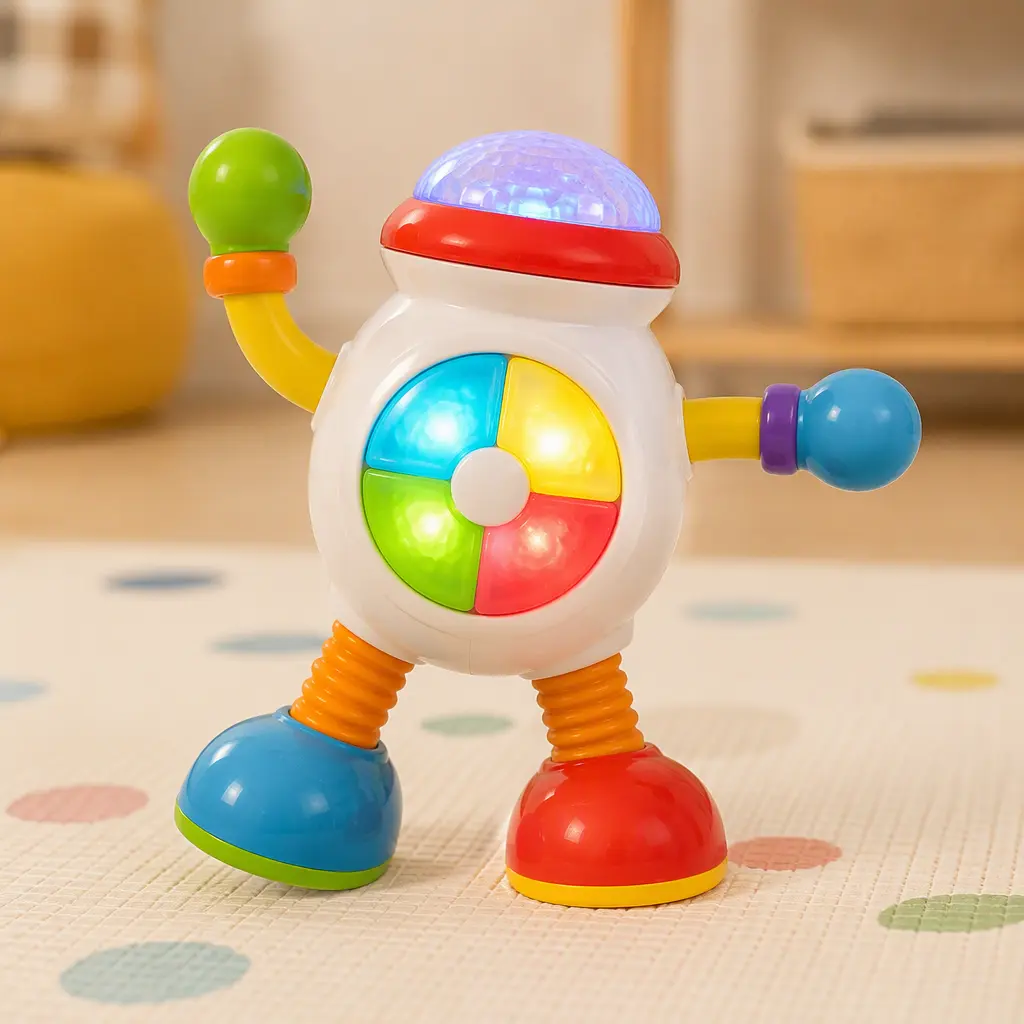
Interactive infant toys have steadily moved from simple rattles and pull-along animals toward products that combine lights, movement, music and responsive play. Fisher-Price DJ Bouncin’ Beats sits squarely in that shift. The toy is designed as a dancing, music-driven activity companion for babies and toddlers, using bouncing motion, illuminated controls and playful audio prompts to encourage movement and attention. It is part entertainer, part early-learning toy and part sensory experience, reflecting a broader trend in contemporary nursery products that aim to keep children physically engaged while introducing concepts like counting, colors and cause-and-effect play.
Where it came from
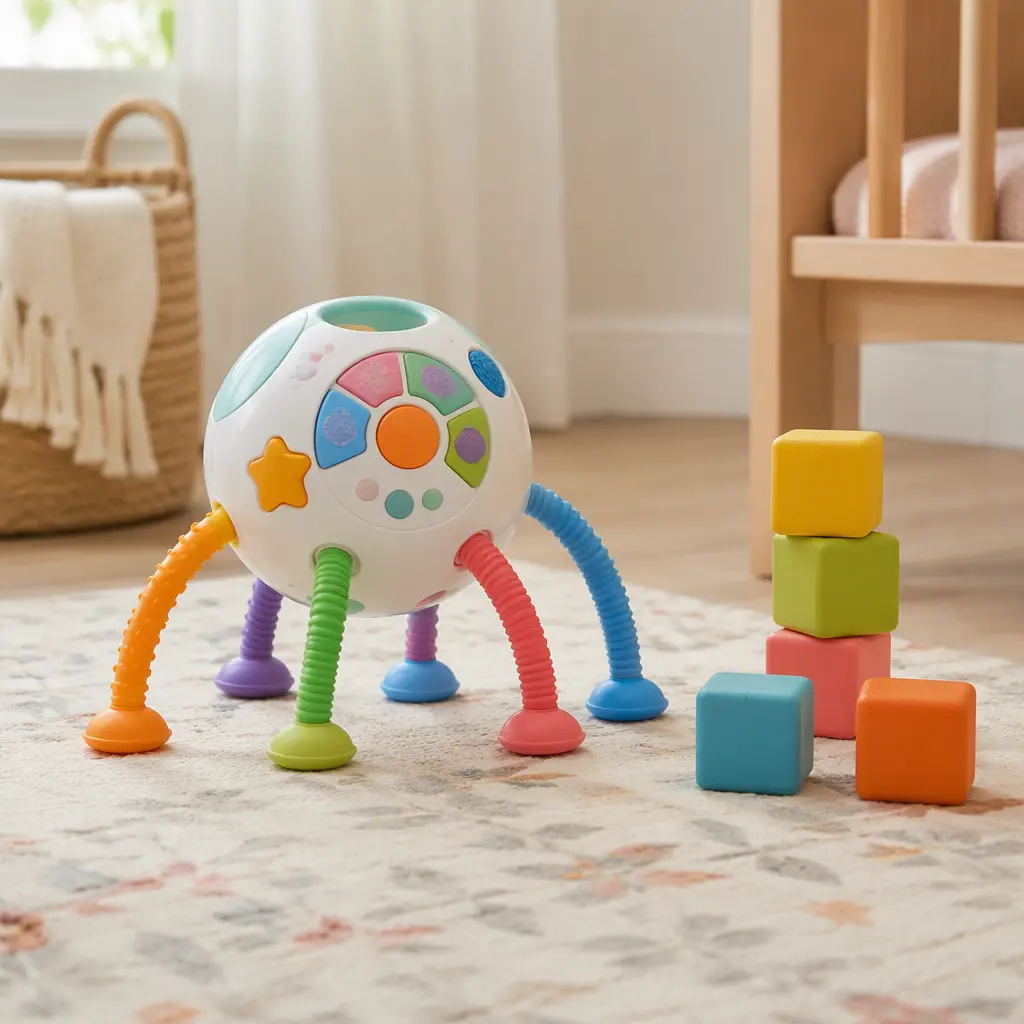
Fisher-Price has spent decades building a reputation around toys aimed at infants, toddlers and preschoolers, particularly products that mix entertainment with developmental play patterns. DJ Bouncin’ Beats arrived during a period when many toy makers were leaning further into responsive electronics. Instead of simply playing songs when a button is pressed, newer toys increasingly react with movement, changing lights and layered sound effects designed to create the impression of interaction.
The toy’s dance-themed presentation also reflects a wider design trend in children’s products. Music-inspired characters, pretend microphones and mini dance-floor aesthetics have become common in toddler aisles, partly because they naturally support movement-based play. Unlike screen-based entertainment, toys in this category encourage children to stand, bounce, clap or crawl toward sounds and motion. Fisher-Price positioned DJ Bouncin’ Beats as a playful learning companion rather than a gadget-first product, emphasizing active engagement through songs, rhythms and simple educational prompts.
Why it works
The appeal of DJ Bouncin’ Beats comes from layered stimulation. The toy combines motion, audio cues, rhythmic music and lighting effects in a way that keeps very young children focused for short bursts of play. Babies and toddlers are naturally drawn to repetition and predictable reactions, so a toy that lights up or dances after a button press can quickly become rewarding. The bouncing movement is especially important because it gives the toy a sense of personality without requiring advanced robotics or app connectivity.
There is also a practical side to the design. Large buttons, rounded edges and exaggerated movements make the toy easier for small children to understand physically. Cause-and-effect interaction is immediate: a child presses, taps or moves something, and the toy responds with sound or action. Parents often recognize this category of toy as occupying a middle ground between passive music players and fully digital devices.
- Music and rhythm-based play designed to encourage movement
- Light-up controls that respond to interaction
- Simple educational prompts tied to counting, colors or patterns
- Animated bouncing or dancing motion for visual engagement
- Large, toddler-friendly controls and rounded construction
At the same time, toys built around lights and sound often raise familiar concerns about overstimulation. Some families enjoy highly energetic toys because they capture attention quickly and encourage active play. Others prefer quieter environments or shorter play sessions, especially for younger infants who can become overwhelmed by rapid audio and visual feedback. DJ Bouncin’ Beats falls into the high-energy category, so how well it fits into a home often depends on a family’s tolerance for noise, flashing lights and repeated musical loops.
Who it's for
DJ Bouncin’ Beats is aimed primarily at babies and toddlers who are beginning to sit independently, crawl, stand or dance along to music. The toy’s oversized controls and animated movement are intended for early developmental stages rather than detailed pretend play. Older toddlers may continue to enjoy the music and dance elements, but the educational content is generally simple and introductory. Adult appeal largely comes from the toy’s ability to hold attention during short play sessions and encourage movement away from passive screen viewing. Families should also expect regular battery use, since motion, lights and audio are central to the experience.
Variants and what to look for today
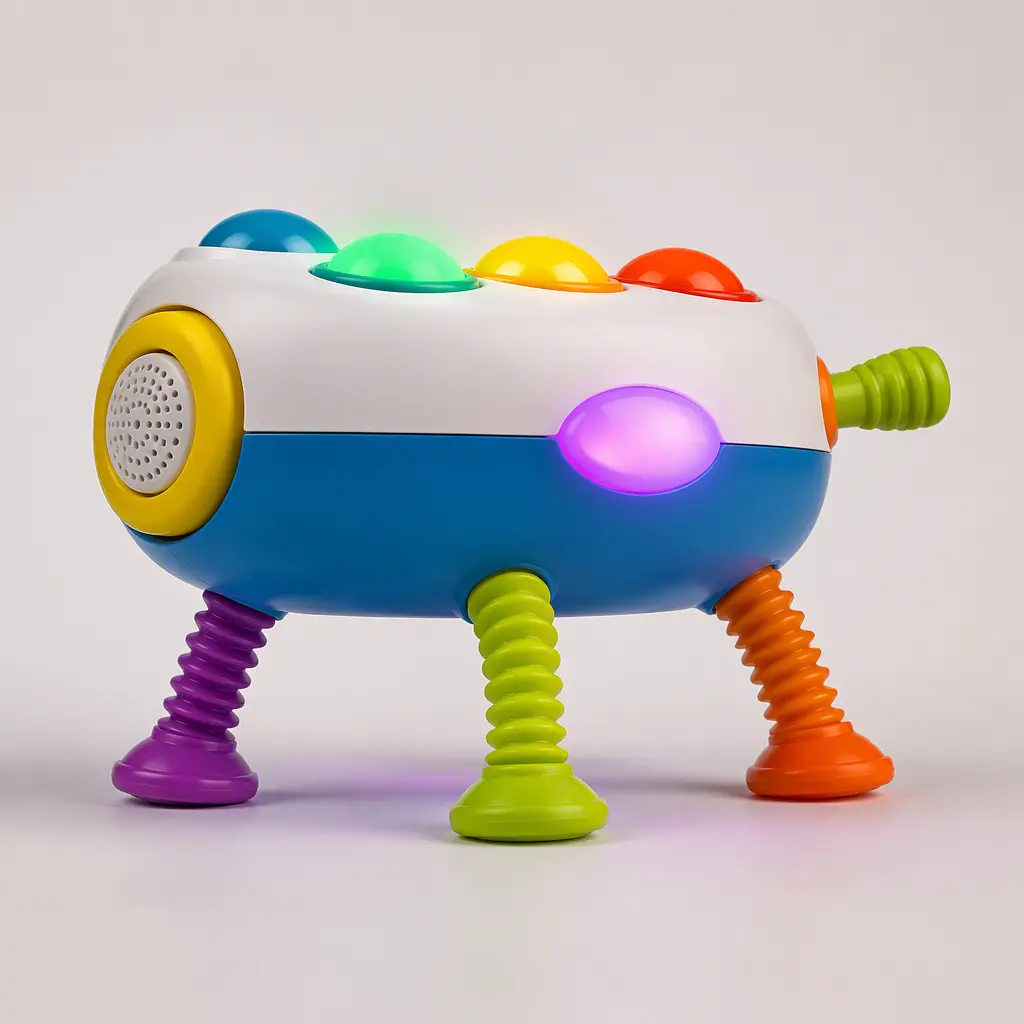
Interactive learning toys now appear in many forms, from compact musical companions to larger activity centers with multiple play modes. Fisher-Price itself produces a broad range of toys built around songs, lights and developmental prompts, so shoppers may encounter products with similar themes but different physical formats. Some focus more heavily on language-learning features, while others emphasize movement and dance-based interaction.
When comparing versions or similar toys, the most important differences usually involve volume levels, physical durability, battery access and how much movement the toy actually performs. Some products rely mostly on flashing lights and audio, while others include bouncing, spinning or swaying motion. Parents shopping secondhand should inspect battery compartments carefully and confirm that moving parts still function smoothly.
- Look for sturdy battery compartment covers and intact screws
- Check whether volume settings can be adjusted or muted
- Compare physical size with available floor or nursery space
- Consider whether the toy works meaningfully without all sound effects active
- Be cautious of generic lookalikes with poor-quality plastics or weak battery contacts
Frequently asked questions
Does DJ Bouncin’ Beats use app connectivity or internet features?
The toy is generally positioned as a self-contained electronic learning toy rather than an app-dependent connected device. Families should still review manufacturer packaging and regional product details for the latest information about features and compatibility.
Is it educational or mainly entertainment?
The toy blends both approaches. Music, counting prompts, colors and repetition are commonly used to support early learning concepts, but the main attraction is responsive sensory play built around movement and sound.
Are interactive toys like this too stimulating for babies?
That depends on the child and the setting. Some infants respond positively to energetic music and movement, while others prefer calmer play environments. Many parents use toys like this for active daytime play while balancing them with quieter activities such as books, blocks or sensory toys without electronics.
What should parents expect from battery life?
Motion, lights and sound effects can consume batteries more quickly than simpler electronic toys. Keeping spare batteries available is common with toys in this category, especially during frequent use.
DJ Bouncin’ Beats reflects the current direction of infant and toddler toys: expressive, animated and designed to compete for attention in busy homes filled with digital media. Its mix of music, movement and responsive interaction makes it easy to understand why these products resonate with young children. At the same time, it also highlights ongoing conversations about sensory overload, household noise and how much technology families want in early childhood play. Whether viewed as a lively learning companion or simply a cheerful dance toy, it captures a defining style of contemporary baby entertainment.