Montessori Toys for 1–2 Year Olds: What to Look For
A plain‑English guide to choosing Montessori toys for ages 1–2, with tips on age fit, safety, and features that support early learning without overstimulation.
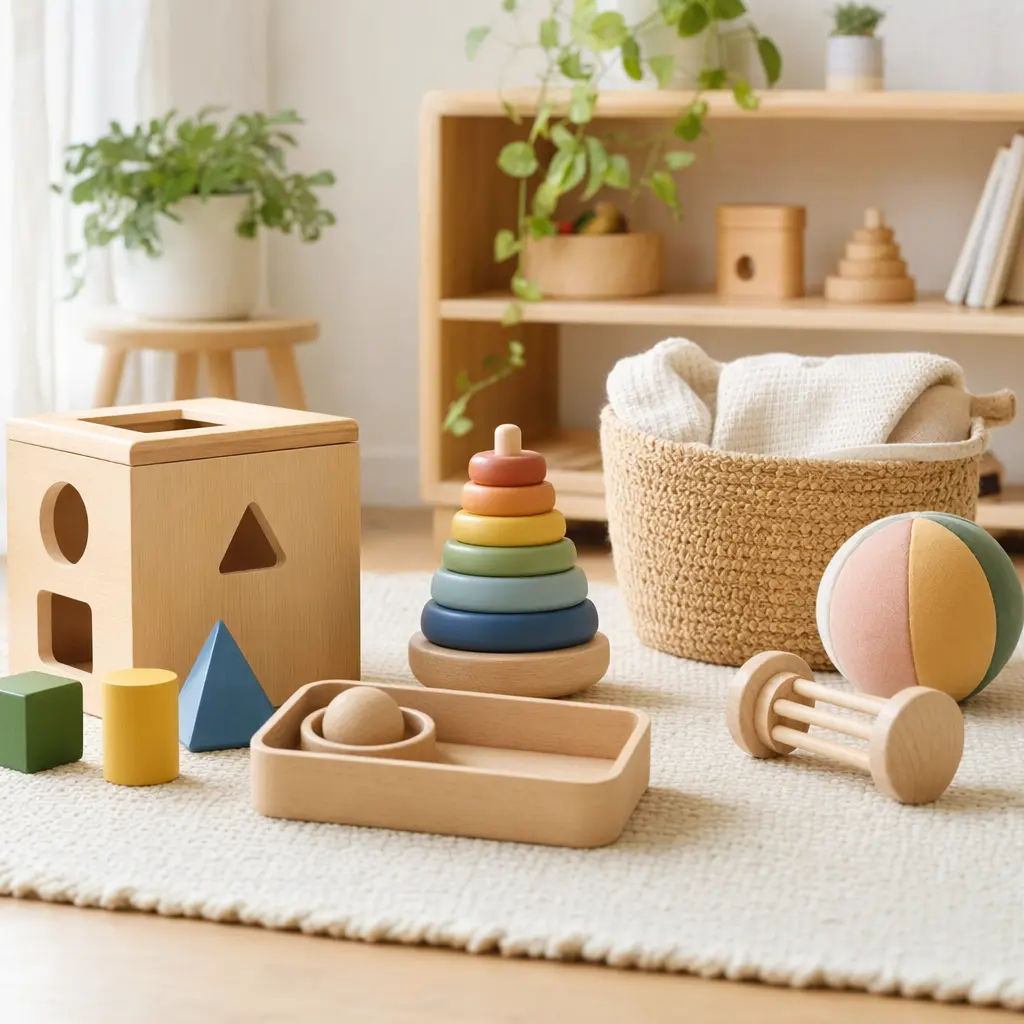
Compare prices and availability
Check current prices and availability for this guide on eBay.
As an eBay Partner, we may be compensated if you make a purchase.
Between ages one and two, children change quickly. Walking becomes steadier, hands grow more precise, and curiosity drives nearly every moment. Montessori toys are designed to support this stage by focusing on simple, hands‑on learning rather than lights, sounds, or screens. For parents, the challenge is knowing which toys truly fit Montessori principles and which are just labeled that way. This guide explains what to look for when choosing Montessori‑style toys for toddlers aged 1–2 years.
What to look for
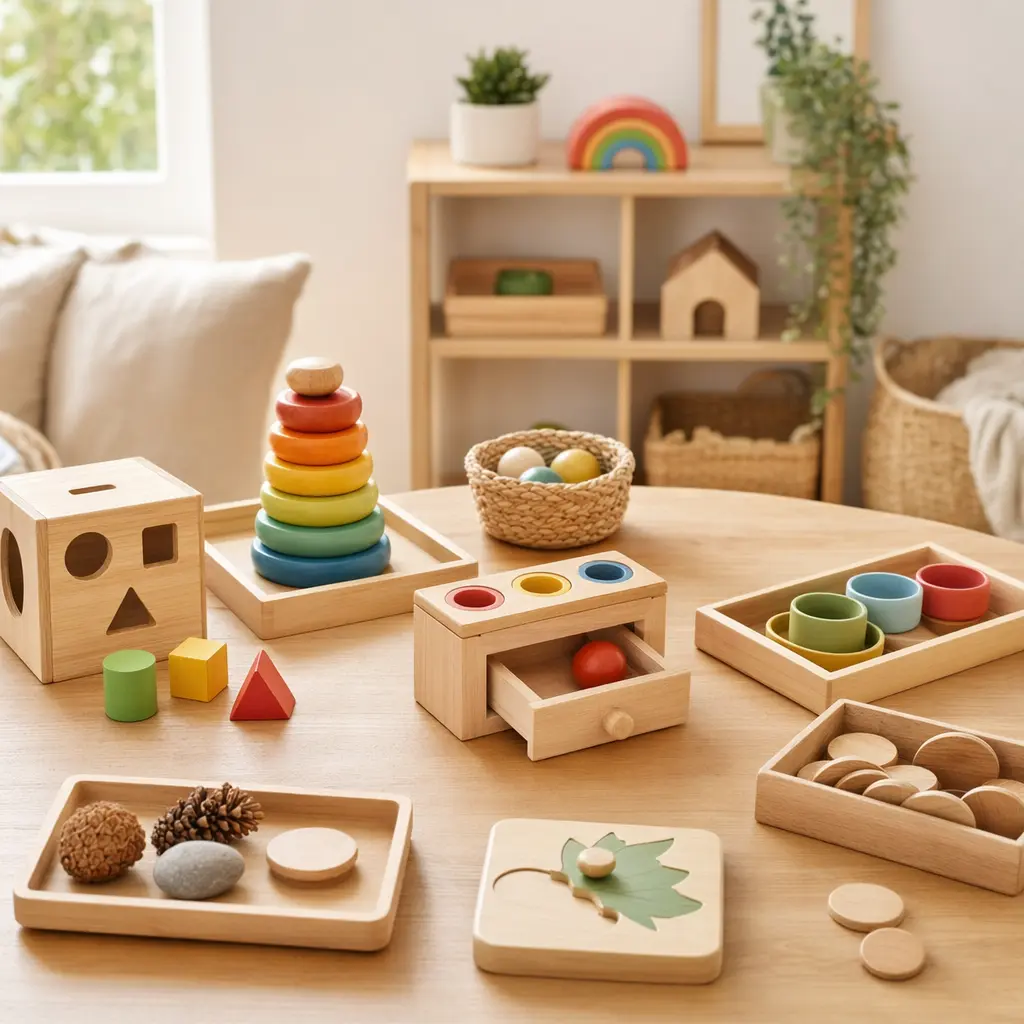
Montessori toys for young toddlers are built around the idea of purposeful play. Each toy should encourage a specific skill, allow the child to explore independently, and feel intuitive without instructions. Instead of entertaining a child, the toy invites the child to do something with it—push, stack, fit, open, or carry.
- Simple, single‑purpose design that focuses on one skill at a time
- Materials that feel real and sturdy, such as wood, metal, or thick fabric
- Opportunities for hands‑on problem solving, like fitting shapes or stacking by size
- Realistic colors and textures rather than flashing lights or loud sounds
- Durability that can handle dropping, throwing, and repeated use
Age suitability
Children between 12 and 24 months are building coordination, balance, and early problem‑solving skills. Toys for this age should be challenging enough to hold interest but not so complex that they cause frustration. At the younger end of the range, toddlers benefit from larger pieces and straightforward actions. Closer to age two, they are often ready for more precise movements, such as threading, matching, or simple sequencing. Age labels on packaging can be helpful, but watching how a child interacts with similar objects can be an even better guide.
Standout categories or types
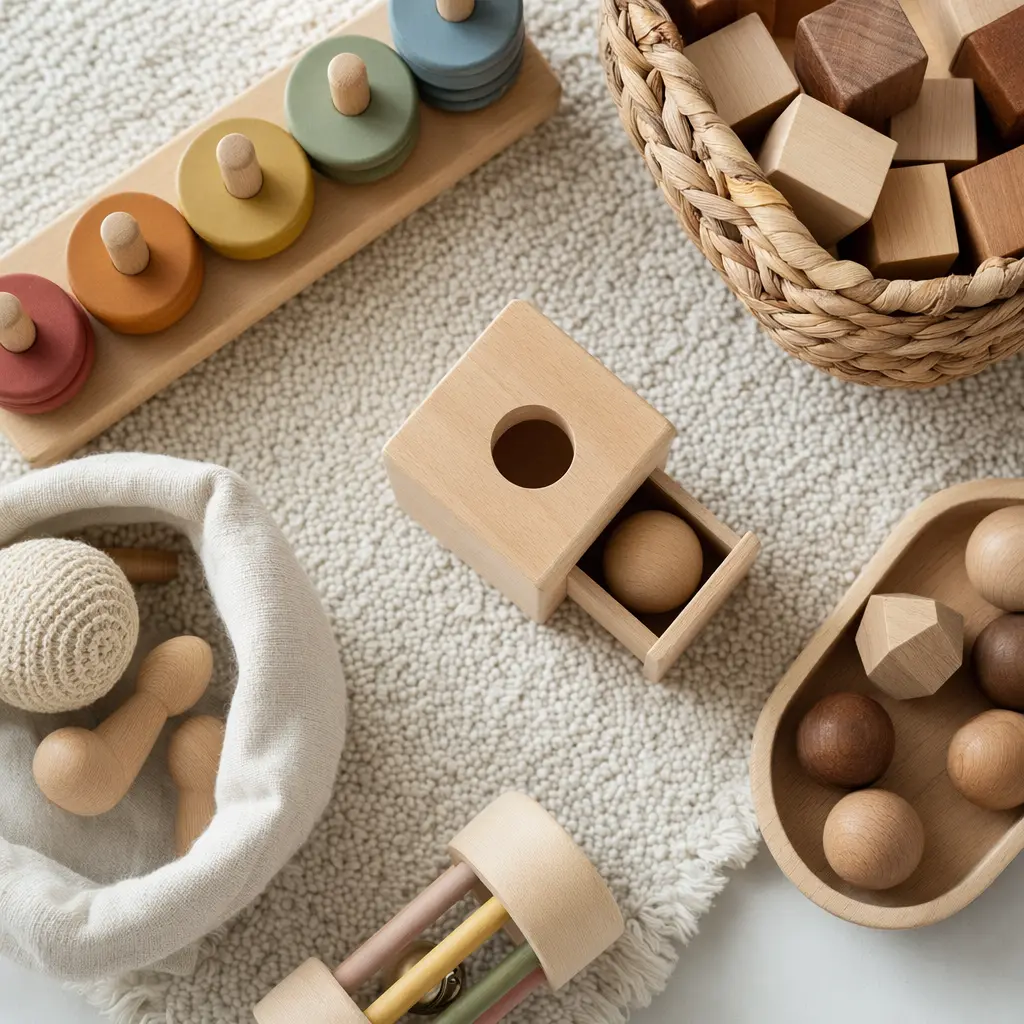
Montessori toys for 1–2 year olds often fall into a few key categories, each supporting a different area of development. Mixing a small number from different categories can create a balanced play environment without overwhelming a child.
- Fine motor toys, such as stacking rings, peg boards, or simple puzzles, that strengthen hand and finger control
- Gross motor toys, including push toys or climbing elements, that support balance and coordinated movement
- Practical life toys, like object‑permanence boxes or latches, that mimic everyday actions children see adults perform
- Sensory toys that focus on touch and weight, using textures or solid pieces rather than electronic effects
Across all categories, fewer toys often work better than many. Montessori‑style play encourages rotation—putting some toys away and bringing them back later—so each item feels fresh and inviting. This approach can help toddlers focus longer and explore more deeply.
Frequently asked questions
Do Montessori toys have to be made of wood?
Wood is common because it is durable and offers natural weight and texture, but it is not required. What matters most is that the material feels solid, safe, and free from distractions.
How many Montessori toys does a toddler need?
A small selection is usually enough. Having four to eight accessible toys at a time allows a child to choose independently without feeling overwhelmed.
Can Montessori toys be used alongside regular toys?
Yes. Montessori toys can complement other toys at home. Many parents choose to keep Montessori‑style toys in a dedicated space to support calmer, focused play.
What if a child loses interest quickly?
Loss of interest is often temporary. Rotating toys or offering the same toy again after a few weeks can renew curiosity as skills develop.
Are Montessori toys worth it for this age?
For many families, the value comes from simplicity and longevity. Well‑chosen toys can be used in multiple ways as a child grows, rather than being outgrown quickly.
Choosing Montessori toys for 1–2 year olds is less about following trends and more about understanding how toddlers learn. By focusing on age‑appropriate challenges, safe materials, and purposeful design, parents can create a play environment that supports independence and steady development during these important early years.