Best No-Battery Toys for Babies 0–12 Months
A parent-focused guide to simple, no-battery toys for babies 0–12 months. Learn what features support early development, age-appropriate options, and safety tips—without lights or noise.
Compare prices and availability
Check current prices and availability for this guide on eBay.
As an eBay Partner, we may be compensated if you make a purchase.
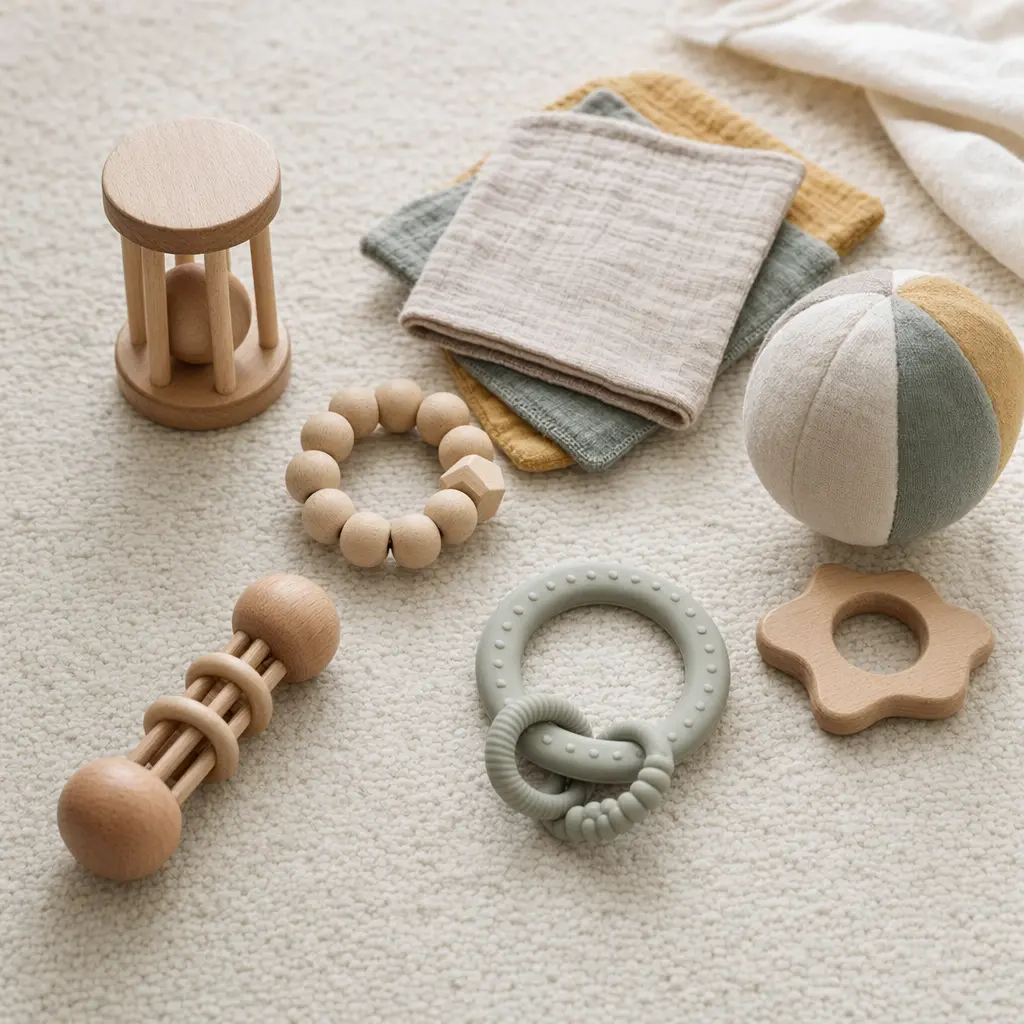
For babies under one year, the most effective toys are often the simplest. No-battery toys encourage babies to explore through touch, sound, and movement—without flashing lights or electronic noise. These classic sensory items support early development while keeping play calm, predictable, and parent-friendly.
What to look for
Babies learn best through their senses. When choosing no-battery toys, focus on materials, size, and how the toy responds to simple actions like shaking or squeezing. The goal is to invite exploration without overstimulation.
- Safe materials: Look for untreated wood, food-grade silicone, or tightly stitched fabrics.
- Easy-to-grasp shapes: Lightweight toys with rings, loops, or soft edges fit small hands.
- Gentle sensory feedback: Soft rattles, crinkles, or varied textures encourage cause-and-effect learning.
- Simple design: Fewer parts make toys easier to understand and harder to misuse.
- Washable or wipeable surfaces: Helpful for frequent mouthing and drooling.
Age suitability
From birth to 12 months, babies change quickly. Newborns benefit from high-contrast visuals and soft textures, while older infants enjoy toys they can grasp, shake, and mouth. Many no-battery toys grow with a baby—starting as something to look at, then becoming an object to hold, chew, and manipulate.
Standout categories or types
Certain categories of no-battery toys consistently support early development. These options focus on sensory input and simple motor skills, making them well-suited for babies throughout the first year.
- Rattles and shakers: Gentle sounds help babies learn that movement creates an effect.
- Teethers: Silicone or wooden teethers provide safe relief during teething and encourage hand-to-mouth coordination.
- Soft fabric toys: Crinkle cloths, textured squares, and plush shapes offer varied tactile experiences.
- Cloth books: Simple images and textures introduce early literacy and visual exploration.
- Soft balls: Lightweight balls encourage reaching, rolling, and early hand control.
Frequently asked questions
Are no-battery toys enough for development?
Yes. Babies do not need electronic features to learn. Simple toys support sensory development, motor skills, and attention without overstimulation.
What makes a toy safe for babies under one?
Safe toys are sized to prevent choking, made from non-toxic materials, and designed to withstand mouthing and drooling without breaking.
How many toys does a baby need?
A small rotation of well-chosen toys is usually enough. Fewer options can help babies focus and explore more deeply.
Can these toys be used from birth?
Many are suitable from birth, especially soft or lightweight items. Always check the recommended age range and supervise play.
No-battery toys offer a calm, developmentally supportive way to play during a baby’s first year. By choosing simple, well-made items, parents can encourage curiosity and learning while keeping playtime quiet and engaging.