Playskool Busy Ball Popper: Why simple motion still delights toddlers
A look at the Playskool Busy Ball Popper, the classic pop-and-roll toy that has kept toddlers laughing for decades through simple cause-and-effect play.
Compare prices and availability
Check current prices and availability for this guide on eBay.
As an eBay Partner, we may be compensated if you make a purchase.
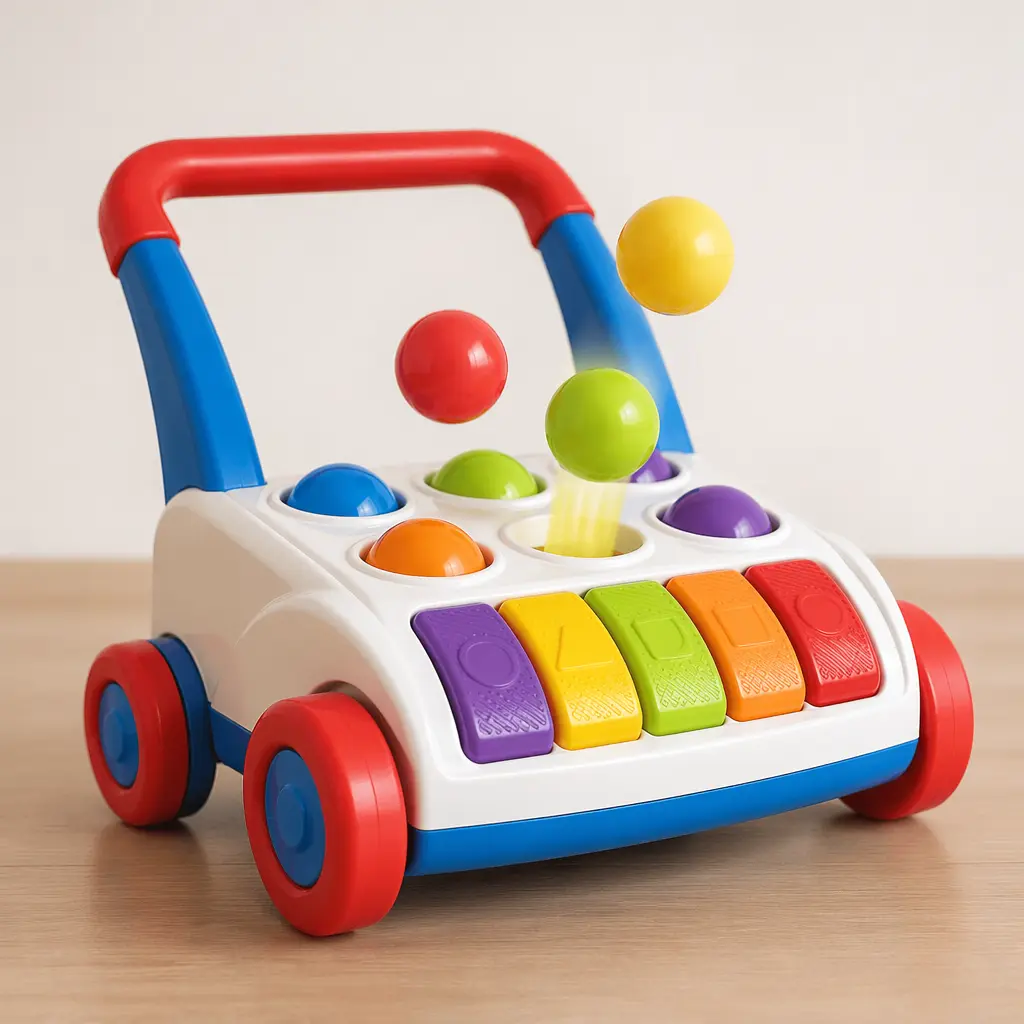
Few toys explain the appeal of cause-and-effect play as clearly as the Busy Ball Popper. Press a button, hear a cheerful sound, and watch a ball bounce into the air. For toddlers just learning how their actions shape the world, that tiny moment of control is endlessly fascinating. First introduced by Playskool in the late 20th century, the Busy Ball Popper has become a familiar sight in nurseries, playgroups, and grandparents’ living rooms.
What’s striking is how little the formula has changed. In an era of screens and rechargeable gadgets, this toy still relies on springs, air, and gravity. Its staying power says something important about early play: toddlers don’t need complexity, they need clear feedback, bright colour, and a reason to try again.
Where it came from
The Busy Ball Popper traces its roots to Playskool’s focus on developmental toys for very young children. By around 1980, the brand was already known for sturdy, preschool-friendly designs that prioritised learning through play rather than flashy extras. The popper fit neatly into that philosophy.
At its heart, the toy was designed to encourage motor development and curiosity. Large buttons were easy for small hands to press, while the dramatic pop of a ball rewarded effort instantly. It was never meant to be a novelty item; it was built to survive daily use, drops, and the enthusiastic attention of toddlers who wanted to press the same button over and over again.
Why it works
The Busy Ball Popper works because it delivers a clear loop: action, reaction, delight. A toddler presses a button, hears a sound, and sees a ball jump. That loop is easy to understand and satisfying to repeat, which is exactly what early learners crave.
The design also respects toddlers’ physical abilities. Everything is oversized, stable, and forgiving. There’s no right or wrong way to play, and success is immediate. Standout features include:
- Large, easy-to-press buttons suited to developing fine motor skills
- Bright, contrasting colours that catch attention
- Simple mechanical action rather than screens or complex electronics
- Auditory feedback that reinforces cause and effect
- Durable construction made for repeated use
Who it's for
This toy is aimed squarely at babies and young toddlers, typically from around 9 months to about 2 years. It’s ideal for children who are sitting independently and beginning to explore with their hands. While older children will quickly outgrow it, adults often appreciate the Busy Ball Popper for different reasons: it’s intuitive, sturdy, and doesn’t demand supervision or explanation.
Variants and what to look for today
Over the years, the Busy Ball Popper concept has appeared in a few variations. Some versions swap the traditional pop for air-powered bursts, while others add extra buttons or sounds. Despite these updates, the core idea remains the same.
When looking for one today, focus less on added features and more on build quality. Balls should be large enough to avoid choking hazards, buttons should move smoothly, and the base should feel stable on the floor. Many generic popper toys copy the look but may use lighter plastics or weaker mechanisms that don’t hold up to repeated play.
Frequently asked questions
Is the Busy Ball Popper educational?
Yes, in a foundational way. It supports early motor skills, hand-eye coordination, and an understanding of cause and effect. While it doesn’t teach letters or numbers, it builds the skills that make later learning easier.
Does it need batteries?
Some versions include simple sound effects that require batteries, while others rely entirely on mechanical action. Many parents appreciate that the core play still works even if the sounds are turned off.
How long will a toddler stay interested?
Interest usually peaks during the period when a child is mastering pressing, grasping, and watching objects move. For most children, that means months of regular use rather than years.
Is it suitable for group play?
It can work well in shared spaces like nurseries, though toddlers may need help taking turns. The clear action and visible result make it easy for multiple children to understand what’s happening.
The Busy Ball Popper endures because it respects how young children learn. It doesn’t rush them or overwhelm them; it simply rewards curiosity. Decades after its introduction, that gentle approach still feels relevant, proving that sometimes the simplest toys are the ones that last.