Ticket to Ride: How trains made modern board games family‑friendly
First published in 2004, Ticket to Ride showed families that modern board games could be strategic, welcoming, and fun without being complicated.
Compare prices and availability
Check current prices and availability for this guide on eBay.
As an eBay Partner, we may be compensated if you make a purchase.
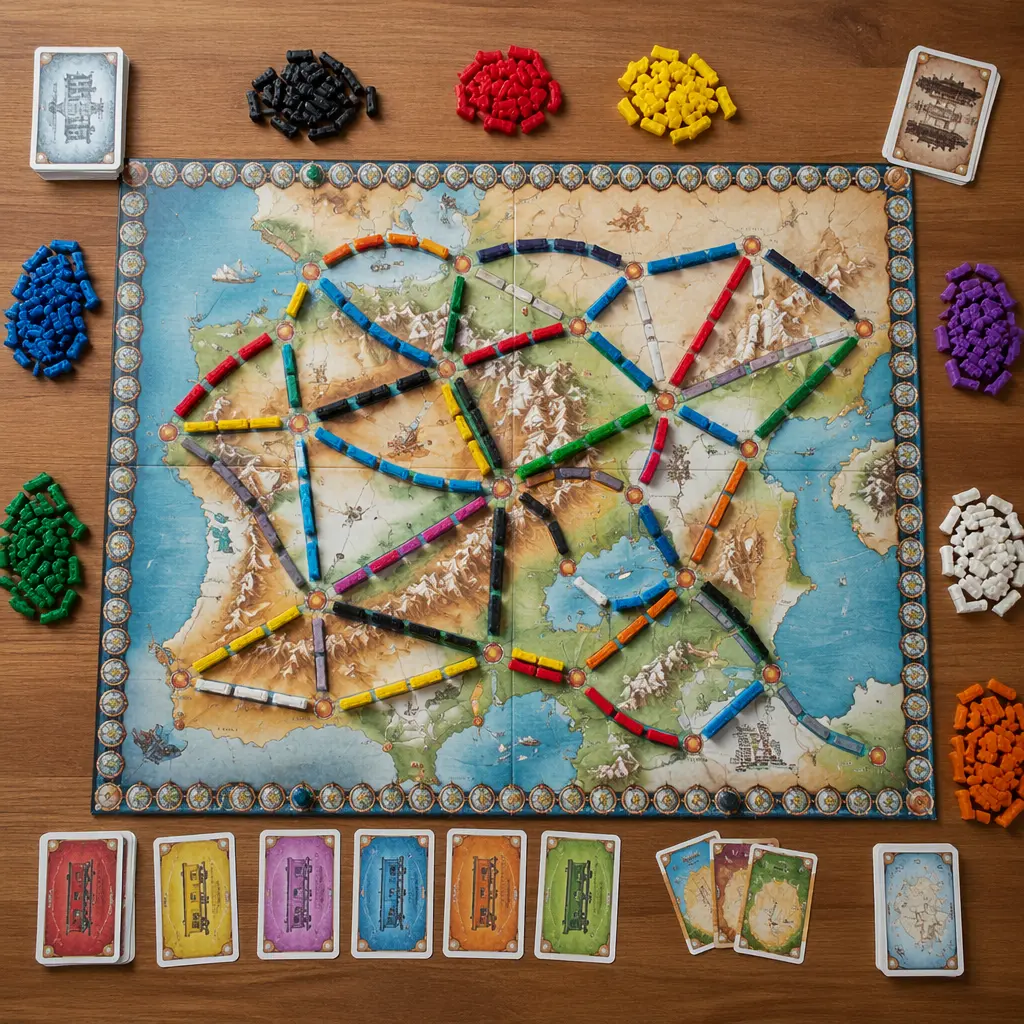
When people talk about the modern board game boom, Ticket to Ride often comes up early in the conversation. It’s a game about building train routes across a map, but its real achievement was showing that strategy games didn’t have to be intimidating. Clear goals, simple turns, and a friendly theme helped it find a place on family tables that might otherwise have stuck with traditional classics.
Where it came from
Ticket to Ride was released in 2004 by Days of Wonder, a publisher that set out to make board games look and feel more inviting. Designed by Alan R. Moon, the game built on ideas from earlier train and route‑building games, but stripped them down to something much more approachable.
At the time, many strategy games were aimed at hobbyists and came with long rulebooks and dense themes. Ticket to Ride went the other way. The rules fit on a few pages, the map was bright and readable, and the goal was instantly understandable: connect cities by claiming railway routes. That balance of depth and accessibility helped it win the Spiel des Jahres (Game of the Year) award in Germany, a prize known for spotlighting games suitable for families.
Why it works
The heart of Ticket to Ride is its rhythm. On your turn, you usually do one of three things: draw cards, claim a route, or pick up new destination tickets. There’s very little downtime, and players always feel like they’re making progress, even when their plans are quietly being blocked by others.
The design encourages gentle interaction rather than direct conflict. You can’t destroy someone else’s network, but you can take a route they were clearly hoping to use. That small bit of tension keeps the table engaged without tipping into arguments.
- Simple turn structure that’s easy to teach in minutes
- Bright, readable map that makes planning routes intuitive
- Hidden destination tickets that reward long‑term planning
- Physical train pieces that make progress visible and satisfying
Who it’s for
Ticket to Ride is often recommended for ages eight and up, but what really matters is patience rather than reading level. Children can grasp the basics quickly, while adults find enough strategy to stay interested. It’s also a common bridge game for families moving from traditional board games into the wider modern hobby, and it remains popular with adults who enjoy relaxed, social play rather than heavy competition.
Variants and what to look for today
Since its release, Ticket to Ride has grown into a whole family of games. Different map versions adjust the rules slightly to reflect new regions, adding elements like ferries, tunnels, or alternative scoring systems. These variations keep the core experience fresh without losing the simplicity that made the original popular.
If you’re buying today, the main choice is which map and player count suits your group. Some versions are quicker and better for younger players, while others add layers that appeal more to adults. It’s also worth sticking with well‑made editions, as the tactile feel of the cards and train pieces is part of the game’s charm.
Frequently asked questions
How long does a game usually take?
Most games finish in 45 to 60 minutes. With new players, the first play may take a little longer, but the pace speeds up quickly once everyone understands the flow.
Is there much luck involved?
Card draws add an element of luck, but planning and timing matter more over the course of the game. Good players adapt their routes rather than relying on perfect draws.
Does it work with just two players?
Yes. While it feels busier with more people, two‑player games are tighter and more strategic, with fewer routes being contested at once.
Why is it considered a modern classic?
Ticket to Ride helped redefine what a family board game could be in the 2000s. Its success opened doors for many other accessible strategy games that followed.
More than twenty years on, Ticket to Ride still earns its place on the shelf. It doesn’t chase trends or overwhelm players with complexity. Instead, it offers a calm, engaging experience that invites people back again and again — which is often the true mark of a classic.