Silly Putty: How a lab accident turned into a timeless toy
Born from a failed wartime experiment, Silly Putty became a pocket-sized classic thanks to its strange physics, endless uses, and simple, screen-free appeal.
Compare prices and availability
Check current prices and availability for this guide on eBay.
As an eBay Partner, we may be compensated if you make a purchase.
Silly Putty looks like a joke, feels like a magic trick, and behaves like a science lesson you can keep in your pocket. It stretches, it snaps, it bounces, and it can lift ink from paper — all without batteries, instructions, or a screen. Few toys have stayed so small, so strange, and so relevant for so long.
Where it came from
Silly Putty traces its roots to a failed science experiment during World War II. In the early 1940s, engineers were racing to find a synthetic rubber substitute, as natural rubber was in short supply. One experiment combined silicone oil with boric acid, creating a substance that definitely wasn’t rubber — but was undeniably strange.
For years, the material bounced between labs and cocktail parties as a novelty. It wasn’t until 1950 that it was repackaged as a toy, famously sold in a small egg-shaped container. That simple presentation helped frame it not as a chemistry oddity, but as something playful, portable, and irresistible to touch.
Why it works
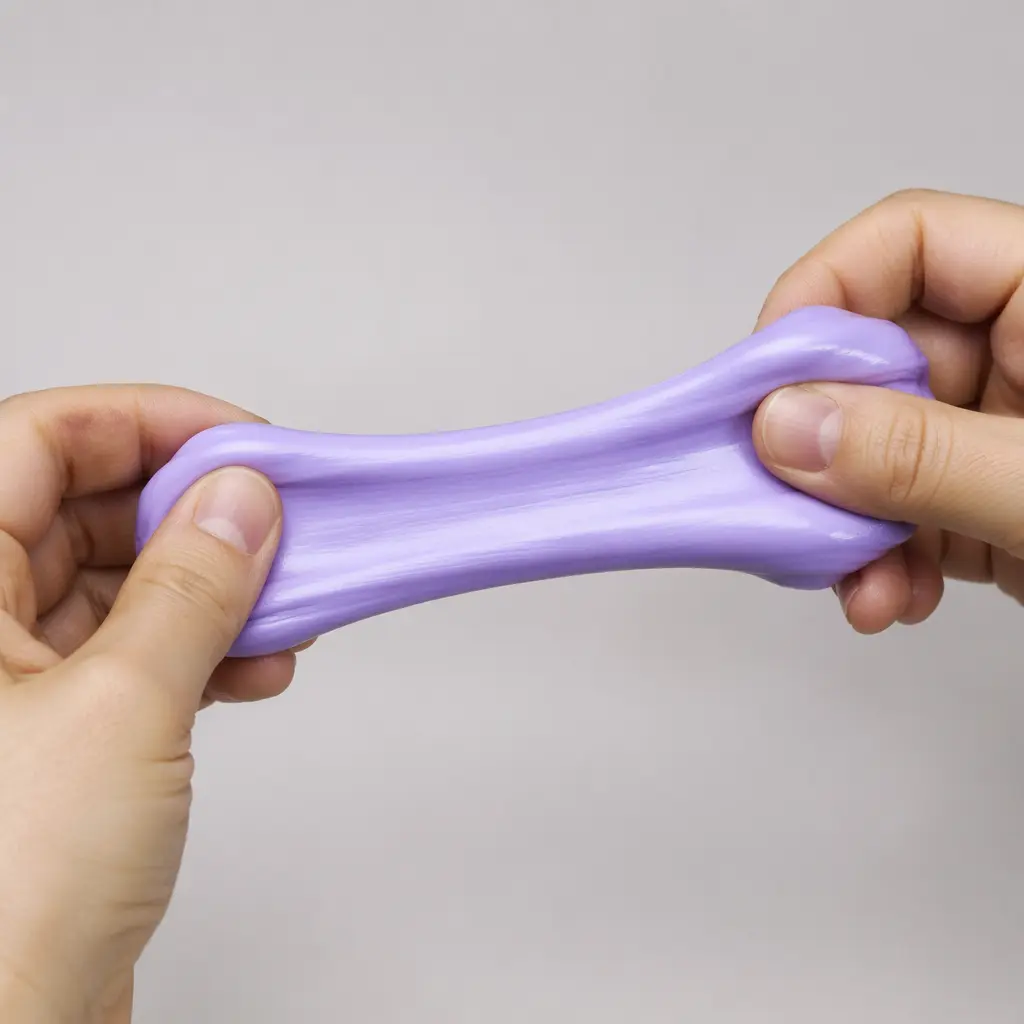
At the heart of Silly Putty’s appeal is its unusual physical behavior. It’s a viscoelastic material, meaning it flows like a liquid over time but behaves like a solid when stressed. That single property unlocks dozens of ways to play, fidget, and experiment.
- Stretches slowly but snaps when pulled sharply
- Bounces when formed into a ball
- Can be molded, squashed, or rolled endlessly
- Feels cool, smooth, and oddly calming in the hand
- Demonstrates real-world physics without explanation
Unlike toys with a fixed goal, Silly Putty invites open-ended interaction. There’s no right way to use it, which makes it equally suited to a curious child, a bored teenager, or an adult absent-mindedly kneading it during a phone call.
Who it's for
Silly Putty is typically recommended for school-age children and up, largely due to small-piece and ingestion concerns for younger kids. That said, its audience has always been broader than any age label. Adults buy it for desks, travel bags, and stress relief just as often as parents buy it for playtime.
Variants and what to look for today
Modern versions of Silly Putty-style toys come in a wider range of colours and finishes than the original neutral tone. Some glow in the dark, shift colour with temperature, or have added textures, while others stay close to the classic formula.
When choosing one today, focus on texture and resilience rather than novelty. Good putty should stretch smoothly, bounce cleanly, and not feel sticky or crumbly. Very cheap imitations can dry out quickly or leave residue on surfaces, which takes away from the experience.
Frequently asked questions
Is Silly Putty educational?
Yes, though indirectly. It’s often used to demonstrate basic physics concepts like elasticity, viscosity, and material response. Kids learn through play without realizing they’re engaging with science.
Does it dry out over time?
It can, especially if left exposed to air or heat. Proper storage significantly extends its lifespan, sometimes for years.
Can it damage surfaces?
Most quality putties won’t damage hard surfaces, but they can leave residue on porous materials like fabric or unfinished wood. Supervision and sensible use are key.
Why has it lasted so long?
Because it does one thing exceptionally well: it feels interesting. In a toy world driven by trends and technology, that simple sensory appeal never goes out of style.
More than seventy years on, Silly Putty remains a reminder that great toys don’t have to be complicated. Sometimes, all it takes is a happy accident, a clever reframe, and something your hands don’t want to put down.