Educational Puzzles That Grow With Your Child (Ages 3–5)
A parent-friendly guide to educational puzzles with adjustable difficulty for ages 3–5. Learn what features matter, how to match skills, and how to get long-term value as your child grows.
Compare prices and availability
Check current prices and availability for this guide on eBay.
As an eBay Partner, we may be compensated if you make a purchase.
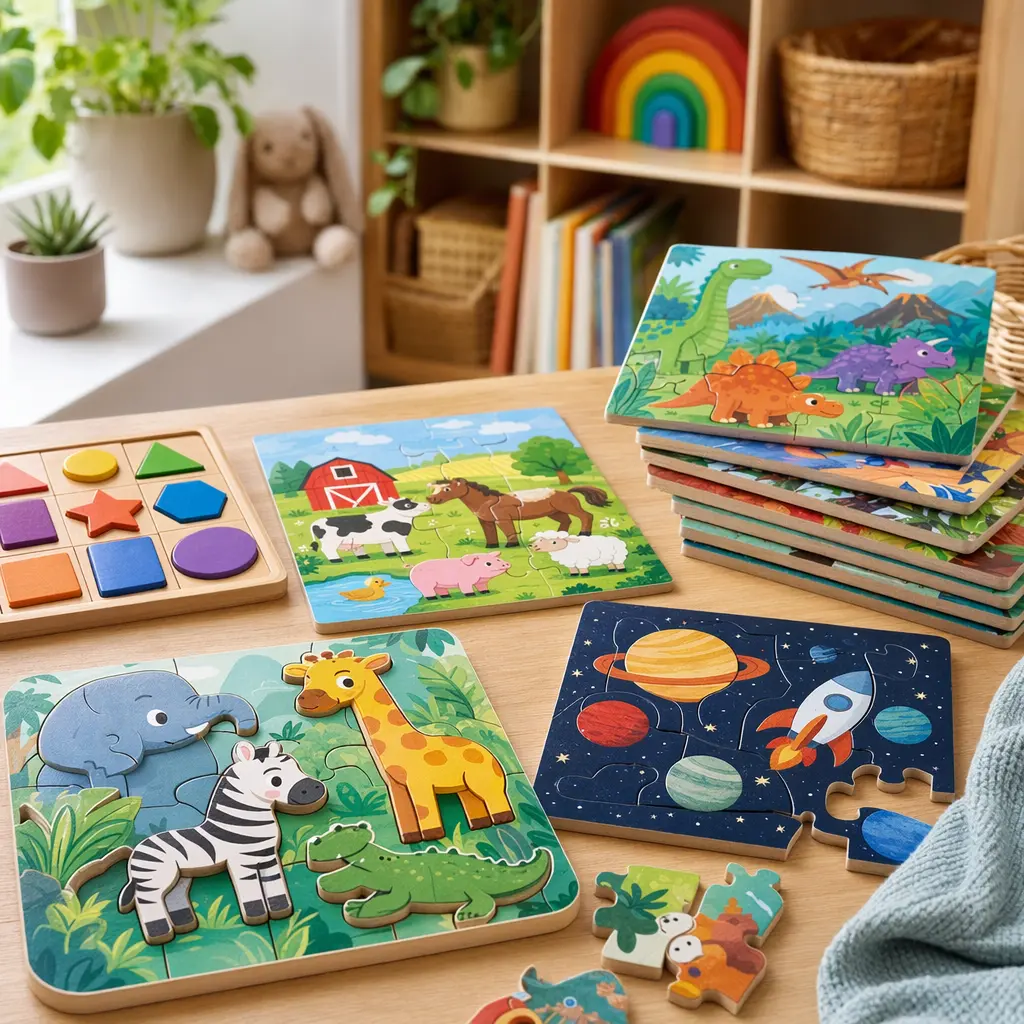
Educational puzzles that grow with your child are designed to stay useful over several years, not just a single stage. For children ages 3–5, the best options offer multiple difficulty levels that support early problem-solving, fine motor skills, and confidence. Instead of outgrowing a puzzle in a few weeks, families can rotate challenges as skills develop, making these toys a practical and educational choice.
What to look for
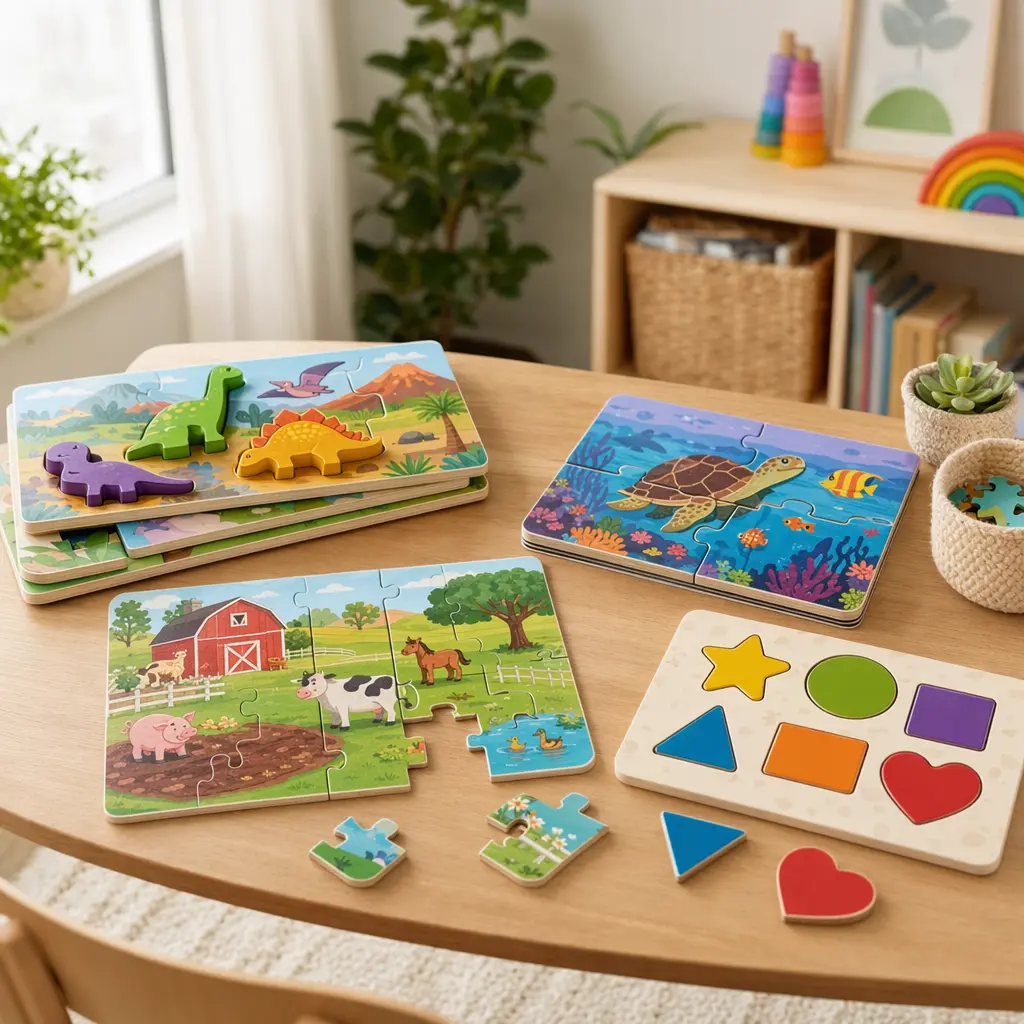
When choosing a puzzle with long-term value, focus on how it adapts to your child’s changing abilities. The goal is gentle challenge without frustration. Well-designed puzzles allow children to start with simple tasks and gradually add complexity, encouraging persistence and independent thinking.
- Multiple difficulty levels, such as fewer pieces first with optional add-ons later
- Clear visual cues like color matching, outlines, or graduated piece sizes
- Durable materials that can handle frequent use over several years
- Open-ended play options, allowing pieces to be used in more than one way
- Themes that stay interesting as children grow, such as numbers, letters, shapes, or scenes
Age suitability
For ages 3–5, puzzles should match developing hand strength, attention span, and reasoning skills. Younger preschoolers often do best with large, easy-to-grasp pieces and simple goals, such as matching shapes or completing a small picture. As children approach age five, they are typically ready for more pieces, less obvious visual guidance, and challenges that involve sequencing, counting, or simple logic. A puzzle labeled for this age range should safely span these stages without becoming either boring or overwhelming.
Standout categories or types
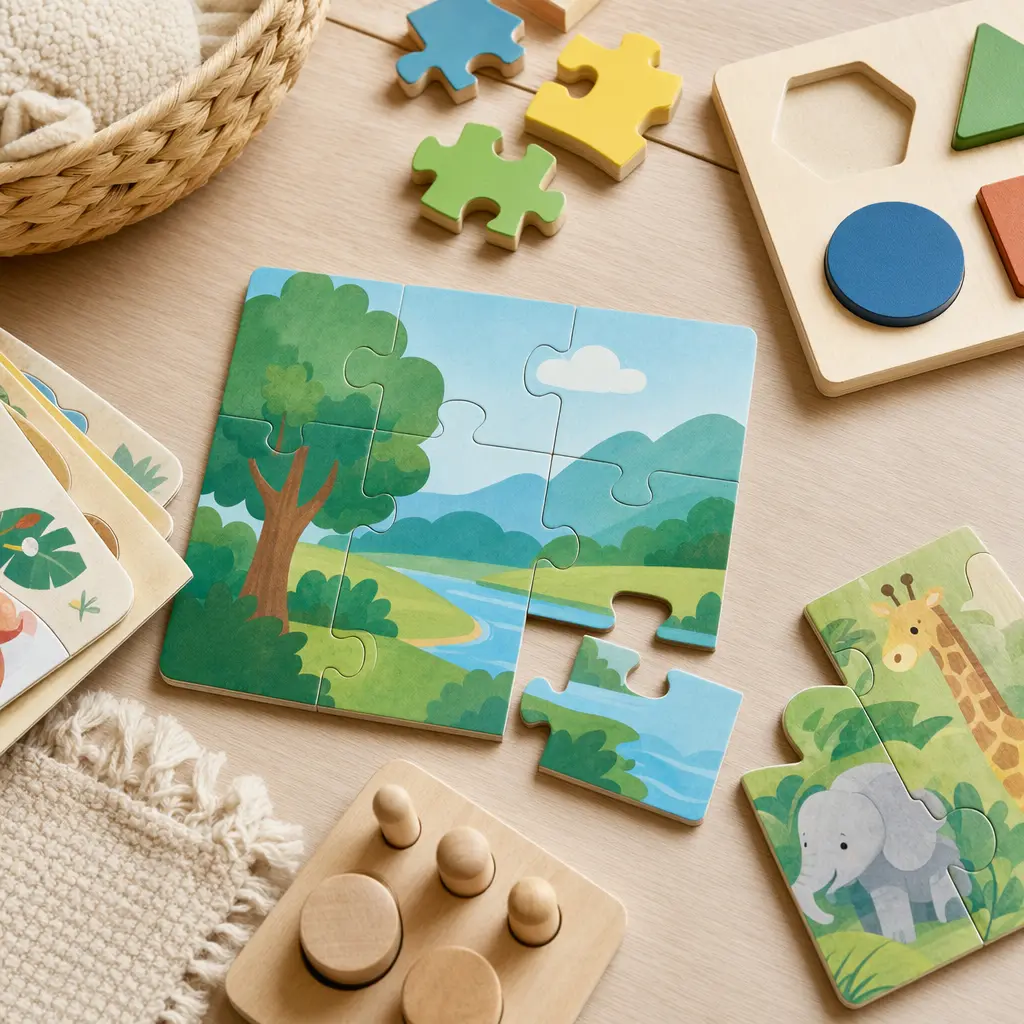
Several types of educational puzzles are especially well-suited to growing with children between ages 3 and 5. These categories focus on progression, allowing families to adjust the challenge without replacing the toy.
- Layered puzzles that add depth or detail as each level is completed
- Progressive jigsaw sets that increase piece count over time
- Shape and color puzzles that evolve into pattern or logic challenges
- Number and letter puzzles that begin with recognition and move toward sequencing or simple math
- Build-and-solve puzzles that combine construction with problem-solving
Puzzles in these categories often support both independent play and guided learning. Parents can start by modeling strategies or asking simple questions, then step back as children gain confidence. This flexibility helps puzzles remain engaging across different developmental stages and learning styles.
Frequently asked questions
How do puzzles help learning at ages 3–5?
Puzzles support fine motor development, hand-eye coordination, and early reasoning skills. They also encourage focus, patience, and problem-solving, which are important foundations for preschool and kindergarten learning.
What makes a puzzle “grow with” a child?
A puzzle that grows with a child offers adjustable difficulty. This may include removable guides, extra pieces, or multiple ways to complete the same puzzle so it stays challenging as skills improve.
Are wooden or cardboard puzzles better?
Both can be appropriate. Wooden puzzles are often more durable and easier for small hands to grip, while thick cardboard puzzles can offer more detailed images and higher piece counts. The best choice depends on durability needs and your child’s motor skills.
How much help should parents give?
It helps to offer guidance at the beginning, such as pointing out strategies or sorting pieces. Over time, stepping back allows children to build confidence and solve problems independently.
Educational puzzles with built-in progression can be a smart addition to a preschool toy collection. By choosing options that adapt to your child’s abilities, families can support learning, reduce toy turnover, and encourage meaningful play from ages 3 through 5.