Challenging Logic Puzzles for Kids Ages 9–12
A parent-friendly guide to brain-stretching logic puzzles for ages 9–12, with tips on difficulty, skills built, and safe, engaging puzzle types that hold attention beyond beginner sets.
Compare prices and availability
Check current prices and availability for this guide on eBay.
As an eBay Partner, we may be compensated if you make a purchase.
As kids move past beginner puzzles, they often want something that feels tougher and more satisfying to solve. For ages 9–12, the best logic puzzles introduce multi-step thinking, pattern recognition, and strategy—without becoming frustrating. This guide breaks down what to look for, how difficulty levels work, and which puzzle types tend to keep older kids engaged and learning.
What to look for
Logic puzzles for this age group should feel challenging but fair. The goal is sustained thinking, not guesswork. Look for puzzles that clearly explain rules, scale in difficulty, and reward careful reasoning. Many kids at this stage enjoy puzzles they can return to again and again, either by increasing levels or by offering multiple solutions.
- Clear rules with examples so kids can get started independently
- Multiple difficulty levels or adjustable challenges
- Problems that require planning several moves ahead
- Durable pieces that hold up to repeated attempts
- A balance of visual and logical elements to suit different learning styles
Age suitability
Ages 9–12 is a wide range, and abilities vary. Younger kids in this band may prefer hands-on puzzles with physical pieces, while older kids often enjoy abstract logic, codes, and written challenges. Check recommended age ranges, but also consider your child’s patience level and experience with puzzles. A good sign of fit is when a puzzle takes time to solve but doesn’t stall progress completely.
Standout categories or types
Several puzzle categories tend to work especially well for kids who are ready to move beyond simple matching or basic mazes. These types encourage different kinds of thinking, so mixing a few styles can keep interest high.
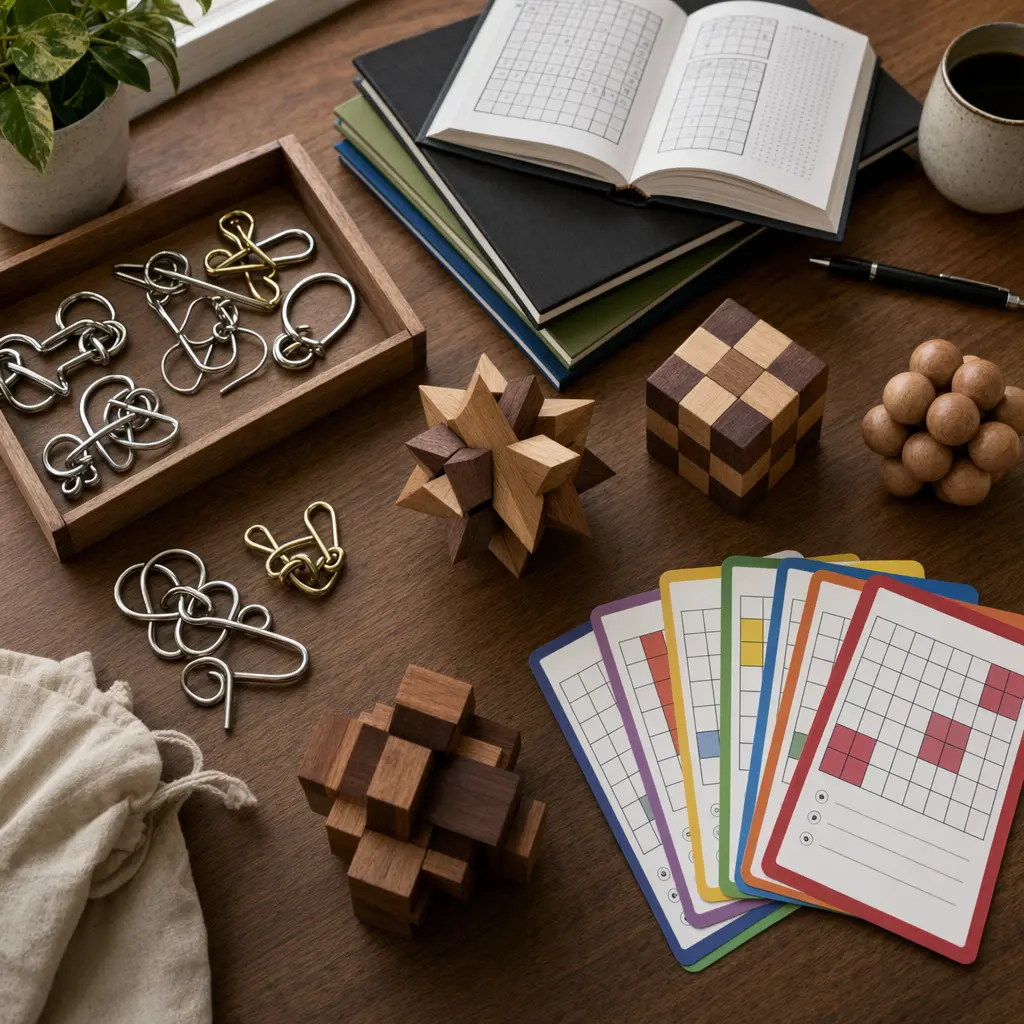
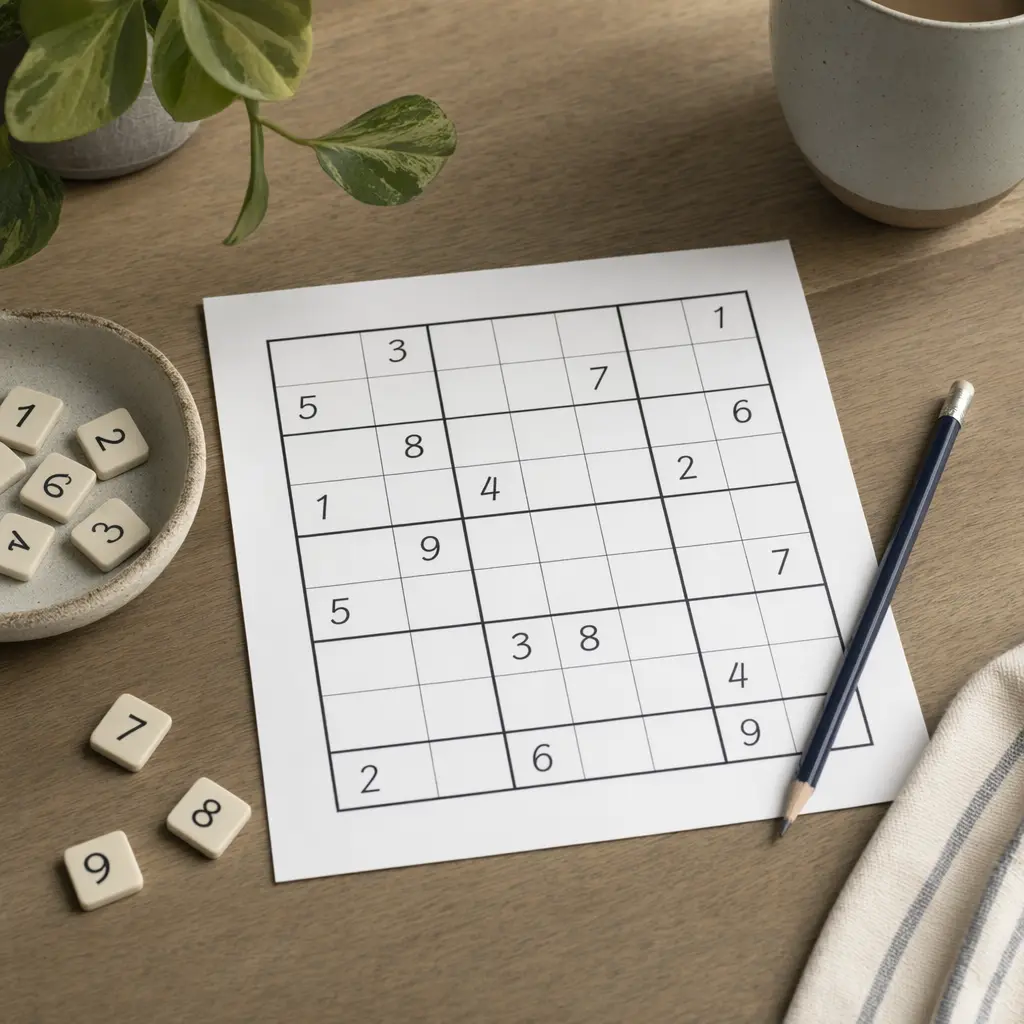
- Grid-based logic puzzles: Deduction puzzles where kids use clues to fill in grids, building skills in elimination and inference.
- 3D brain teasers: Interlocking wooden or plastic puzzles that require spatial reasoning and trial-and-error problem solving.
- Sequential reasoning puzzles: Challenges that must be solved in a specific order, encouraging planning and patience.
- Math and number logic puzzles: Games that use arithmetic or number patterns to reach a solution, often with increasing difficulty.
- Deduction card puzzles: Compact sets where each challenge presents a scenario to analyze using provided clues.
Frequently asked questions
How hard is too hard?
If a child can’t make progress after multiple attempts and hints, the puzzle may be too advanced right now. Look for sets that include easier starter challenges and gradually increase in complexity.
Are logic puzzles educational?
Yes. Logic puzzles support skills like critical thinking, problem solving, and persistence. Many also reinforce math concepts, spatial awareness, and reading comprehension without feeling like schoolwork.
Do kids need to play alone?
Most logic puzzles can be solved solo, but many kids enjoy working through tougher challenges with a parent or sibling. Collaborative problem solving can help model strategies without giving away answers.
How long should a good puzzle take to solve?
For this age group, anywhere from 10 minutes to an hour is typical, depending on difficulty. Longer, multi-level puzzles are often designed to be completed over several sessions.
Challenging logic puzzles can be a smart way to keep kids engaged while stretching their thinking skills. By choosing age-appropriate difficulty and mixing puzzle types, parents can offer activities that feel rewarding, screen-free, and mentally stimulating well into the tween years.