Beyblade: How spinning tops became a global playground sport
From a 1999 relaunch of a classic spinning top to a worldwide battle game, Beyblade endures by mixing physics, customisation and head‑to‑head play that still clicks with kids and adults today.
Compare prices and availability
Check current prices and availability for this guide on eBay.
As an eBay Partner, we may be compensated if you make a purchase.
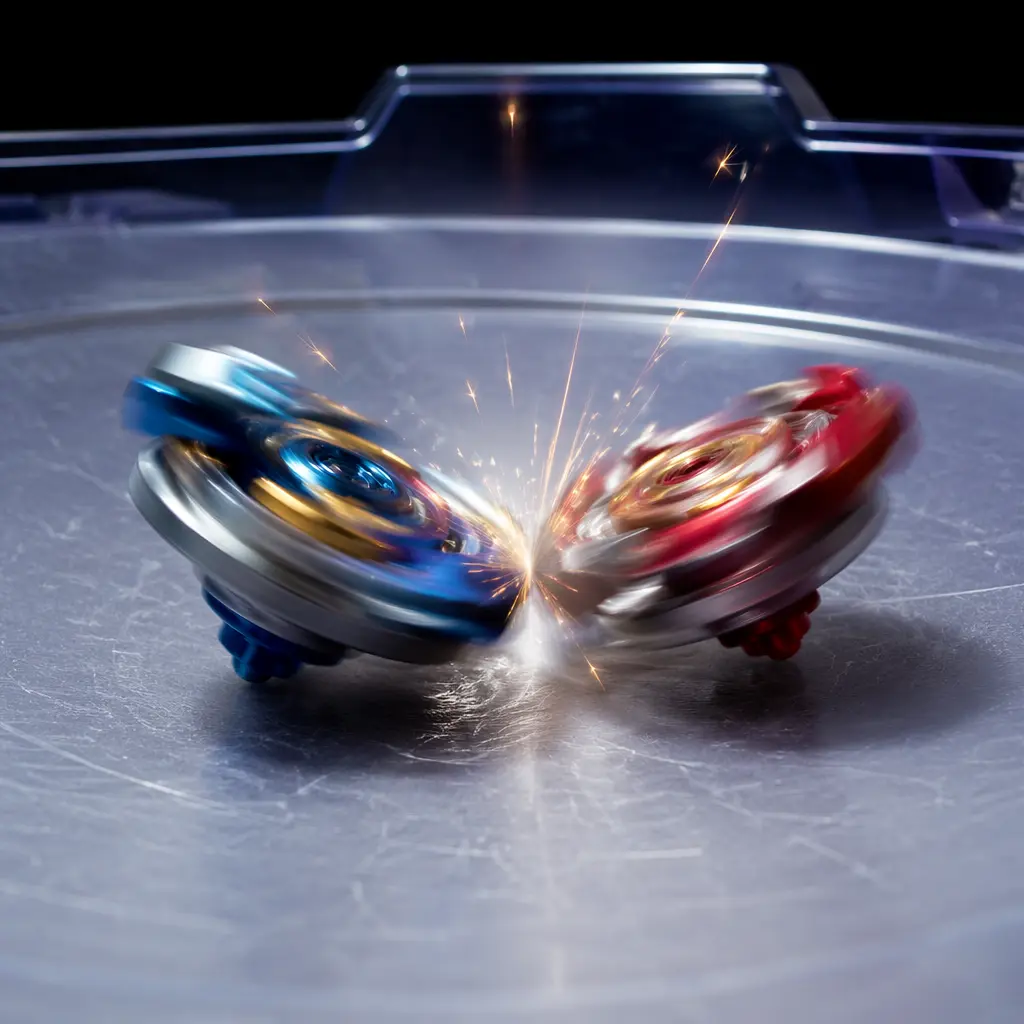
Beyblade looks simple at first glance: spinning tops launched into a bowl to see which one lasts longest. Yet for more than two decades it has held onto playgrounds, after‑school clubs and kitchen tables around the world. Its staying power comes from turning an ancient toy into a competitive system, complete with rules, custom parts and just enough chaos to make every match feel new.
Where it came from
Beyblade launched in 1999, developed in Japan by Takara (now Takara Tomy) and inspired by traditional spinning-top games that have existed across cultures for centuries. The modern twist was to formalise battles: tops weren’t just spun for fun, they were designed to collide, knock each other out of bounds, or outlast rivals.
An accompanying manga and animated series helped spread the idea globally in the early 2000s, but the core appeal wasn’t the story. It was the physical game. By giving kids a clear objective and gear they could tinker with, Beyblade transformed a timeless toy into something closer to a sport.
Why it works
At its heart, Beyblade is about physics you can feel. Weight, balance, friction and momentum all matter, even if players don’t use those words. A heavier top might hit harder, while a well-balanced one spins longer. Because outcomes aren’t fully predictable, skill and experimentation stay rewarding.
The design also invites ownership. Instead of a single fixed toy, each top is built from parts that can be mixed and matched. That makes play feel personal and encourages problem-solving rather than pure collecting.
- Modular parts that change performance
- Quick, repeatable battles that fit short play sessions
- A balance of skill, chance and strategy
- Clear win conditions that make matches decisive
Who it’s for
Beyblade is typically aimed at children around primary school age and up, when hand strength and coordination are enough to use launchers safely. That said, it has a notable adult following too. Older fans enjoy the engineering side, organised tournaments, or simply the nostalgia of revisiting a toy that once ruled the playground.
Variants and what to look for today
Over the years, Beyblade has gone through multiple generations, each refreshing the parts system and battle style while keeping the same core idea. Modern lines tend to focus on durability and safety, with enclosed tips and sturdier plastics compared with earlier metal-heavy designs.
If you’re shopping today, look for sets that include a proper arena, as battles are far more controlled and enjoyable than free-spinning on the floor. Starter sets are a sensible entry point, offering balanced parts rather than extremes. Be cautious of very cheap off-brand tops: inconsistent weights and poor moulding can lead to unpredictable breaks and rough play.
Frequently asked questions
Is Beyblade more about skill or luck?
It’s a mix of both. Launch technique and part selection matter, but collisions introduce randomness. That balance is part of the appeal, keeping beginners competitive while still rewarding practice.
Do you need lots of tops to enjoy it?
Not at all. Two tops and an arena are enough for regular play. Additional parts mainly expand experimentation rather than being essential.
Are modern Beyblades compatible with older ones?
Compatibility varies by generation. Many newer systems are designed to work within their own line, so mixing eras isn’t always possible without adapters.
Is it safe for younger children?
Most modern sets are designed with safety standards in mind, but small parts and fast movement mean adult supervision is recommended for younger players.
Beyblade’s real achievement is how little it needs to explain itself. Spin, clash, repeat. Behind that simplicity sits a clever system that keeps players curious and competitive. Whether discovered for the first time or rediscovered years later, it remains a rare example of a toy that turns motion itself into a lasting game.