Tyco Super Rebound: The RC car that turned crashes into play
Tyco's Super Rebound made radio-controlled cars feel less fragile by treating flips, rollovers, and wall hits as part of the experience. Its oversized tires and reversible design helped define 1990s RC play.
Compare prices and availability
Check current prices and availability for this guide on eBay.
As an eBay Partner, we may be compensated if you make a purchase.
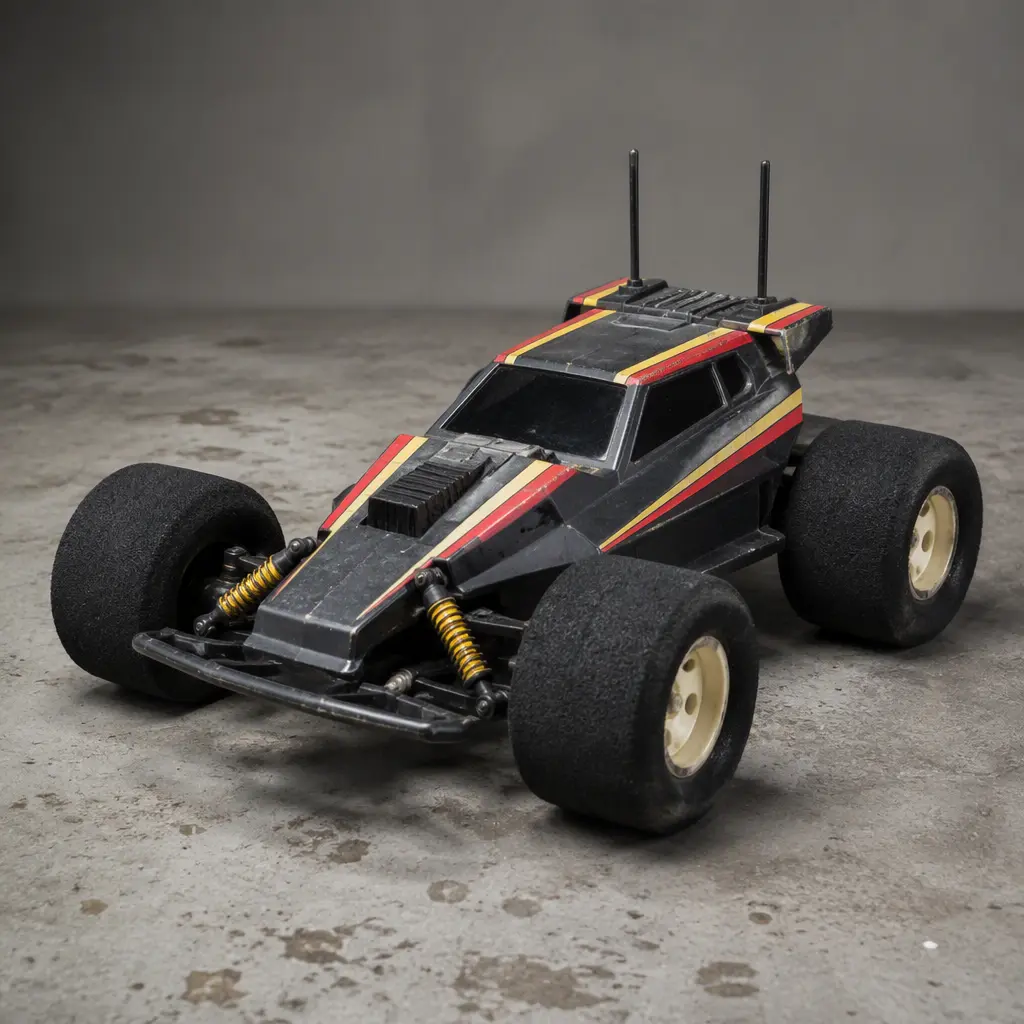
In the early 1990s, most toy-grade radio-controlled cars still treated crashes as failure. Thin wheels, low bodies, and basic steering meant one hard hit into a curb or couch leg could stop the fun quickly. Tyco's Super Rebound approached the category from the opposite direction. Instead of trying to avoid wipeouts, it made them part of the attraction. With huge tires, a cage-like body, and the ability to keep driving after flips and rollovers, the Super Rebound became one of the standout stunt RC toys of its era. It captured the rough-and-tumble energy of playground racing and helped shift expectations for what an RC toy could survive.
Where it came from
Released in 1991 during a boom period for consumer RC toys, the Tyco Super Rebound arrived when companies were competing to make radio-controlled vehicles feel faster, tougher, and more exciting indoors and outdoors. Tyco had already become a major name in toy RC products by offering approachable, battery-powered cars sold through department stores rather than hobby shops. The Super Rebound stood out because it focused less on precision driving and more on spectacle.
The vehicle's defining feature was its oversized foam-like tires and symmetrical design. The body sat protected between the wheels, allowing the car to tumble and continue moving even after landing upside down. That made it unusually forgiving for younger users and dramatically more entertaining for groups of kids experimenting with ramps, stair edges, and obstacle courses. At a time when many RC toys still borrowed their look from realistic race cars, the Super Rebound embraced exaggerated toy design. It looked built for chaos, and that identity became part of its appeal.
Why it works
The Super Rebound succeeded because it reduced the fear of making mistakes. Traditional RC driving could become frustrating for children who struggled with steering orientation or who constantly flipped lightweight vehicles. The Rebound transformed those moments into highlights. If it rolled over, it often kept going. If it hit furniture, the tires absorbed much of the impact. The toy rewarded experimentation instead of careful handling.
Its oversized wheels also changed how the vehicle moved through a room or across pavement. The tires acted almost like suspension, bouncing over cracks and obstacles while creating a visually dramatic driving style. Combined with fast acceleration for a toy-grade RC car of the time, the result felt energetic even in a small space. The controls were still simple enough for beginners, but the physical behavior of the vehicle made every run feel unpredictable in a fun way.
- Large oversized tires designed to absorb impacts and maintain traction
- Symmetrical body layout that allowed continued driving after flips
- Fast, bouncing movement that emphasized stunts over precision
- Durable cage-like structure that protected internal components
- Accessible controls aimed at younger RC beginners rather than hobby racers
Who it's for
Originally, the Super Rebound was aimed squarely at children who wanted excitement without the complexity of hobby-grade RC systems. Its forgiving design made it especially appealing for younger drivers still learning directional control. Today, nostalgia plays a major role in its audience. Adults who grew up during the 1990s often remember it as one of the first RC toys that felt genuinely indestructible. Collectors of classic electronic toys and retro RC vehicles continue to seek out surviving examples, especially complete sets with original controllers and battery covers.
Variants and what to look for today
Original Super Rebound vehicles from the early 1990s are now part toy collectible and part working electronic device, which means condition matters. Many surviving examples show heavy cosmetic wear because they were used exactly as intended. Scratched wheel surfaces, missing battery doors, cracked antenna housings, and weakened tire foam are common. Buyers interested in operating one should pay attention to corrosion in the battery compartment and whether the steering still responds consistently.
The influence of the Super Rebound can still be seen in modern stunt RC toys with reversible driving, rotating wheel systems, and oversized tires. Contemporary versions often use rechargeable batteries and lighter materials, but the basic play idea remains similar. When shopping today, it helps to distinguish between collectible vintage units and modern stunt vehicles inspired by the same concept.
- Look for intact battery compartments with minimal corrosion
- Check that the controller matches the vehicle generation
- Expect cosmetic scuffs because the toy was built for impacts
- Modern stunt RC cars may offer rechargeable batteries and easier parts replacement
- Avoid heavily modified vintage units if collectibility matters to you
Frequently asked questions
Was the Super Rebound considered hobby grade?
No. It was designed as a toy-grade RC vehicle sold through mainstream toy retailers. The focus was durability and excitement rather than tunable performance or competitive racing.
Could it really drive upside down?
That was one of its main attractions. The symmetrical design and giant tires allowed the vehicle to continue moving after flips, which made crashes part of normal play instead of a stopping point.
Why do people still remember it so clearly?
The Super Rebound arrived during a period when RC toys were becoming more energetic and personality-driven. Its loud movement, bouncing tires, and apparent toughness made it memorable in a way that more realistic RC cars often were not.
Are vintage examples difficult to maintain?
They can be. Battery corrosion, aging plastics, and worn electrical contacts are common issues with RC toys from the early 1990s. Some collectors restore them for display, while others search for working examples with original parts already intact.
The Tyco Super Rebound occupies an interesting place in toy history because it changed the emotional tone of RC play. Instead of asking kids to protect the toy from accidents, it encouraged them to test limits and enjoy the chaos. That simple shift helped make stunt-oriented RC vehicles a lasting category. Decades later, the core idea still shows up in modern designs, but for many players who grew up in the 1990s, the original remains the version that defined the experience.