Best STEM Toys for Preschoolers (Ages 3–5)
A parent-friendly guide to screen-free STEM toys for ages 3–5. Learn what features matter, how to match toys to development, and which play-based categories spark curiosity and confidence.
Compare prices and availability
Check current prices and availability for this guide on eBay.
As an eBay Partner, we may be compensated if you make a purchase.
For preschoolers, STEM learning works best when it feels like play. At ages 3–5, children are naturally curious about how things fit together, move, and change. The best STEM toys for this age group build early science, technology, engineering, and math skills without screens, lessons, or pressure—just hands-on exploration that fits short attention spans.
What to look for
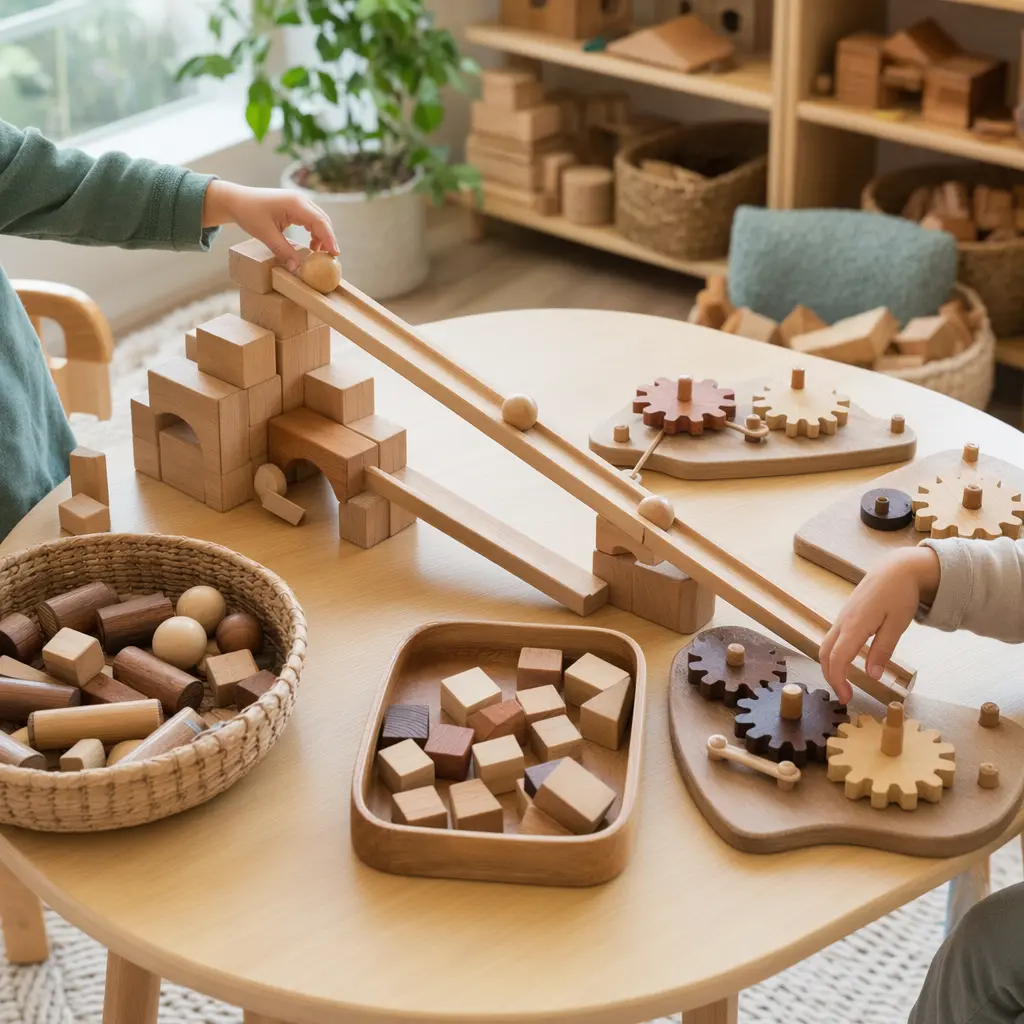
When choosing STEM toys for preschoolers, focus on how the toy invites play rather than what it promises to teach. At this stage, children learn through trial and error, repetition, and imagination. A good toy should grow with your child and allow multiple ways to play.
- Open-ended design: Toys that can be used in many ways encourage creativity and problem-solving.
- Hands-on interaction: Turning, stacking, pouring, and building support fine motor skills and early engineering thinking.
- Simple cause and effect: Actions should lead to clear, visible results, like pieces snapping together or objects rolling.
- Durable materials: Preschool play can be rough, so sturdy construction matters.
- No screens or batteries: Passive lights and sounds are fine, but the child should drive the play.
Age suitability
Ages 3–5 span a wide range of abilities. Younger preschoolers benefit from large pieces and simple concepts, such as stacking or matching. Older preschoolers may enjoy toys that add basic challenges like balancing, sorting by size or color, or building simple structures that stand up. Look for toys labeled for ages 3+ with room to scale up in complexity.
Standout categories or types
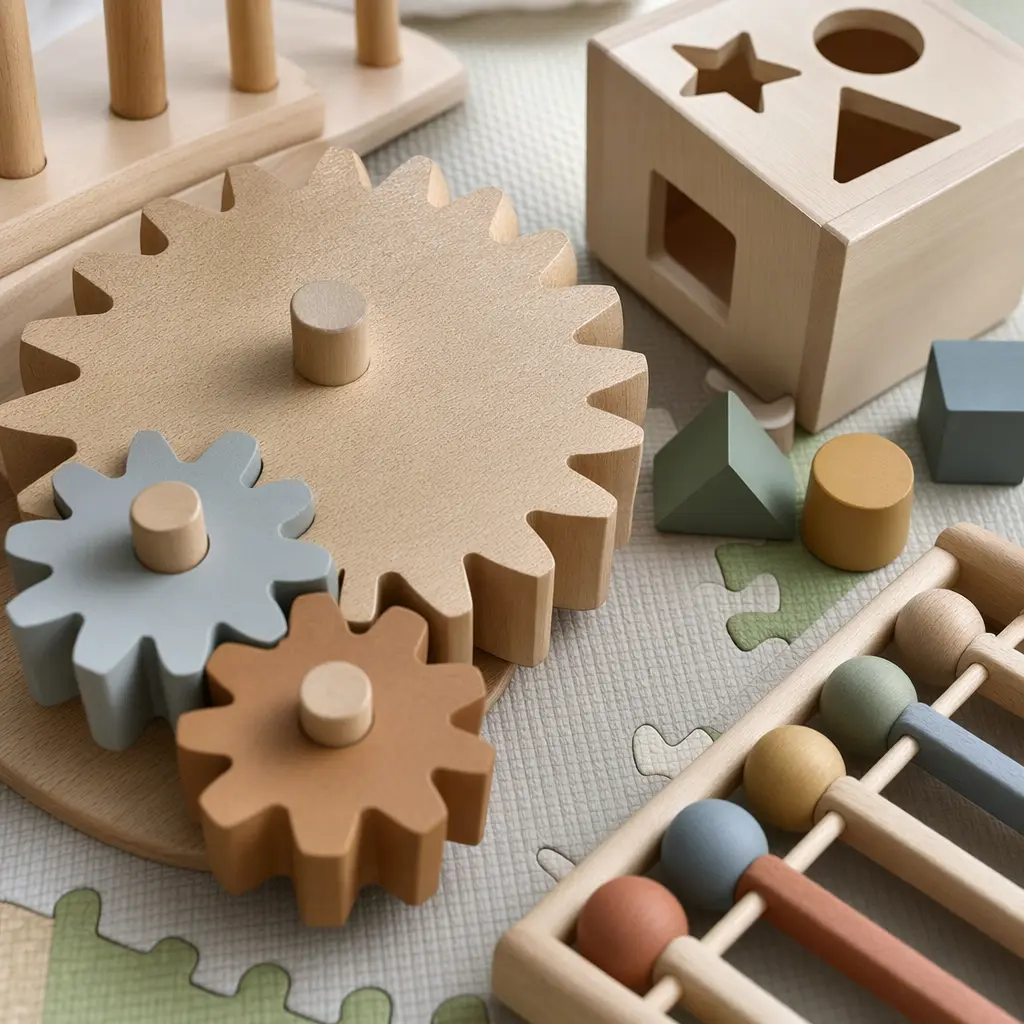
Screen-free STEM toys for preschoolers generally fall into a few reliable categories. Each supports different skills, and many families mix types to keep play fresh.
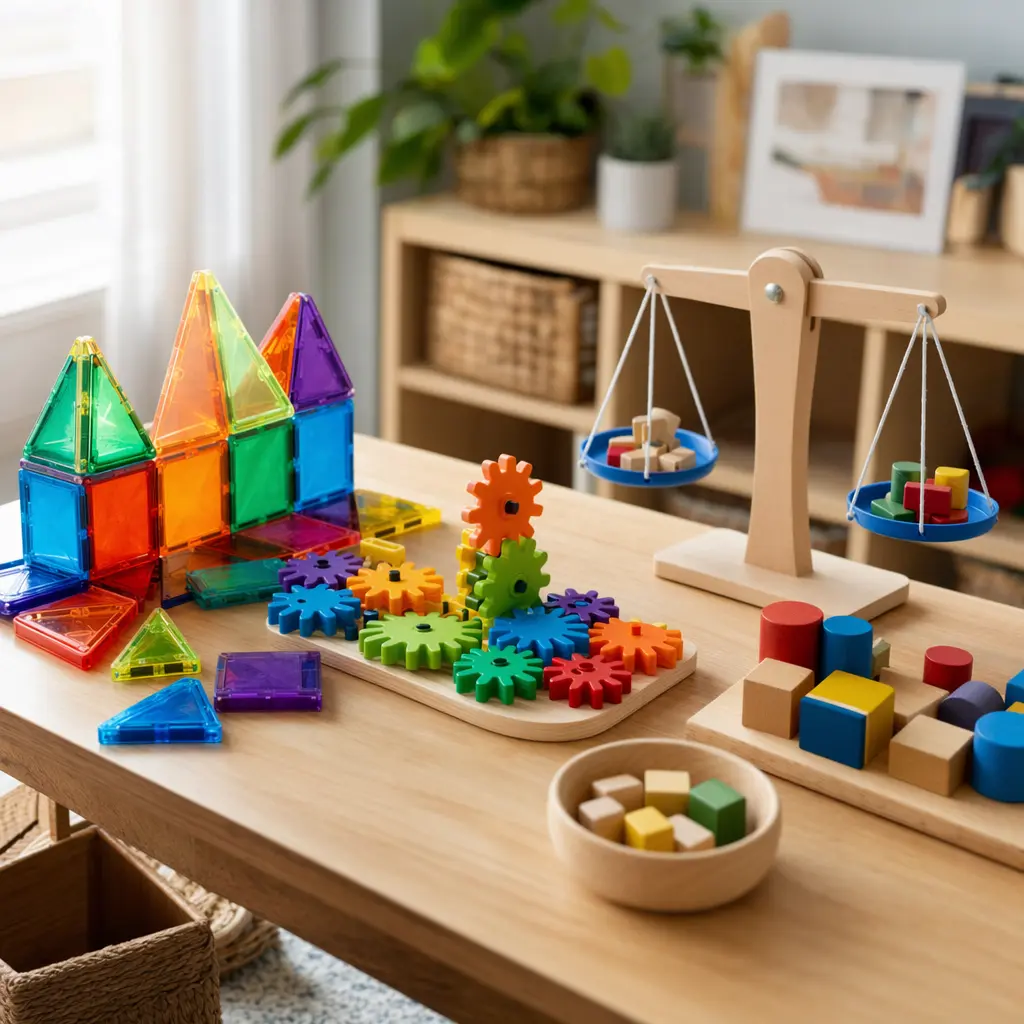
- Building and construction sets: Blocks, magnetic pieces, and interlocking parts build spatial awareness and early engineering skills.
- Simple machines and motion toys: Ramps, marble-style tracks with large balls, and gear boards introduce gravity, speed, and cause-and-effect.
- Early math manipulatives: Counting bears, balance scales, and sorting trays support number sense and pattern recognition.
- Science exploration kits: Magnifying tools, nature sorting sets, and water-play tools encourage observation and curiosity.
- Puzzles and logic games: Shape puzzles and matching games strengthen problem-solving without requiring reading.
Frequently asked questions
What makes a toy a STEM toy for preschoolers?
For this age group, STEM toys focus on exploration rather than formal instruction. If a toy encourages building, sorting, experimenting, or asking “what happens if,” it supports early STEM learning.
Are screen-free STEM toys really effective?
Yes. Hands-on play supports brain development, motor skills, and attention in ways screens cannot. Preschoolers learn best by touching, moving, and manipulating real objects.
How long should a preschooler play with a STEM toy?
Play sessions may be short—often 10 to 20 minutes—but repeated play over time is what matters. Toys that can be revisited in new ways tend to hold interest longer.
Do I need to teach or explain concepts while they play?
Not usually. Simple prompts like “What do you think will happen next?” are enough. Letting children lead builds confidence and independent thinking.
Can one toy cover multiple STEM skills?
Many open-ended toys do. For example, a building set can involve math (counting pieces), engineering (structure), and science (balance and gravity) all at once.
The best STEM toys for preschoolers don’t look like lessons. They look like inviting play opportunities that spark questions and experimentation. By choosing durable, open-ended, screen-free toys, you give young children a strong foundation for learning—one playful moment at a time.