3D Crystal Puzzle: The brainteaser built to stay on display
With translucent pieces and sculptural designs, 3D Crystal Puzzles turned tabletop brainteasers into decorative objects that appeal to both puzzle fans and casual collectors.
Compare prices and availability
Check current prices and availability for this guide on eBay.
As an eBay Partner, we may be compensated if you make a purchase.
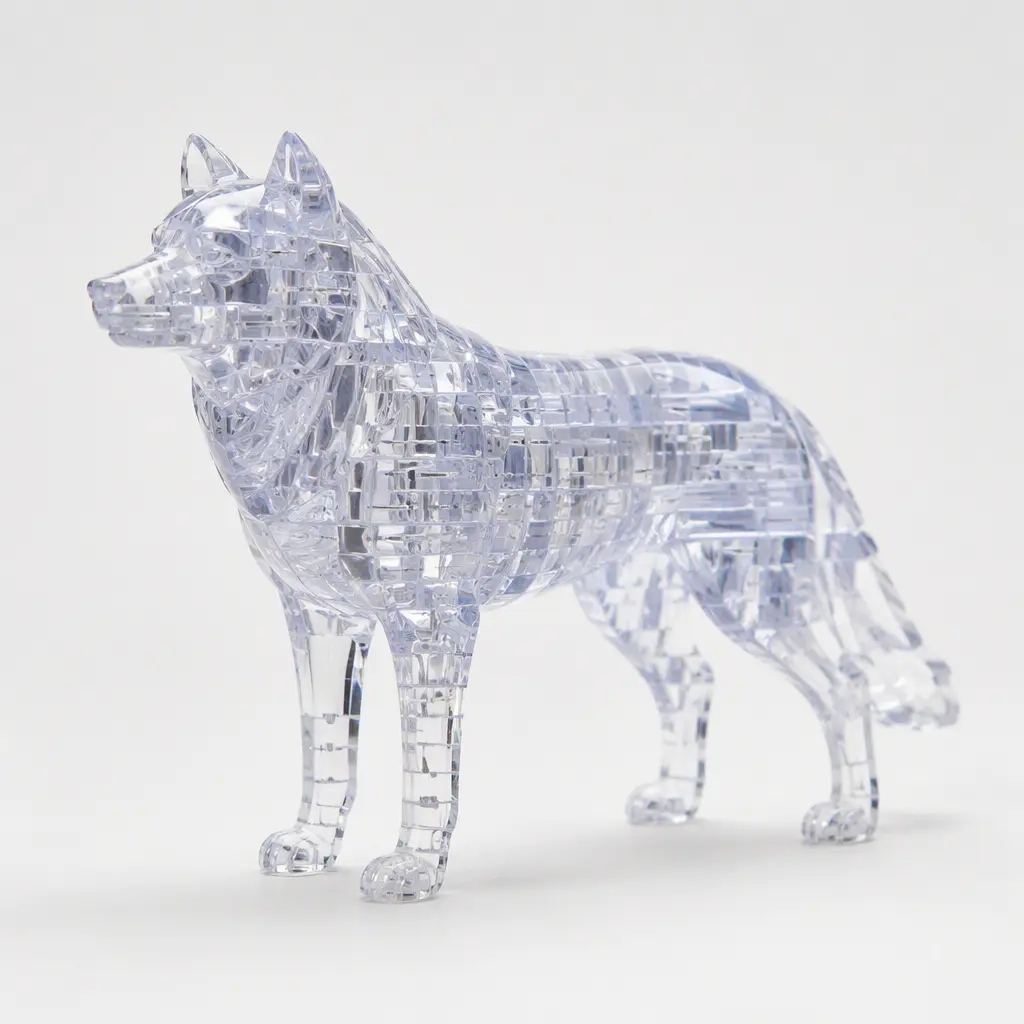
The 3D Crystal Puzzle arrived at a moment when puzzles were becoming more than rainy-day activities. With transparent plastic pieces, jewel-like finishes, and sculptural shapes ranging from animals to landmarks, these puzzles blended the logic of traditional jigsaws with the visual appeal of display collectibles. Once completed, they looked less like cardboard puzzles waiting to be boxed up and more like decorative objects meant to stay on a shelf or desk. That combination helped the format stand out in a crowded puzzle market during the late 2000s and early 2010s.
Where it came from
The modern wave of 3D Crystal Puzzles emerged around 2007, building on earlier ideas from mechanical burr puzzles and three-dimensional brainteasers. Instead of flat cardboard pieces that connected edge to edge, these puzzles used rigid interlocking plastic parts that stacked upward into complete objects. Early releases focused on recognizable forms such as swans, apples, dolphins, skulls, and towers. Their appeal came partly from novelty: they looked difficult, futuristic, and decorative all at once.
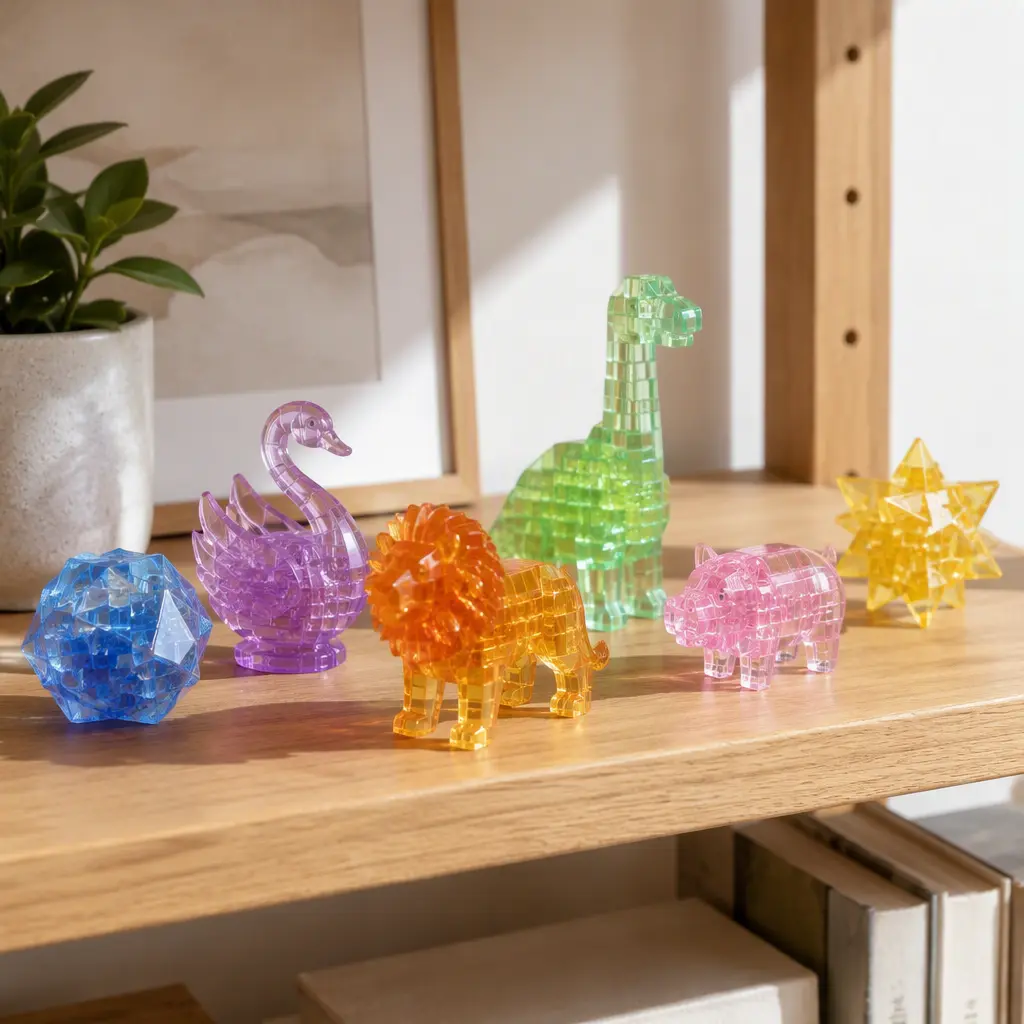
Toy and puzzle companies quickly recognized that the format attracted more than dedicated puzzle enthusiasts. Adults bought them as desk ornaments, teenagers treated them as collectible display pieces, and gift shoppers saw them as an activity that also became room decor. The translucent plastic was central to the identity of the toy family. Clear and tinted pieces reflected light in ways that ordinary puzzles never could, giving completed builds a crystal-like appearance despite being molded from lightweight plastic.
Why it works
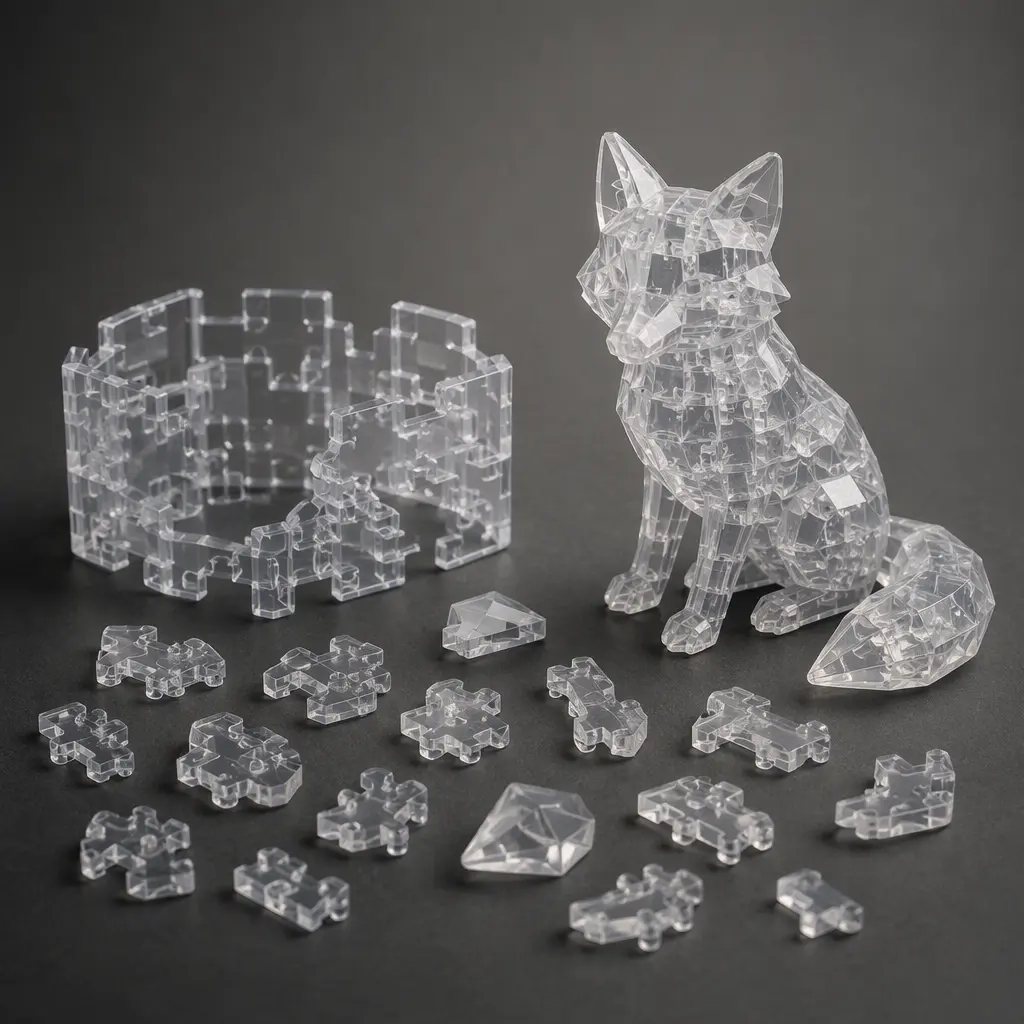
Traditional jigsaw puzzles rely heavily on image matching. A 3D Crystal Puzzle changes the challenge completely. Builders must pay attention to shape, orientation, and assembly order, often rotating pieces in space to understand how they lock together. Many sets include a central spine or internal structure hidden within the finished object, which gives the build a surprising architectural quality. The process can feel closer to constructing a model or solving a mechanical puzzle than finishing a standard jigsaw.
The visual payoff matters just as much as the challenge itself. Completed puzzles catch ambient light and create reflections that make even simple shapes appear more complex. That display quality encouraged repeat purchases because each new design added another object to a growing collection. Unlike many puzzles that return to storage after completion, these were designed to remain visible.
- Transparent or translucent plastic pieces create a glass-like appearance
- Three-dimensional assembly changes the problem-solving experience
- Compact finished builds work as shelf or desk decor
- Many designs combine hidden internal supports with outer shell pieces
- Wide variety of themes appeals to both kids and adults
Who it's for
Most 3D Crystal Puzzles are best suited to older children, teens, and adults rather than very young builders. The pieces can be small, the assembly sequence can be unforgiving, and some designs require careful handling to avoid disassembly during the final steps. Puzzle fans who enjoy spatial reasoning tend to appreciate the format most, but casual hobbyists are often drawn in by the decorative results. Adults who normally would not buy a traditional puzzle sometimes connect with these because they function as conversation pieces after completion.
Variants and what to look for today
The range of available designs has expanded dramatically since the format first became popular. Animal shapes remain common, but modern collections also include vehicles, seasonal decorations, fantasy-inspired forms, and famous architectural silhouettes. Some puzzles focus on symmetry and clean geometry, while others lean heavily into decorative detail. Piece counts vary widely, with simpler builds intended for beginners and more intricate models designed to challenge experienced puzzlers.
Material quality matters more than it might first appear. Better versions fit together securely without excessive force and maintain clarity without cloudy plastic or rough molding marks. Poorly made copies can frustrate builders because loose tolerances make assembly unstable. Buyers today should also pay attention to whether instructions are included. Some experienced fans enjoy solving entirely by observation, but many designs become unnecessarily difficult without a guide.
- Beginner-friendly animal or fruit shapes are often easier starting points
- Larger architectural or mechanical designs usually require more patience
- Clear, tinted, and color-gradient versions create different display effects
- Look for smooth-fitting pieces and sturdy locking connections
- Storage trays or resealable bags help keep small pieces organized between sessions
Frequently asked questions
Are 3D Crystal Puzzles difficult to solve?
Difficulty varies considerably by design and piece count. Simpler animal shapes can be approachable for beginners, while larger models may require careful planning and multiple attempts. The challenge comes more from spatial reasoning than from image matching.
Can you take them apart and rebuild them?
Yes. Most are designed for repeated assembly, although some completed builds lock together tightly enough that disassembly requires patience. Many owners rebuild them occasionally or swap completed models on display shelves.
Do they work as decorative objects?
That is one of the main reasons the toy family became popular. The translucent plastic catches light effectively, and the finished objects often resemble small sculptures or desk ornaments more than traditional puzzles.
Are they suitable for younger children?
They are generally better suited to older children and up due to small parts and the complexity of assembly. Younger kids may enjoy supervised building sessions, but most designs are intended for builders with patience and developed fine motor skills.
The 3D Crystal Puzzle succeeded because it crossed categories that rarely overlap cleanly. It was part brainteaser, part construction toy, and part display collectible. In a toy aisle filled with products designed for quick entertainment, these puzzles offered something slower and more tactile while still looking modern and stylish. Even years after their introduction, they remain recognizable for turning the simple idea of a puzzle into an object people actually want to leave out in the open.