The Ball Pit: How plastic spheres became sensory magic
From soft-play centres to living rooms, the ball pit turned simple plastic balls into a powerful tool for movement, confidence, and sensory joy.
Compare prices and availability
Check current prices and availability for this guide on eBay.
As an eBay Partner, we may be compensated if you make a purchase.
Few toys deliver such instant delight as the ball pit. One step (or tumble) into a sea of lightweight plastic balls and children instinctively kick, scoop, crawl, and laugh. There’s no storyline to learn and no right way to play — just movement, colour, and sensation. What began as a fixture of soft-play centres and fast-food play zones has quietly become a staple of modern homes, especially for babies and toddlers finding their bodies in space.
Where it came from
Ball pits didn’t arrive with a single inventor or patent. Instead, they evolved from broader ideas in physical therapy, playground design, and early-years education. Foam pits had long been used in gymnastics training to cushion falls and encourage fearless movement. The switch to hollow plastic balls made the concept lighter, cheaper, and far more accessible.
By the late 20th century, ball pits were firmly associated with soft-play centres and family entertainment venues. In the modern era, smaller, softer, home-friendly versions emerged, driven by parents looking for safe indoor ways to support gross motor development — especially in limited spaces.
Why it works
At its core, a ball pit works because it turns movement into a full-body sensory experience. The balls shift under weight, offering resistance without hardness. That instability encourages balance, core strength, and coordination, while the visual chaos of colour keeps young brains engaged.
Unlike many toys, ball pits scale naturally with a child’s development. A baby may sit and feel the balls against their legs. A toddler might crawl, throw, and bury toys. Older children invent games — sorting colours, diving, or pretending the pit is lava or the sea.
- Provides gentle resistance for muscles without impact
- Supports sensory processing through touch and movement
- Encourages independent, open-ended play
- Works indoors with minimal setup
- Invites both calm exploration and energetic activity
Who it's for
Ball pits are most commonly used from around six months through early childhood, depending on the design. Babies benefit from supported sitting and tactile exploration, while toddlers and preschoolers get the most out of active play. There’s also quiet adult appeal: therapists use ball pits in sensory integration work, and many parents admit the temptation to kick off shoes and step in themselves.
Variants and what to look for today
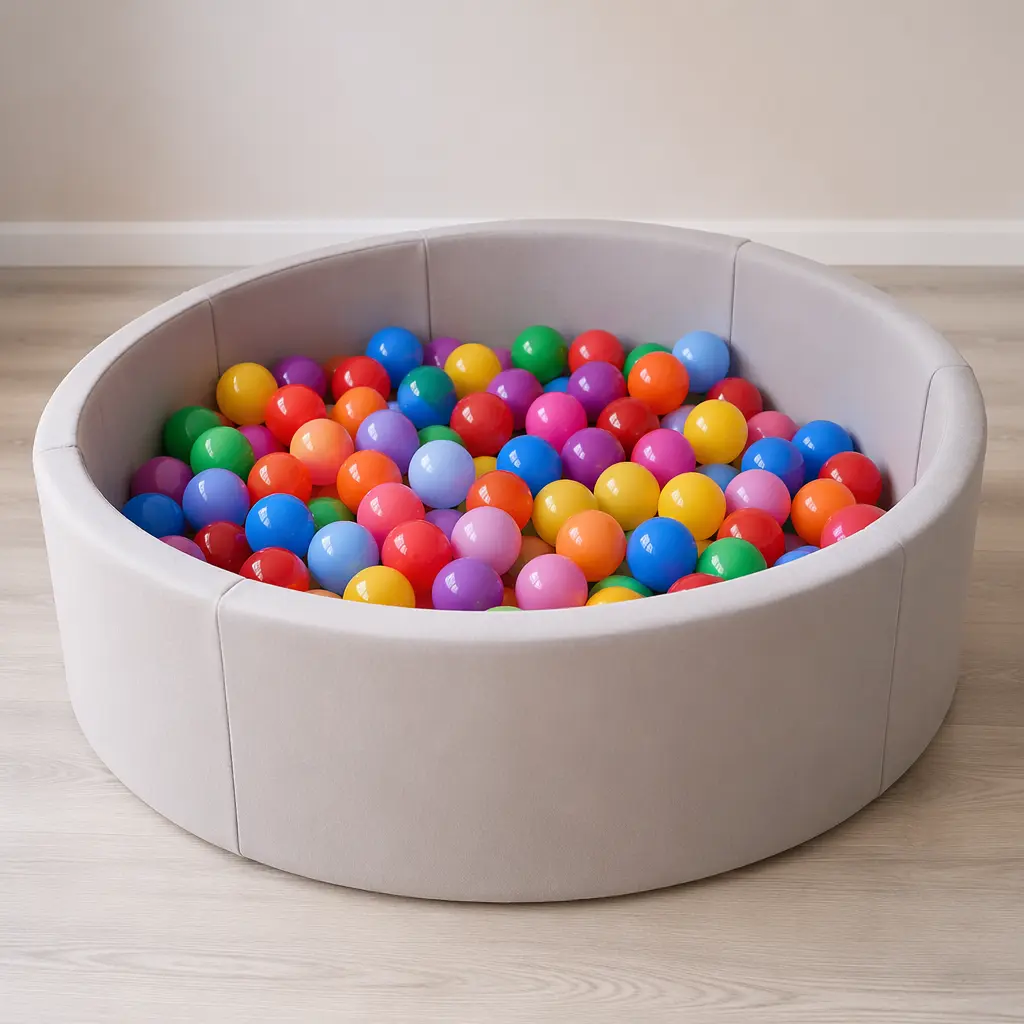
Modern ball pits come in a surprising range of styles. Soft-sided foam pits are popular for younger children, offering structure with padded edges. Pop-up fabric pits fold flat for storage and travel. Some sets integrate tunnels or small tents, extending play without changing the basic idea.
When choosing one today, focus less on novelty and more on fundamentals. The quality of the balls matters: they should be lightweight but resilient enough not to collapse under pressure. Neutral or muted colour palettes are increasingly common for parents who want the pit to blend into living spaces, while classic brights remain favourites for visual stimulation.
Frequently asked questions
Is a ball pit safe for babies?
With supervision and an age-appropriate design, yes. Babies should be able to sit with support, and pits should have soft sides and properly sized balls. It’s not a sleep or containment device, but a supervised play space.
How many balls do you need?
Enough to allow movement without fully burying a child. Most home pits are designed for partial coverage, letting legs and hands push through the balls rather than disappear beneath them.
Are ball pits just for energetic play?
Not at all. Many children use them as calming spaces, sitting quietly and running balls through their fingers. The same toy can energise or soothe, depending on the child and the moment.
Do ball pits get dirty quickly?
They can, especially on the floor. The good news is that plastic balls are easy to wipe or wash in batches, and fabric pits often have removable covers.
The genius of the ball pit lies in its simplicity. No batteries, no instructions, no screens — just a space that invites children to move, explore, and feel confident in their bodies. In a modern world crowded with clever toys, the ball pit remains a reminder that sometimes the most joyful play comes from the simplest ideas.