Battat Take-A-Part Vehicles and the Preschool Builder Boom
Battat’s Take-A-Part Vehicles turned toy drills and rebuildable machines into a hands-on preschool hit, blending pretend construction play with simple engineering concepts and repeatable problem-solving.
Compare prices and availability
Check current prices and availability for this guide on eBay.
As an eBay Partner, we may be compensated if you make a purchase.
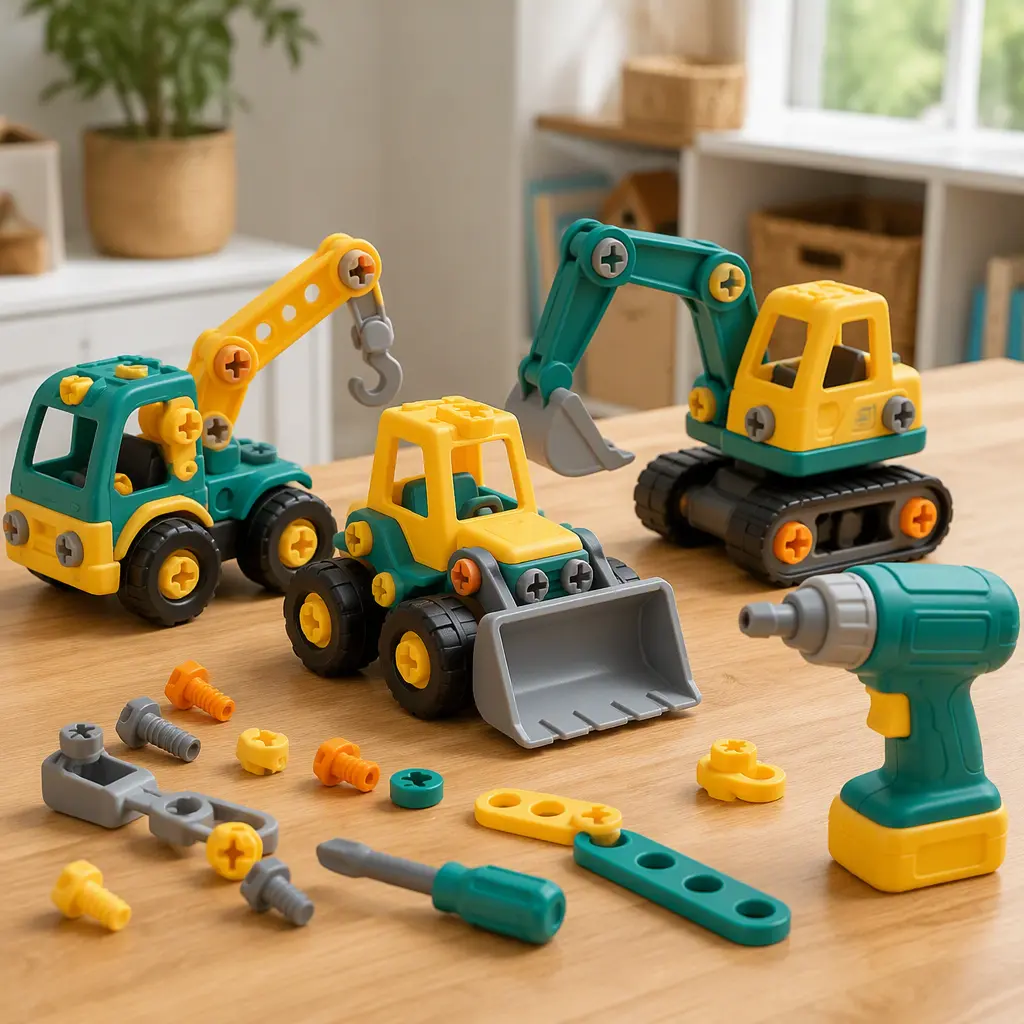
Few preschool toy trends have been as durable as the take-apart vehicle category. The appeal is easy to understand: children get the satisfaction of building and rebuilding while still ending up with something recognizable, like a dump truck, bulldozer, or race car. Battat’s Take-A-Part Vehicles arrived during a broader wave of STEM-inspired preschool toys in the mid-2010s, but the line stood out because it translated basic mechanical play into something approachable for very young children. Instead of tiny parts or complicated instructions, these toys used oversized screws, simple assemblies, and kid-safe battery-powered drills designed around repetition and discovery.
Where it came from
Battat is a long-running family-owned toy company with roots stretching back more than a century, though many modern parents know the brand through educational and developmental toys sold in large retail chains. By the mid-2010s, the toy industry was deep into a STEM and maker-inspired phase. Parents were increasingly interested in toys that encouraged hands-on learning, but many products aimed at engineering concepts skewed older and relied heavily on instruction-following.
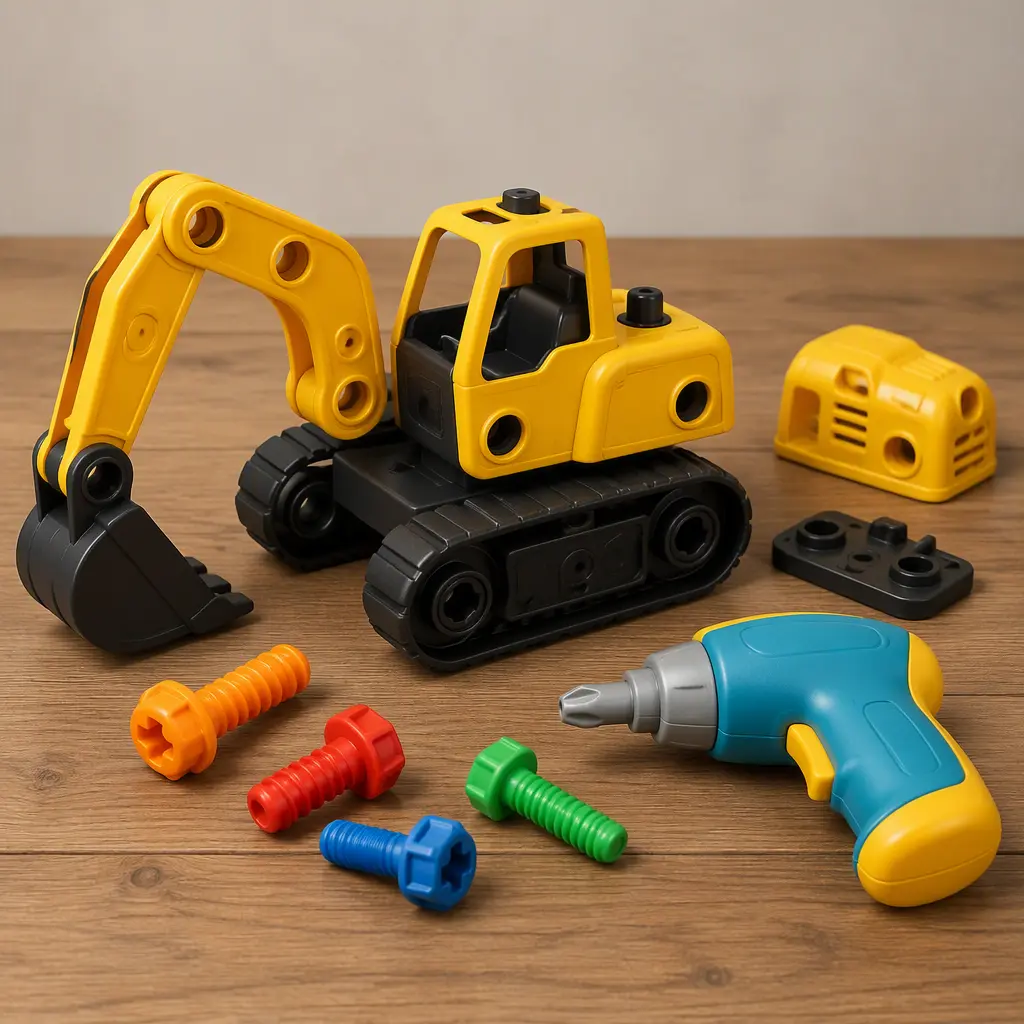
The Take-A-Part Vehicles line, introduced around 2016, simplified those ideas for preschoolers. Instead of teaching formal engineering principles, the toys focused on mechanical cause and effect. Children could unscrew wheels, lift apart body panels, and reassemble parts using a low-speed plastic drill built for small hands. The vehicles themselves borrowed familiar real-world forms from construction sites, emergency vehicles, and transportation themes, giving kids a clear play pattern before and after the building process. That balance between structured assembly and open-ended pretend play helped the category expand quickly.
Why it works
The core idea behind the toys is surprisingly effective because it combines several developmental milestones into one activity. Young children enjoy repetition, and the act of fastening and loosening chunky screws creates a predictable loop with visible results. The drill makes noise and movement without introducing genuine risk, while the oversized components reduce frustration. Children are not simply stacking blocks; they are manipulating systems that resemble real mechanical objects.
There is also a strong sense of ownership built into rebuildable toys. A child who takes apart a truck and successfully puts it back together experiences a basic form of problem-solving that feels meaningful. Unlike many electronic preschool toys that direct play through lights and sounds, take-apart vehicles encourage experimentation. A child may rebuild the toy incorrectly, discover a wheel does not spin properly, and try again. That trial-and-error loop is a large part of the category’s staying power.
- Chunky screws and parts sized for preschool hands
- Battery-powered toy drill with gentle, low-speed operation
- Simple mechanical systems that encourage repetition
- Vehicles recognizable enough for pretend-play storytelling
- Bright colors and durable plastics designed for frequent rebuilding
Who it's for
Most take-apart vehicle sets are aimed at children roughly three years and older, largely because of removable components and the coordination needed to use the drill and screws effectively. The sweet spot is often preschool and early kindergarten ages, when children are eager to imitate adult tools and machinery. The toys also appeal to adults for practical reasons: they are interactive without relying heavily on screens, and they encourage independent play once a child understands the assembly pattern. Some families use them cooperatively, with adults naming parts or demonstrating how reversing the drill changes the direction of the screws.
Variants and what to look for today
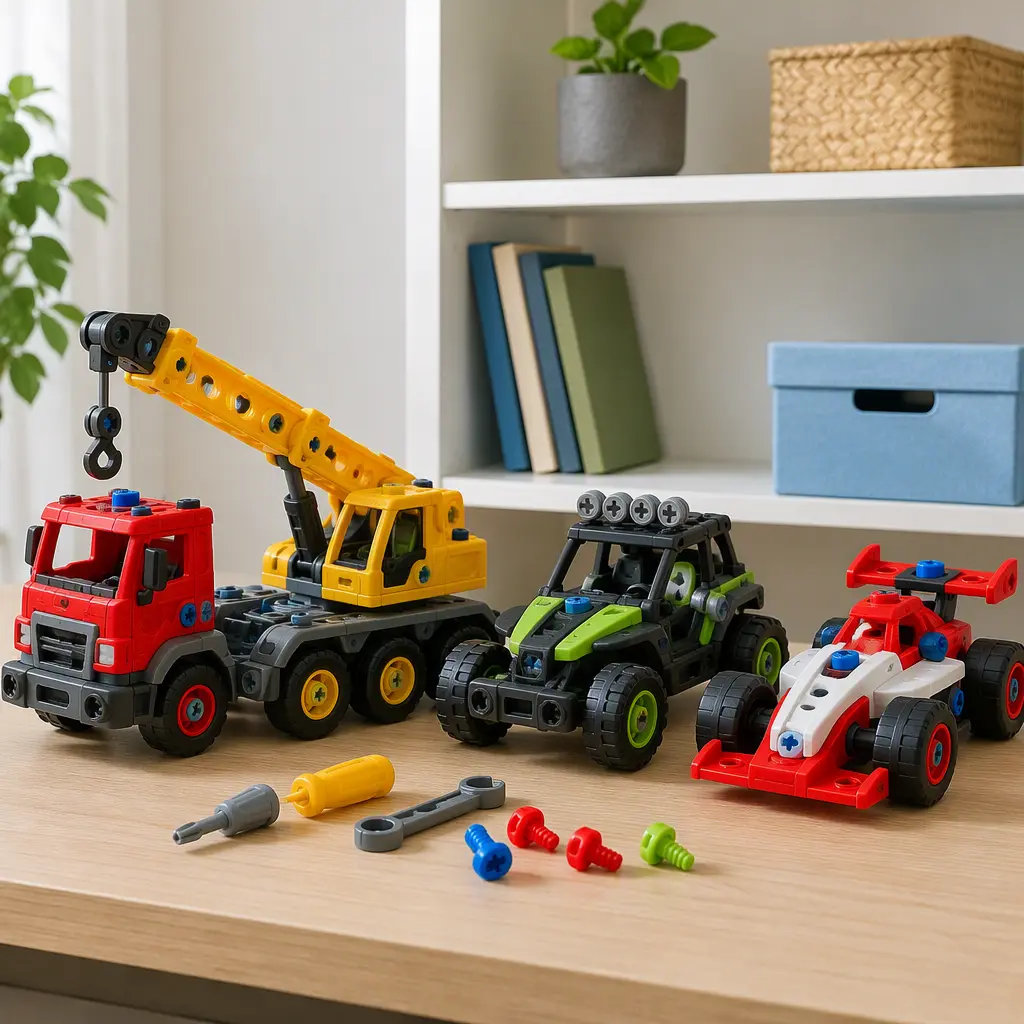
The category has expanded well beyond the original construction-truck concept. Today, shoppers can find take-apart race cars, airplanes, rescue vehicles, dinosaurs with mechanical joints, and combination tool benches that use similar screw-and-drill systems. Battat’s versions generally remain focused on approachable preschool design rather than highly detailed realism, which is part of their broad appeal.
When shopping today, the most important differences are usually durability, part size, and ease of reassembly. Some lower-cost versions use brittle plastics or screws that strip quickly after repeated use. Parents may also notice that certain sets prioritize appearance over functionality, making it difficult for children to align pieces independently. Simpler is often better for younger builders.
- Look for rounded edges and thick plastic components
- Check whether replacement screws or extra parts are included
- Choose sets with fewer pieces for younger preschoolers
- Consider vehicle themes your child already recognizes
- Avoid sets with overly tiny connectors or fragile decorative pieces
Frequently asked questions
Are toy drills in these sets actually powered?
Most versions use small battery-powered drills that rotate slowly and stop easily when resistance increases. They are designed to mimic the experience of a real tool without generating significant force.
Do children need instructions to use take-apart vehicles?
Many preschoolers learn through experimentation rather than step-by-step instructions. Some sets include simple diagrams, but the toys are generally designed so children can figure out assembly patterns through trial and error.
Are these toys educational or mainly pretend play?
They sit somewhere in between. The toys encourage fine motor coordination, sequencing, spatial awareness, and basic mechanical reasoning while still functioning as imaginative play vehicles once assembled.
Why did rebuildable preschool toys become so popular?
The rise of STEM-focused marketing played a role, but the category also matched broader parent interest in tactile, screen-light activities. Rebuildable toys offered an accessible way to introduce tool use and problem-solving without requiring advanced reading skills or complicated kits.
Battat’s Take-A-Part Vehicles succeeded because they understood something simple about preschool play: children enjoy feeling capable. The toys turn ordinary actions like unscrewing a bolt or rebuilding a truck into repeatable accomplishments. That sense of mastery, combined with durable designs and familiar vehicle themes, helped the category become a lasting part of the modern preschool toy aisle rather than a short-lived STEM fad.