Bed Bugs: The bug-grabbing game built for 1980s chaos
Released during the high-energy toy boom of the 1980s, Bed Bugs turned frantic bug-catching into a noisy tabletop race that still stands out for its simple mechanics and memorable physical play.
Compare prices and availability
Check current prices and availability for this guide on eBay.
As an eBay Partner, we may be compensated if you make a purchase.
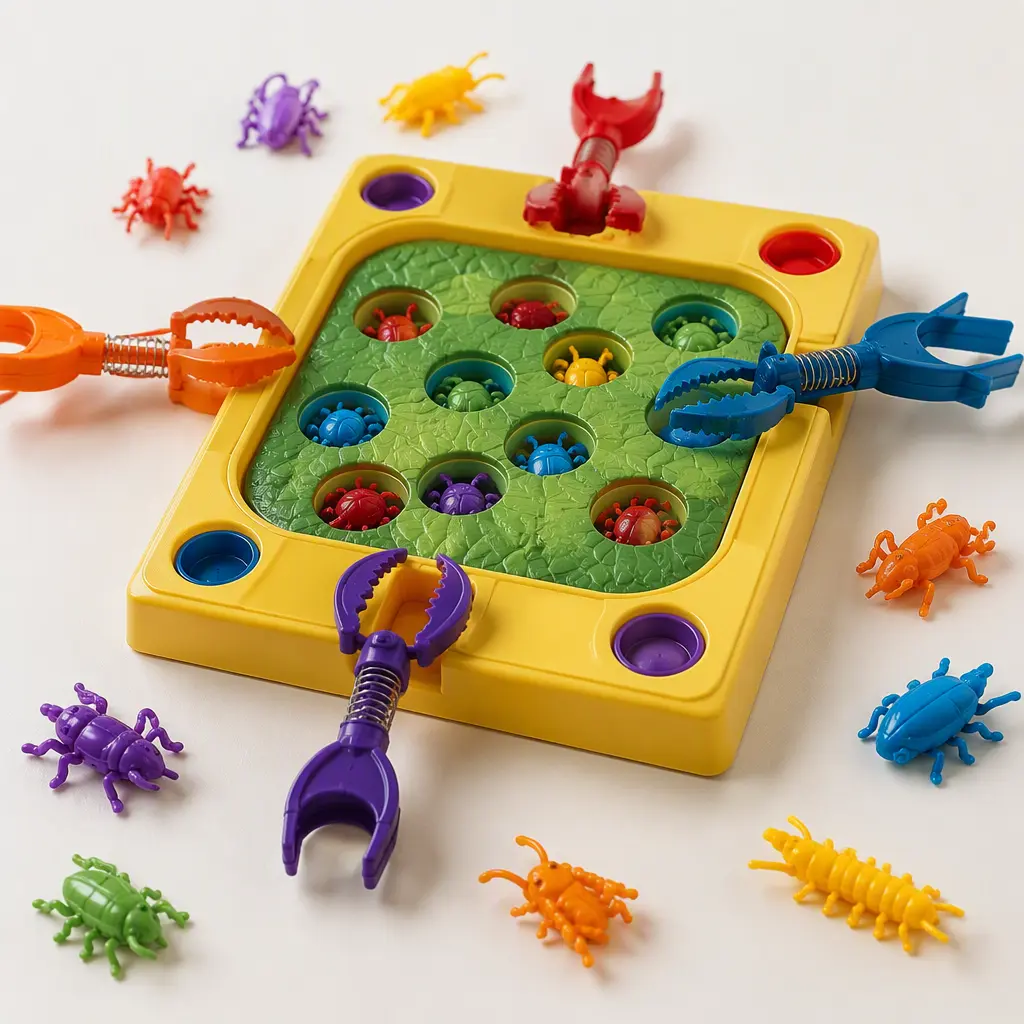
Few tabletop games capture the loud, fast-moving energy of the mid-1980s quite like Bed Bugs. The premise was simple: plastic bugs scattered across a vibrating game surface while players raced to grab them before anyone else could. That straightforward idea became a memorable living-room spectacle because it mixed toy-like action with the competitiveness of a party game. Children did not need complicated rules or long setup times. The game worked almost immediately, creating the kind of noisy excitement that defined many family games of the era.
Where it came from
Bed Bugs arrived during a period when toy companies increasingly leaned into motion, noise, and physical interaction. By the mid-1980s, battery-powered tabletop games were becoming common, especially games that turned simple actions into fast-paced competitions. The idea behind Bed Bugs was easy for children to understand and easy for parents to demonstrate in seconds: turn the game on and catch as many bugs as possible.
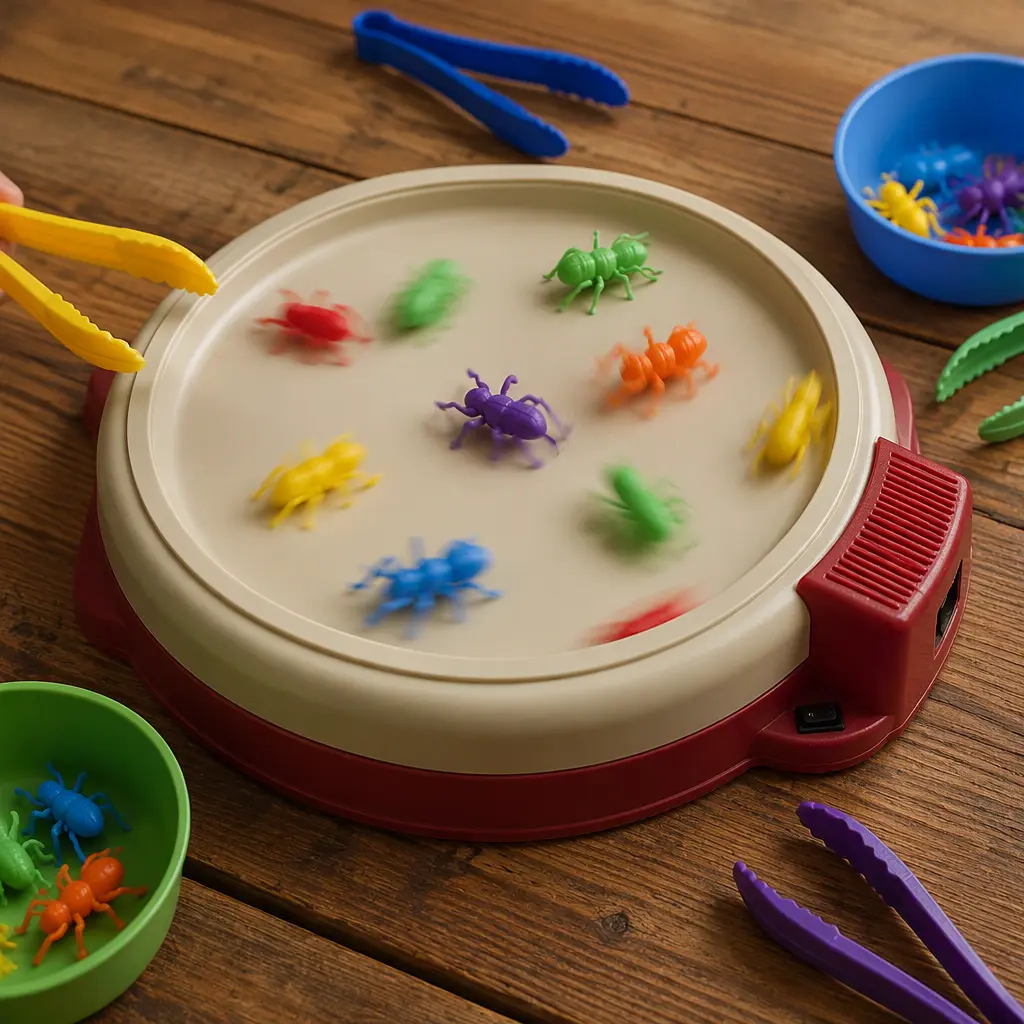
The game reflected a larger trend in 1980s toy design. Instead of relying on strategy or storytelling, many successful toys focused on immediate reactions and exaggerated sensory feedback. Buzzing motors, shaking surfaces, bright molded plastic, and oversized game pieces all helped products stand out on toy-store shelves and television commercials. Bed Bugs fit naturally into that environment. Its vibrating play surface transformed otherwise ordinary plastic pieces into unpredictable moving targets, giving the game an energy that felt larger than its relatively small footprint.
Why it works
The central mechanic is surprisingly effective because it combines randomness with physical skill. Once the bugs begin moving, players must react quickly while adjusting to the unpredictable motion created by the vibrating surface. Younger children can still participate because success depends less on memorized rules and more on timing, coordination, and persistence. Adults often remember the game fondly because the action becomes chaotic almost instantly, especially with several players competing at once.
Another reason the game endured in memory is its tactile design. The bugs were intentionally oversized and colorful, making them easy to recognize and satisfying to collect. The grabbing tools added a toy-like element that separated Bed Bugs from traditional board games built around cards or dice. Even players waiting for a turn could watch the bugs skitter around unpredictably, which kept attention focused on the center of the table.
- Fast setup with minimal rules
- Physical gameplay instead of trivia or strategy
- Bright oversized pieces designed for younger players
- Motorized movement that changes every round
- Short play sessions that encourage repeat games
Who it's for
Bed Bugs was designed primarily for younger children and families, especially households looking for games that worked across a wide age range. Because the rules are so direct, children can usually join in without much explanation. The game also appeals to adults who grew up during the 1980s toy boom and remember the era's preference for loud, energetic products that emphasized movement over careful planning. Today, vintage collectors often see Bed Bugs as a good example of how toy companies blended simple electronics with traditional tabletop play before video games fully dominated family entertainment.

Variants and what to look for today
Original 1980s editions remain the versions most collectors recognize, though later reissues and similar bug-catching games have appeared over the years. Because the concept is mechanically simple, many toy makers produced games inspired by the same style of frantic object-grabbing gameplay. Some modern versions use improved motors or quieter construction, while others lean into nostalgia with retro-inspired colors and packaging.
Anyone shopping for a vintage copy today should pay close attention to completeness and condition. Games from this period often lost smaller accessories over time, especially lightweight plastic pieces that could easily disappear under furniture or into toy bins. Battery compartments are another important area to inspect, since older electronic toys may show corrosion from stored batteries.
- Check that all bug pieces and grabbing tools are included
- Look for clean battery compartments in older sets
- Test the vibration mechanism if buying secondhand
- Modern reissues may use different materials or colors
- Avoid heavily damaged sets with cracked plastic around moving parts
Frequently asked questions
Was Bed Bugs considered a board game or an action toy?
It sat somewhere between the two categories. The game had structured rules and competitive scoring, but the physical grabbing mechanic and vibrating motion made it feel closer to an activity toy than a traditional board game.
Why do people remember the game so vividly?
The combination of noise, movement, and direct competition created memorable moments very quickly. Many 1980s games aimed for that immediate excitement, but Bed Bugs stood out because the entire table became active once the motor started running.
Are vintage copies still playable?
Many are, provided the motor still works and the plastic components remain intact. Since the gameplay itself is mechanically straightforward, a complete set in good condition can still deliver nearly the same experience decades later.
Do modern games use similar mechanics?
Yes. Many contemporary children's games still rely on vibrating surfaces, quick grabbing actions, or moving targets. Bed Bugs helped popularize a style of tabletop play centered on reflexes and physical interaction rather than long-term strategy.
Bed Bugs remains a vivid example of how 1980s toy makers approached family entertainment: fast, colorful, noisy, and immediately understandable. It did not require deep strategy or collectible expansions to make an impression. Instead, it succeeded through movement, unpredictability, and the simple satisfaction of trying to catch something before everyone else could. Decades later, that formula still feels unmistakably tied to the era that produced it.