Castle Grayskull: The fantasy fortress that ruled 1980s playrooms
Castle Grayskull turned action figures into sprawling fantasy adventures with trap doors, secret chambers, and a design built for long-form storytelling in 1980s bedrooms.
Compare prices and availability
Check current prices and availability for this guide on eBay.
As an eBay Partner, we may be compensated if you make a purchase.
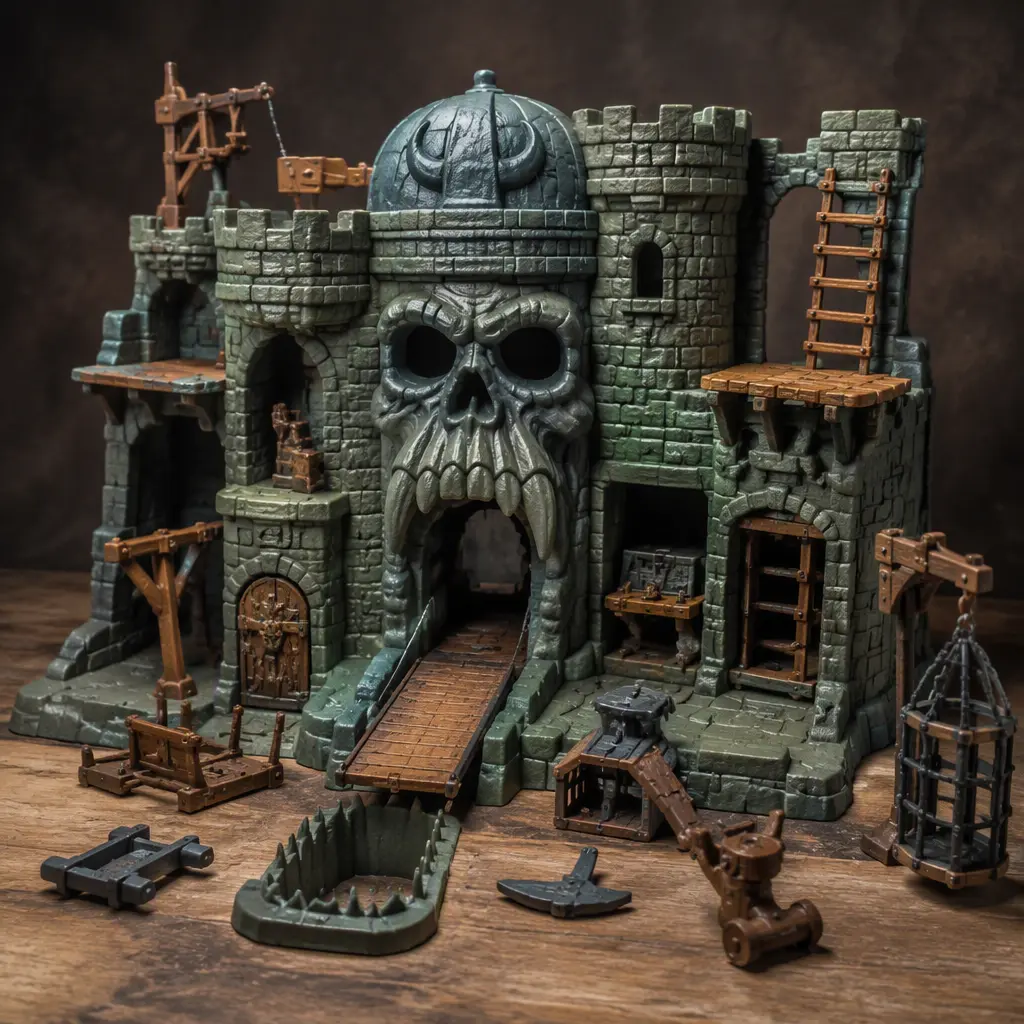
Few toy playsets from the 1980s took over a bedroom quite like Castle Grayskull. Designed as the central fortress for fantasy action-figure adventures, the massive fold-open castle became both a backdrop and a storytelling machine. Kids could stage battles across ramps, trap doors, hidden chambers, and towers while inventing their own mythology around heroes, monsters, and magical relics. Even people who never owned one often remember its distinctive skull-like façade and oversized presence on toy-store shelves.
Where it came from
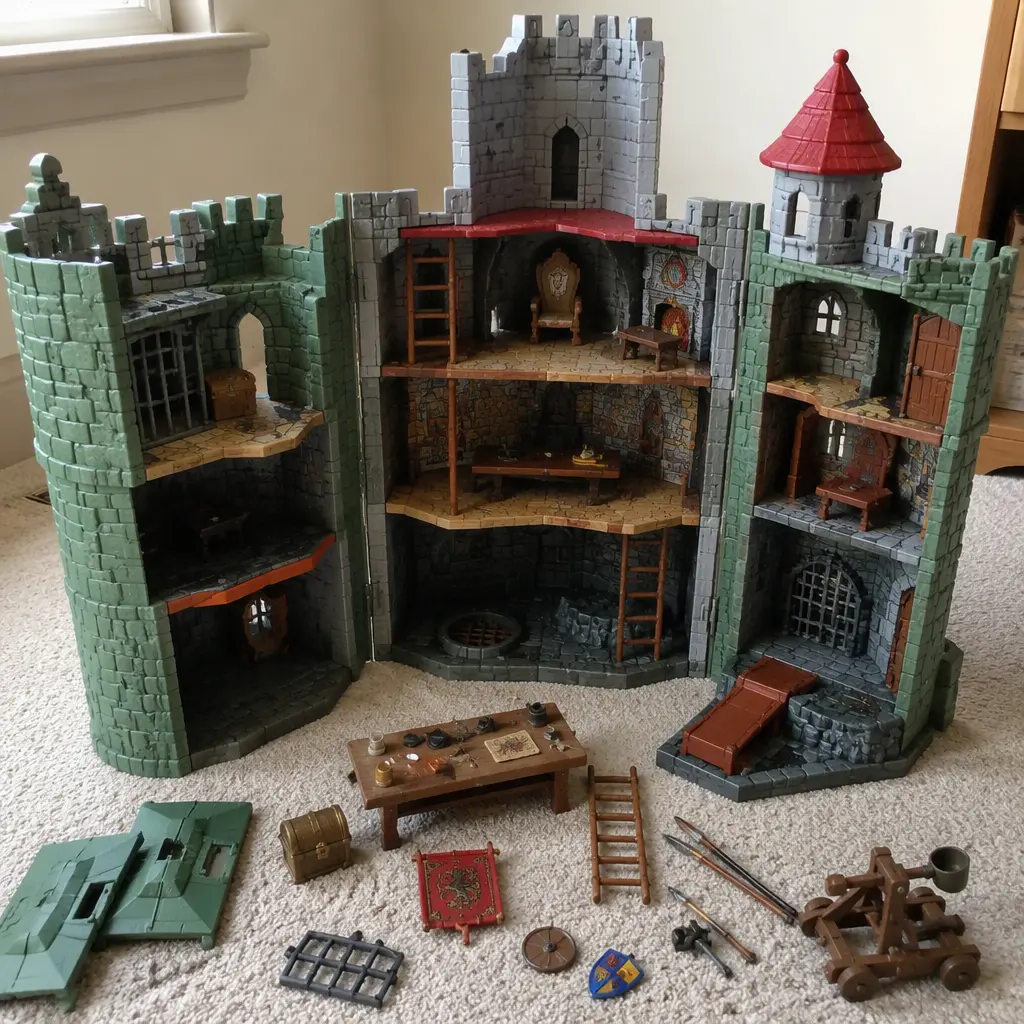
Castle Grayskull arrived in 1982 as part of the original Masters of the Universe toy line. Mattel needed a flagship environment that could anchor its muscular fantasy heroes and villains, giving children a place where battles and quests could unfold. The result was a compact but visually dramatic fortress that folded open like a carrying case, balancing shelf presence with practical storage.
The design mixed science fiction, barbarian fantasy, and horror-inspired imagery in a way that felt unusual for mainstream toys at the time. The castle’s skull-shaped front entrance gave it an instantly recognizable silhouette, while the interior packed in mechanical play features that encouraged movement and surprise. Importantly, it was not tied to a single scripted story. Children could imagine it as a fortress, prison, magical temple, or final battleground depending on whichever action figures happened to be nearby.
Why it works
Castle Grayskull succeeded because it transformed action figures from collectibles into actors on a stage. A good playset gives toys context, and this one offered multiple layers of conflict and exploration in a relatively compact footprint. The opening jaw-like entrance, hidden weapons rack, elevator, and trap door encouraged children to create missions rather than simply pose figures in static scenes.
Its layout also rewarded repeat play. Unlike vehicles that focused on one action or movement, the castle supported long sessions where alliances changed, heroes escaped dungeons, and villains launched attacks from towers. The fortress became a flexible setting that adapted to whatever characters or stories a child invented that day.
- Fold-open design that doubled as storage and display
- Trap doors, ladders, and hidden rooms that encouraged storytelling
- Large central space sized for multiple action figures at once
- Stone-textured sculpting that made the environment feel dramatic
- Fantasy-horror visual design that stood out from brighter toy lines of the era
Who it's for
Originally aimed at children in the early elementary-school years, Castle Grayskull also developed a strong following among older kids who enjoyed building fantasy worlds around their figures. Today, it appeals to several groups at once: nostalgic collectors, parents introducing classic toy design to their children, and younger fans who still respond to physical play environments. Unlike screen-based entertainment, a large playset asks children to invent pacing, dialogue, and outcomes on their own. Adult collectors often value it less as a simple toy and more as a symbol of an era when action-figure lines were built around imaginative world-building rather than constant media tie-ins.
Variants and what to look for today
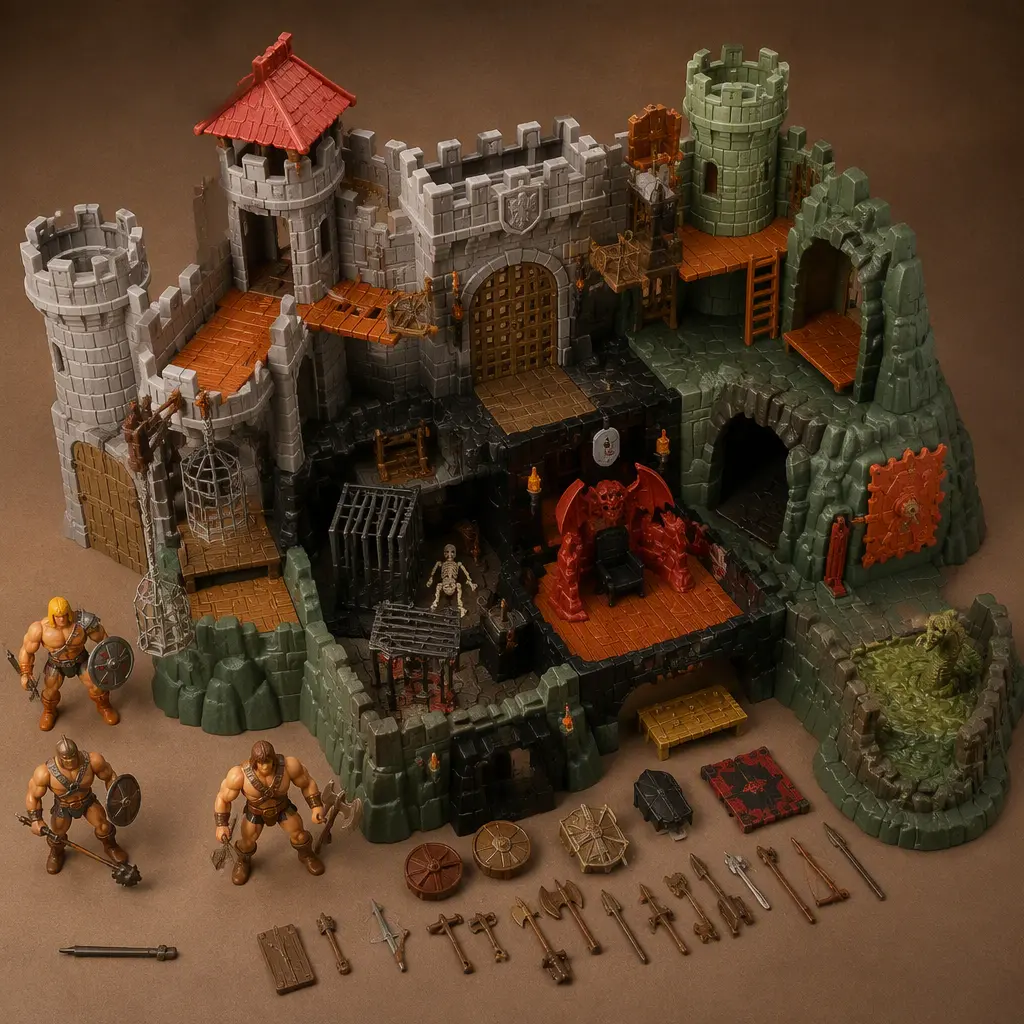
Original 1980s Castle Grayskull sets remain highly collectible, especially examples with intact accessories and minimal wear to hinges or interior parts. Because many playsets were heavily used, complete versions with all ladders, flags, weapons racks, and cardboard inserts can be harder to find. Reissues and modern reinterpretations have also appeared over the years, often enlarging the original concept or adding updated sculpting and sturdier construction.
Collectors and parents shopping today should pay attention to condition and scale compatibility. Some modern fantasy action figures are much larger than vintage figures, which changes how playable older castles feel. Generic imitation playsets can look similar in online photos but may use thinner plastic or simplified interiors.
- Check hinges and folding sections for cracks or stress marks
- Look for complete accessory sets if buying vintage
- Compare figure scale before purchasing a playset
- Modern reproductions may offer sturdier materials for regular play
- Vintage cardboard inserts are often missing or damaged
Frequently asked questions
Was Castle Grayskull only meant for one toy line?
Although it was created for Masters of the Universe figures, many children mixed in monsters, knights, dinosaurs, and other action figures from different toy lines. Its fantasy design made it flexible enough to support almost any adventure theme.
Why was the skull design so memorable?
The giant skull entrance immediately communicated danger and mystery while remaining stylized enough for children's play. It blended fantasy and horror imagery in a way that felt dramatic without becoming overly realistic.
Are modern versions very different from the original?
Most modern editions keep the same core shape and major features while updating proportions, sculpted details, and construction quality. Some are designed more for display, while others aim to recreate the original hands-on play experience.
Why do collectors still care about large playsets?
Large playsets represent a style of toy design centered on imaginative environments rather than quick interactions. They often become emotional centerpieces of childhood memories because they physically dominated play spaces and encouraged collaborative storytelling.
More than four decades after its debut, Castle Grayskull remains one of the clearest examples of how a toy environment can shape the way children play. It was not simply a structure for holding action figures. It acted as a stage, obstacle course, fortress, and storytelling prompt all at once. That combination of strong visual identity and open-ended play is why the castle still occupies such a large place in toy history long after the original 1980s line faded from store shelves.