Crazy Aaron’s Thinking Putty: From science desk to playroom
Invented by a chemist in 1998, Crazy Aaron’s Thinking Putty turned a lab curiosity into a hands-on desk toy that stretches, snaps, and quietly soothes kids and adults alike.
Compare prices and availability
Check current prices and availability for this guide on eBay.
As an eBay Partner, we may be compensated if you make a purchase.
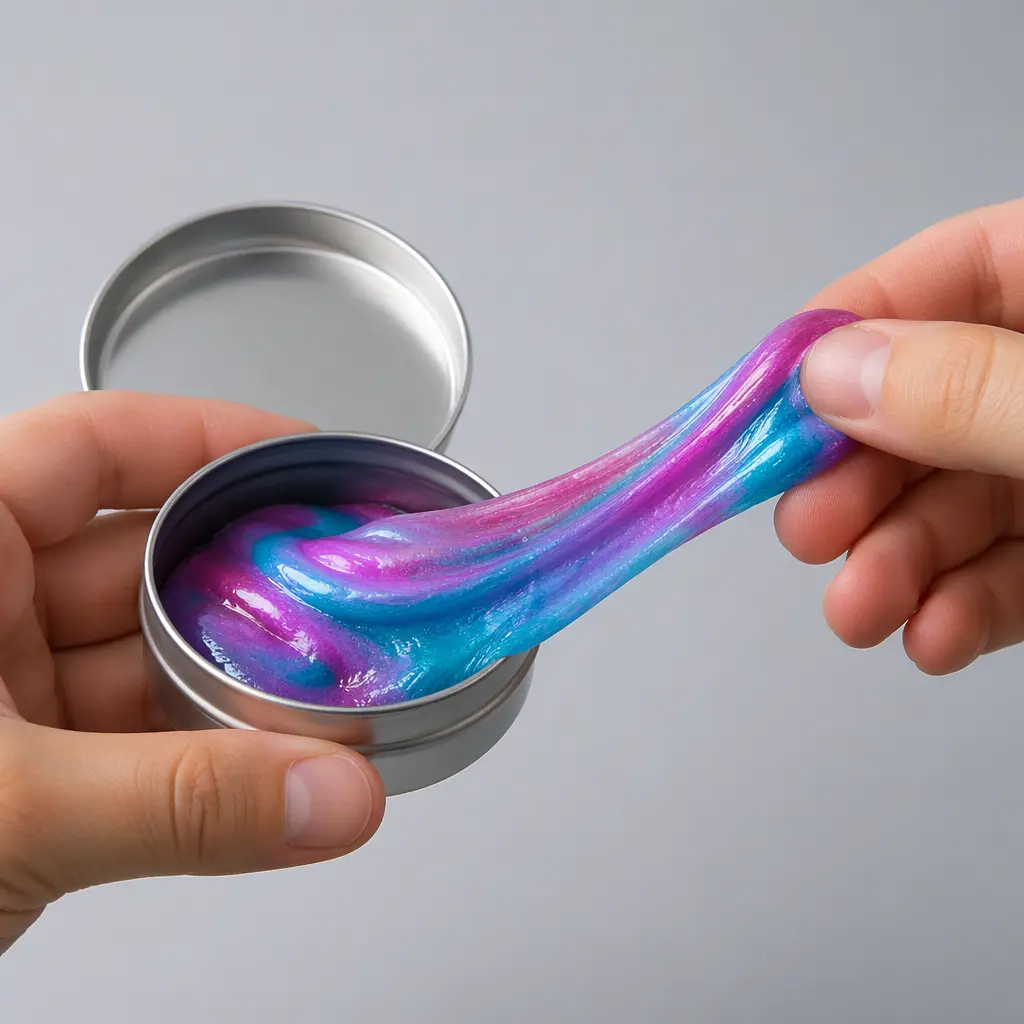
At first glance, Crazy Aaron’s Thinking Putty looks like a simple blob in a tin. Stretch it, though, and it reveals a quietly fascinating personality: it flows slowly if you leave it alone, snaps cleanly if you pull hard, and bounces when rolled into a ball. That blend of science and play is exactly why Thinking Putty has become a staple on school desks, office tables, and coffee tables alike.
Where it came from
Crazy Aaron’s Thinking Putty traces its roots to 1998, when Aaron Muderick, then a young science enthusiast, began experimenting with silicone-based materials. The goal wasn’t initially to create a toy, but to explore the unusual properties of what scientists call non-Newtonian materials — substances that don’t behave like typical liquids or solids.
What emerged was a putty that could be stretched, torn, bounced, and reshaped endlessly. Muderick started selling small batches at science fairs and museum gift shops, where parents and educators immediately saw the appeal. Over time, the product line expanded, but the core idea remained the same: a hands-on way to experience basic physics without a textbook.
Why it works
Thinking Putty works because it invites experimentation. There’s no right way to play with it. Kids squeeze and pull; adults knead it absentmindedly during meetings. Underneath that simplicity is a clever balance of material science that rewards curiosity.
- Non-Newtonian behaviour that changes with how fast you move it
- Firm enough to bounce, soft enough to stretch
- Self-contained storage in a small, reusable tin
- Quiet, screen-free play that doesn’t demand instructions
That mix makes it both engaging and calming. It’s tactile without being messy, and interesting without being overstimulating — a rare combination in modern toy boxes.
Who it's for
Thinking Putty is generally suitable for school-age children and up. Younger kids enjoy the sensory feel under supervision, while older children use it as a creative fidget or science curiosity. Adults are a big part of the audience too, often discovering it as a stress-reliever or focus aid at work. It’s one of those toys that doesn’t feel childish, which helps explain its cross-generational appeal.
Variants and what to look for today
Over the years, Thinking Putty has appeared in many variations, from glow-in-the-dark styles to versions that change colour with heat or light. While the effects differ, the base material and play pattern stay consistent.
If you’re shopping today, look for tins that seal well to keep the putty from drying out. Reputable versions should feel smooth and elastic, not crumbly or sticky. Avoid generic knock-offs that may leave residue on hands or surfaces, as quality control matters with silicone-based materials.
Frequently asked questions
Is Thinking Putty educational?
Yes, in an informal way. It demonstrates basic concepts like elasticity, viscosity, and force through hands-on play, making it popular in classrooms and science centres.
Does it dry out over time?
With proper storage, it can last for years. Leaving it exposed to air for long periods may cause it to stiffen or collect dust.
Is it safe for kids?
It’s generally non-toxic, but it’s not meant to be eaten. Adult supervision is recommended for younger children.
Why is it so popular as a desk toy?
It’s quiet, compact, and satisfying to handle, making it ideal for stress relief or focus without distracting others.
Nearly three decades on, Crazy Aaron’s Thinking Putty endures because it sits at the sweet spot between science and play. It doesn’t shout for attention or rely on trends. Instead, it invites you to slow down, use your hands, and rediscover how interesting a simple material can be.