Fisher-Price Cash Register: The checkout that taught everyday math
A chunky pretend-play classic, the Fisher-Price Cash Register turned make-believe shopping into lessons in counting, turn‑taking, and real‑world math that still resonate today.
Compare prices and availability
Check current prices and availability for this guide on eBay.
As an eBay Partner, we may be compensated if you make a purchase.
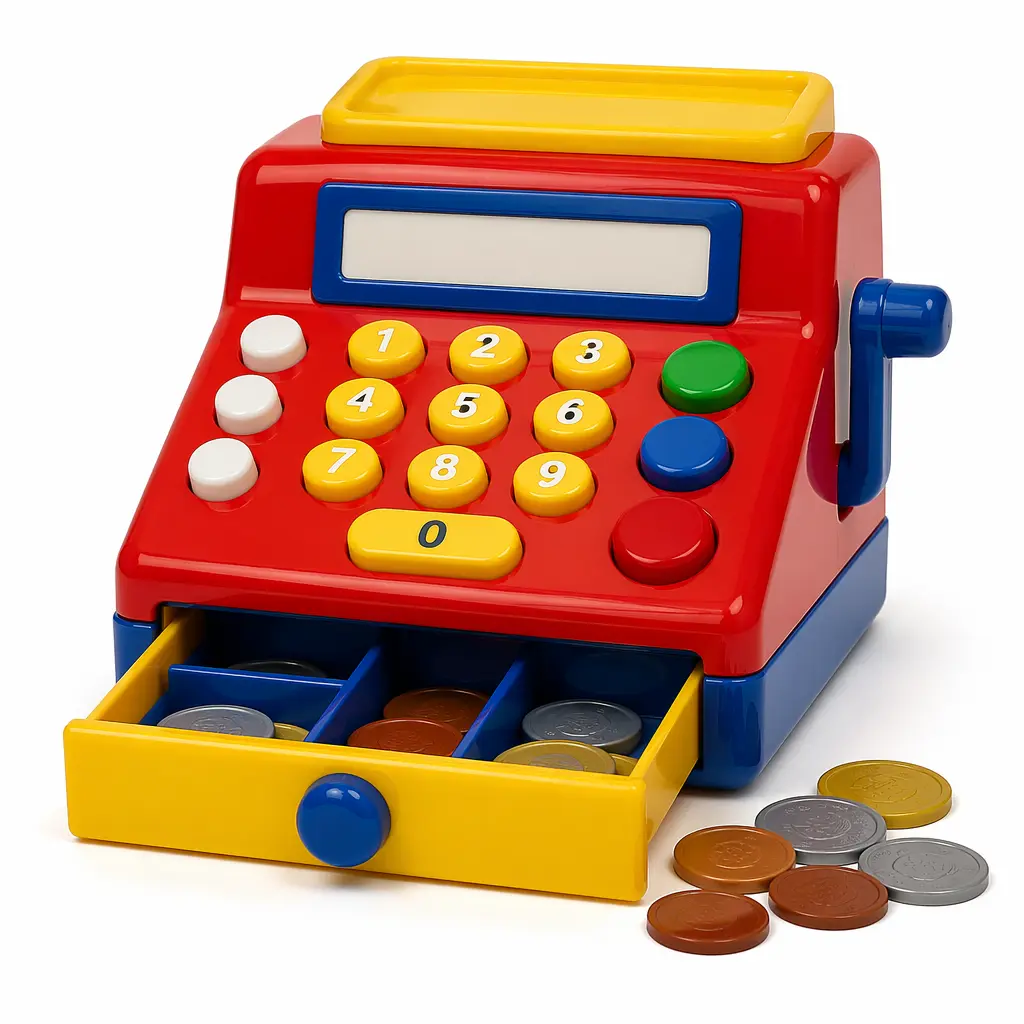
Long before screens took over playrooms, the Fisher-Price Cash Register invited children to step behind an imaginary counter and run their own shop. With a drawer that pops open, coins that clink, and buttons that reward a firm press, it turned everyday errands into a playful lesson in numbers, manners, and taking turns. It’s a simple idea, executed so well that generations of families remember it instantly.
Where it came from
Introduced in the mid-1970s, the Fisher-Price Cash Register arrived during a golden age for preschool toys that mirrored adult life. Fisher-Price had already built a reputation for sturdy, approachable designs aimed at learning through play, and the checkout counter was a natural fit. Shopping was a familiar routine for children, and a cash register distilled that experience into a toy that made sense even to toddlers.
The original purpose wasn’t to teach formal arithmetic, but to let children imitate what they saw adults do. By pressing buttons, counting coins, and opening the drawer, kids practiced early numeracy and social skills without worksheets or instructions. The toy’s success cemented the idea that pretend play could be quietly educational.
Why it works
At its core, the cash register works because it is intuitive. Press a button and something happens. Put in a coin and hear it drop. Open the drawer and reveal a small reward. These cause-and-effect moments keep young players engaged while reinforcing basic concepts like one-to-one counting and sequencing.
- Oversized buttons that are easy for small hands to press
- A spring-loaded drawer that adds anticipation and payoff
- Chunky play coins sized for preschool grip
- Durable plastic built to survive floor play and drops
Just as important, the toy encourages interaction. One child can be the cashier while another is the customer, creating natural opportunities for turn-taking, polite exchanges, and imaginative storytelling. It’s open-ended enough to grow with a child, from simple button-pressing to more elaborate shop games.
Who it's for
The Fisher-Price Cash Register is best suited to preschoolers, typically ages two to five, when pretend play and early counting skills are taking off. That said, adults often feel the pull of nostalgia. Many parents seek it out because they remember playing with one themselves, making it a bridge between generations as much as a learning toy.
Variants and what to look for today
Over the years, the cash register has appeared in several versions, from classic primary-colour models to updated designs with electronic sounds. While the look has evolved, the best examples stick close to the original formula: physical buttons, a real drawer, and tangible coins.
When shopping today, look for a register that prioritises sturdy construction over flashy extras. Some modern alternatives add screens or voices that can distract from imaginative play. Generic copies can vary widely in quality, so check that buttons respond reliably and that coins are large enough to be handled safely by young children.
Frequently asked questions
Does a toy cash register really help with math?
Yes, in an informal way. It supports early number recognition, counting, and understanding that numbers represent quantities, all through play rather than instruction.
Is the classic version better than electronic ones?
Many parents prefer the simpler, mechanical feel of classic-style registers because they encourage imagination and don’t rely on batteries, but it comes down to personal preference.
What age can children start playing with it?
Children as young as two can enjoy pressing buttons and opening the drawer, with more structured pretend play developing as they approach preschool age.
Is it still relevant in a digital world?
Absolutely. Its appeal lies in hands-on interaction and social play, which remain valuable counterpoints to screen-based entertainment.
Nearly fifty years on, the Fisher-Price Cash Register remains a reminder that the best toys don’t need to be complicated. By reflecting everyday life in a form children can control, it quietly teaches skills that last far beyond the playroom.