Georello: The gear toy that turns play into mechanics
Georello turned colorful interlocking gears into a hands-on lesson in cause and effect. Its open-ended building style still makes it a clear, approachable introduction to mechanical thinking.
Compare prices and availability
Check current prices and availability for this guide on eBay.
As an eBay Partner, we may be compensated if you make a purchase.
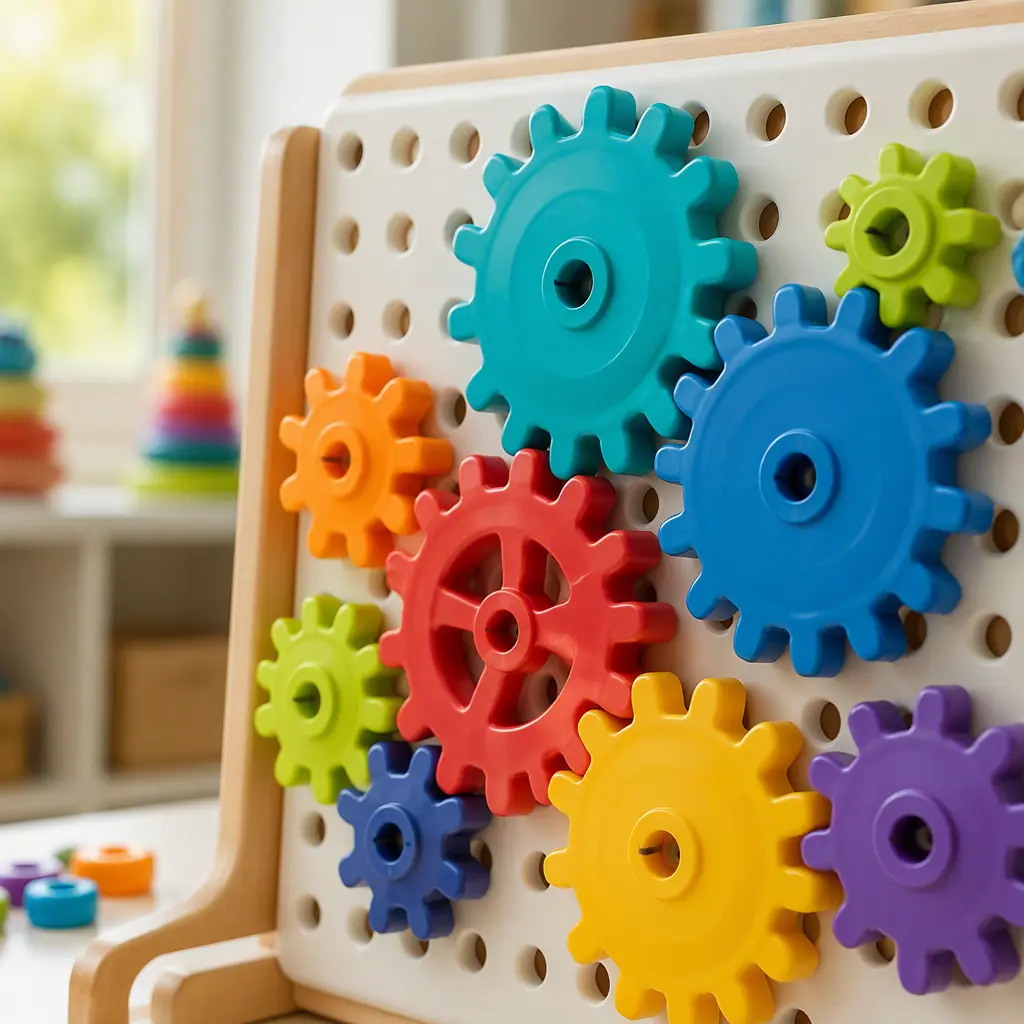
Few educational toys explain motion as clearly as a wall of spinning gears. Georello arrived during a period when STEM-focused toys were becoming more common in homes and classrooms, but its appeal was refreshingly simple: connect gears, turn one handle, and watch an entire chain react. The toy does not rely on screens, sound effects, or complicated instructions. Instead, it turns mechanical cause and effect into something children can see and feel immediately. That direct connection between action and movement is a large part of why Georello has remained a familiar classroom and family toy for more than two decades.
Where it came from
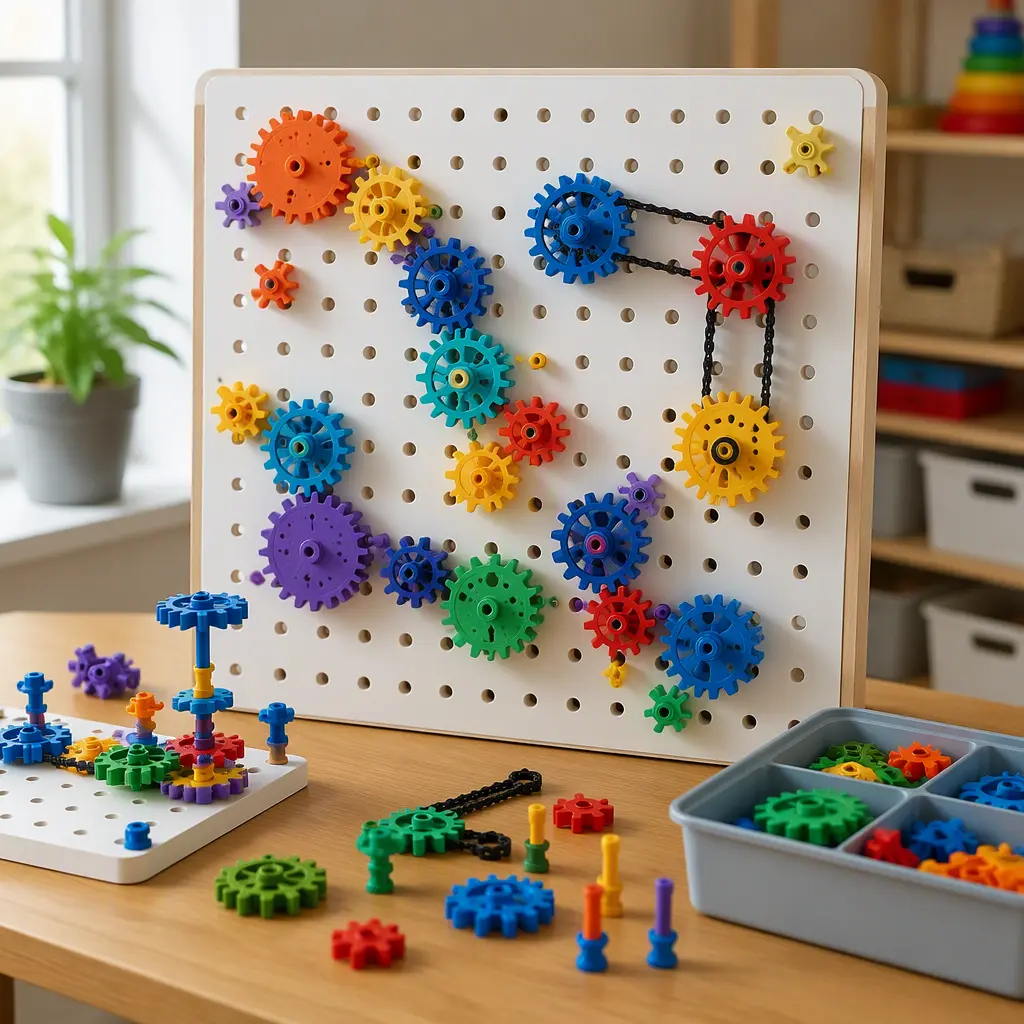
Georello emerged around 2000 as part of a broader wave of educational construction toys designed to make engineering concepts approachable for younger children. Produced by the Italian educational toy company Quercetti, the line combined chunky gears, pegboards, and connector pieces that allowed children to build moving systems without needing advanced assembly skills. The design reflected a long-running philosophy in European educational toys: learning through experimentation rather than step-by-step instruction.
Unlike model kits or robotics sets that focus on finished results, Georello emphasized process. Children could arrange gears in almost any pattern and immediately test whether the movement transferred correctly. That open-ended structure made the toy especially useful in classrooms, where teachers could demonstrate ideas like rotational force, direction changes, and simple mechanical systems using a tool that was durable enough for repeated group play.
Why it works
The strongest part of Georello's design is visibility. Many mechanical toys hide their moving parts behind plastic shells or electronic effects. Georello does the opposite. Every gear remains exposed, so children can track exactly how motion travels from one piece to another. Turn a small gear and a larger one responds. Reverse one connection and the entire chain changes direction. The toy transforms abstract physics ideas into physical interactions that are easy to observe.
The building system also encourages experimentation because mistakes are part of the play. A disconnected gear train simply stops moving, giving immediate feedback without frustration. Younger children often begin by arranging colorful patterns, while older kids start creating bridges, towers, or layered gear systems that transfer motion across wider structures. Adults often notice that the toy naturally introduces engineering vocabulary without feeling academic.
- Large interlocking gears that are easy for younger hands to handle
- Pegboard-based building system that supports freeform layouts
- Visible movement that demonstrates mechanical relationships clearly
- Mix of creative construction play and basic engineering concepts
- Durable plastic pieces designed for repeated classroom or home use
Who it's for
Georello is generally aimed at preschool and early elementary ages, particularly children who enjoy building toys but may not yet be ready for more advanced engineering kits. The large pieces make the toy approachable for younger builders, while the open-ended nature keeps older children engaged longer than many early-learning products. Parents and teachers often appreciate that it supports both independent experimentation and collaborative play. Adult collectors are less common than with some classic toy lines, but educational toy enthusiasts and early STEM educators continue to value Georello for its clear, tactile demonstration of mechanical principles.
Variants and what to look for today
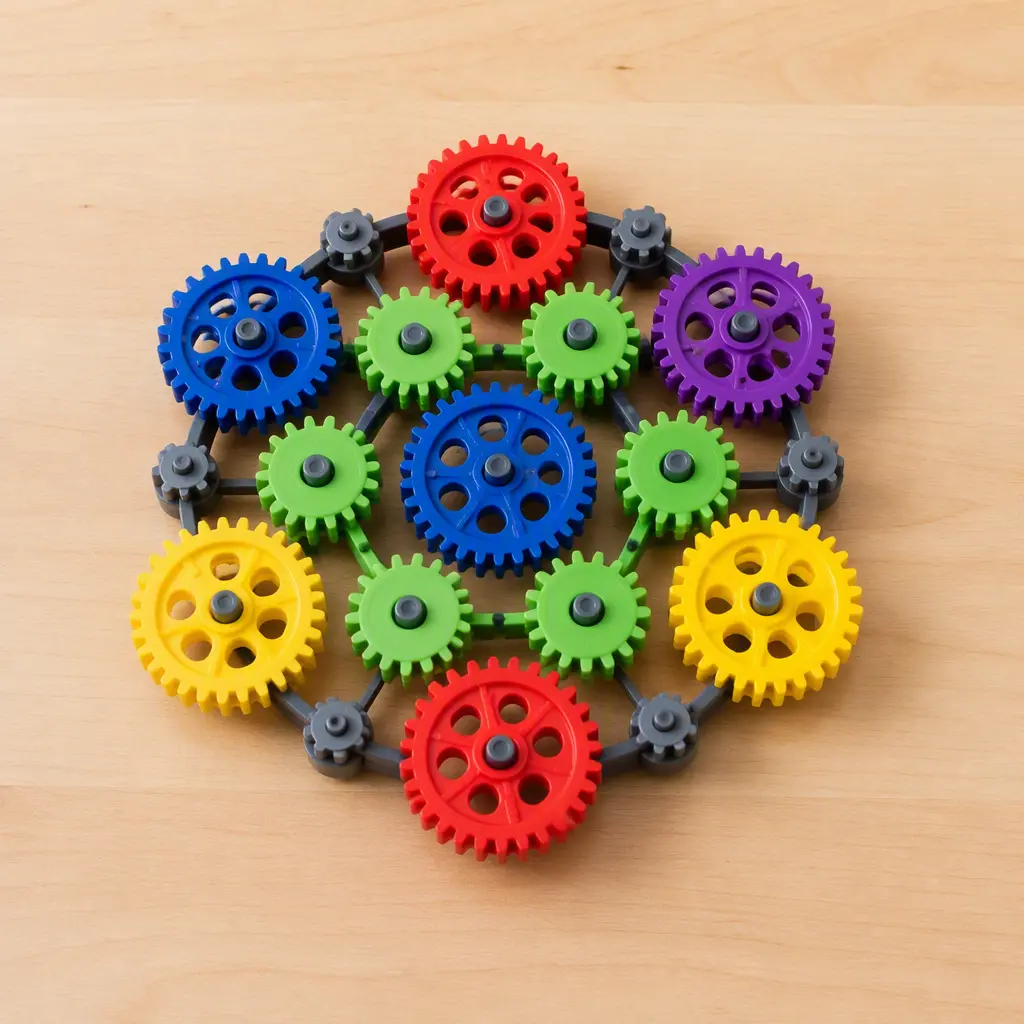
Over the years, Georello sets have appeared in several sizes and configurations. Some focus on simple flat pegboard builds for younger children, while larger sets introduce multi-level structures, chain reactions, or flexible connectors that allow more ambitious layouts. Bright colors remain central to the design because they help children visually separate moving sections and understand how different components interact.
Buyers looking for Georello today will usually encounter both official educational sets and generic gear-building toys inspired by the same concept. The quality difference often shows up in how smoothly the gears mesh and how securely the pegboards hold pieces in place. Better versions tend to spin freely with minimal force, which is important because stiff movement can make younger children lose interest quickly.
- Starter sets are often best for preschool-aged builders
- Larger classroom-oriented kits provide more opportunities for collaborative builds
- Wall-mounted versions can create larger moving displays
- Look for sturdy peg connections and smooth gear rotation
- Avoid very thin plastic pieces that bend or jam during play
Frequently asked questions
Does Georello actually teach engineering concepts?
It introduces foundational ideas rather than formal engineering lessons. Children learn about rotation, connected motion, direction changes, and simple mechanical systems through experimentation. The toy works best as an intuitive introduction to how machines transfer movement.
Is Georello suitable for classrooms?
Yes. Many versions were designed with classroom use in mind, including durable materials and enough pieces for group activities. Teachers often use the toy during early STEM lessons because it demonstrates mechanical relationships visually and quickly.
How is it different from standard building bricks?
Traditional construction toys focus mainly on structure and balance. Georello adds motion as the central feature. The goal is not just building a shape but creating a working mechanical chain where pieces influence one another dynamically.
Do children outgrow it quickly?
That depends on how the toy is used. Younger children may enjoy basic spinning patterns, while older children can experiment with more complex layouts and problem-solving challenges. Larger sets generally extend the play life because they allow more ambitious constructions.
Georello occupies an interesting space in the history of educational toys because it strips mechanics down to their essentials. There are no hidden motors, digital shortcuts, or scripted outcomes. A child connects pieces, turns a gear, and immediately sees the results ripple outward. That clarity is rare in modern toys, and it explains why spinning gear sets continue to hold attention long after flashier educational trends come and go.