Gravity Maze: How one marble teaches planning and perseverance
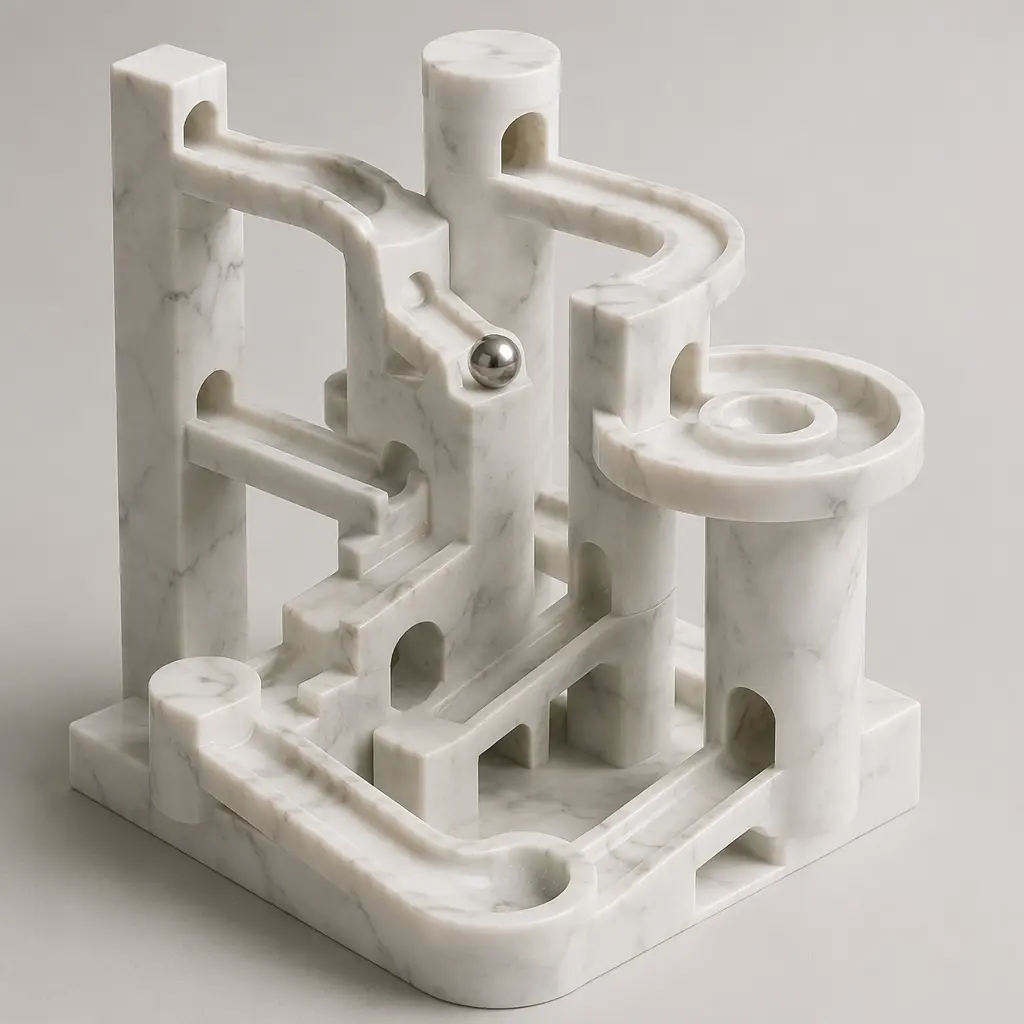
Gravity Maze is a modern logic puzzle that turns a single marble into a lesson in planning, spatial reasoning, and patience—without feeling like homework.
Compare prices and availability
Check current prices and availability for this guide on eBay.
As an eBay Partner, we may be compensated if you make a purchase.
Gravity Maze looks simple at first glance: a handful of towers, a marble, and a challenge card that shows where the marble should start and finish. But spend five minutes with it and you realise why it has become a modern classic. This is a puzzle that asks players to slow down, picture outcomes, and test ideas—skills that matter far beyond the tabletop.
Where it came from
Gravity Maze was introduced in 2014 as part of a wave of modern logic games that blurred the line between toys and brain training. Developed by a company known for single-player puzzles, its goal was straightforward: create a hands-on way to teach spatial reasoning without screens or complicated rules.
The original concept drew inspiration from marble runs and classic deduction puzzles. Instead of racing marbles for speed or spectacle, Gravity Maze focused on prediction. Players are given a target configuration and a limited set of pieces, and they must work out how gravity alone can carry the marble to its goal.
Why it works
At its core, Gravity Maze is about cause and effect. Every tower placement changes the marble’s path, and small adjustments can completely alter the outcome. The physicality of the pieces helps abstract ideas—like planning ahead or visualising multiple steps—feel concrete and understandable.
The puzzle design also respects the player. Challenges increase in difficulty, but each one is solvable using logic rather than guesswork. When players get stuck, the solution usually comes from rethinking assumptions, not from adding more pieces.
- Single marble focus that keeps attention on the problem, not the spectacle
- Vertical, three-dimensional play that builds spatial awareness
- Graduated challenges that reward persistence
- Clear rules that are easy to learn but hard to master
Who it's for
Gravity Maze is typically recommended for children around eight and up, but its appeal stretches well beyond that range. Younger players enjoy the hands-on building, while older children and adults appreciate the logic and planning involved. It works well as a solo activity, making it a good choice for quiet time, classrooms, or anyone who enjoys puzzles without a competitive edge.
Variants and what to look for today
Since its release, Gravity Maze has inspired expansions and similar logic toys that build on the same idea. Some versions add more complex towers or additional challenges, while others simplify the concept for younger players. When choosing a set today, look for sturdy pieces that stack securely and challenge cards that clearly show the intended solution.
As with many popular puzzles, there are generic marble mazes on the market that borrow the look without the thoughtful design. These often lack balanced challenges or clear solutions. A well-designed Gravity Maze-style puzzle should feel fair: difficult, but never random.
Frequently asked questions
Is Gravity Maze educational?
Yes, though it doesn’t feel like a lesson. The game naturally builds skills like planning, logical reasoning, and spatial visualisation through play.
Can more than one person play?
It’s designed as a single-player puzzle, but families often solve challenges together by discussing ideas and testing solutions as a group.
How long does a challenge take?
Early challenges can be solved in a few minutes, while harder ones may take much longer. There’s no time limit, which keeps the focus on thinking rather than speed.
Does it have replay value?
Yes. Even after completing all the challenges, many players return to favourite puzzles or create their own configurations.
Gravity Maze shows how a single marble can carry big ideas. By stripping play down to its essentials—gravity, structure, and logic—it offers a satisfying reminder that some of the best learning happens when kids (and adults) are simply trying to make something work.