The Infinity Cube: How a pocket fidget became a modern classic
The Infinity Cube looks simple, but its endlessly folding motion made it a modern classic for restless hands. Here’s where it came from, why it works, and what to know today.
Compare prices and availability
Check current prices and availability for this guide on eBay.
As an eBay Partner, we may be compensated if you make a purchase.
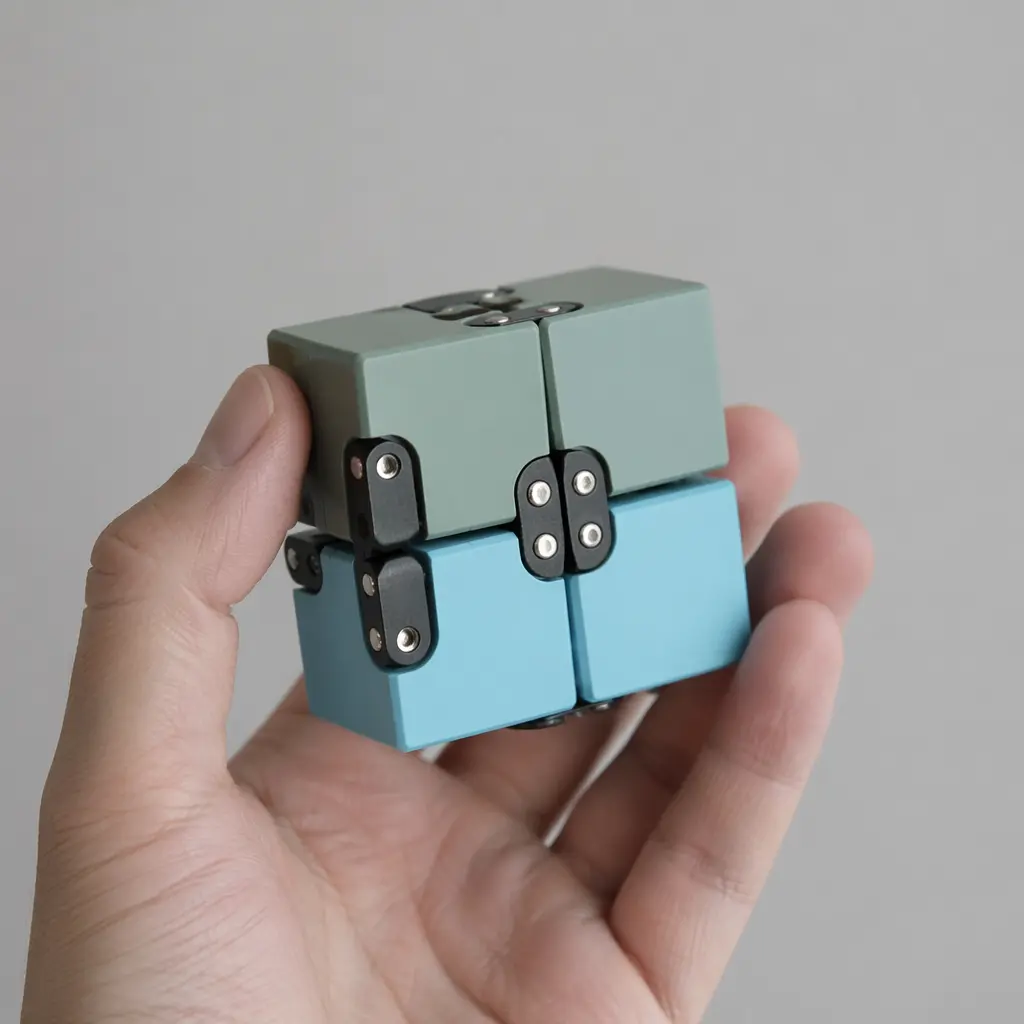
The Infinity Cube is one of those toys that barely looks like a toy at all. About the size of a matchbox, it doesn’t light up, make noise, or keep score. Instead, it offers a simple promise: it will never quite be finished. Fold it one way, then another, and it keeps going, looping back on itself in a quiet, endlessly satisfying motion. For many people, that’s exactly the point.
Where it came from
The Infinity Cube emerged around 2016, during a period when small fidget toys were gaining traction far beyond novelty shops. While there’s no single inventor story as famous as some classic puzzles, the design drew on earlier folding mechanisms and mathematical toys that explored continuous motion and symmetry.
Its rise was closely tied to changing work and school environments. As people spent more time at desks and in meetings, demand grew for quiet, unobtrusive objects that could occupy the hands without demanding attention. The Infinity Cube fit neatly into that niche: small enough for a pocket, silent in use, and visually simple enough to feel almost utilitarian.
Why it works
At heart, the Infinity Cube is a study in motion. Eight small cubes are connected with hinges in a way that allows them to fold inward and outward repeatedly, always returning to a familiar shape but never forcing a final stop. There’s no puzzle to solve, which removes pressure and makes the experience calming rather than challenging.
The design appeals to the senses without overwhelming them. The weight is reassuring, the hinges provide gentle resistance, and the repeated folding builds a rhythm that many users find grounding.
- Endless folding loop with no fixed endpoint
- Compact, pocket-sized form
- Quiet operation suitable for shared spaces
- Simple geometry that’s easy to understand instantly
Who it’s for
The Infinity Cube is often marketed toward teens and adults, but its appeal spans a wide age range. Older children can enjoy it as a tactile toy, while adults frequently use it as a desk companion during calls, study sessions, or travel. It’s especially popular with people who like to keep their hands busy while their mind focuses elsewhere.
Variants and what to look for today
Today’s Infinity Cubes come in a wide range of materials and finishes. Plastic versions are lightweight and affordable, while metal or metal-alloy cubes feel heavier and more substantial in the hand. Some versions focus on smooth, almost silent hinges, while others offer a slightly firmer, clickier feel.
When shopping, pay attention to hinge quality and overall build. Poorly made versions can loosen quickly or pinch fingers. While many look similar, durability is what separates a satisfying everyday fidget from one that ends up forgotten in a drawer.
Frequently asked questions
Is the Infinity Cube a puzzle?
Not in the traditional sense. There’s no goal or solution to reach. It’s better thought of as a kinetic or fidget toy designed for continuous movement rather than problem-solving.
Does it help with focus or stress?
Many users say it helps them focus by keeping their hands occupied, which can reduce restless movements. While it’s not a medical tool, its repetitive motion can be calming for some people.
Are all Infinity Cubes the same size?
Most follow a similar pocket-sized format, but thickness and weight can vary depending on materials. Metal versions tend to feel denser than plastic ones.
Is it suitable for quiet environments?
Yes, provided the hinges are smooth. Well-made cubes operate almost silently, making them suitable for classrooms, offices, and public transport.
The Infinity Cube’s success lies in its restraint. By doing one small thing well—folding endlessly in the palm of your hand—it has earned a place among modern toy classics. It’s a reminder that even in a digital age, simple physical motion can still be deeply engaging.