Lauri Pegboards: The peg toy that trained generations of little hands
Lauri Pegboards turned a simple set of chunky pegs and sturdy boards into a lasting early-learning toy, helping generations of children build fine-motor skills through open-ended play.
Compare prices and availability
Check current prices and availability for this guide on eBay.
As an eBay Partner, we may be compensated if you make a purchase.
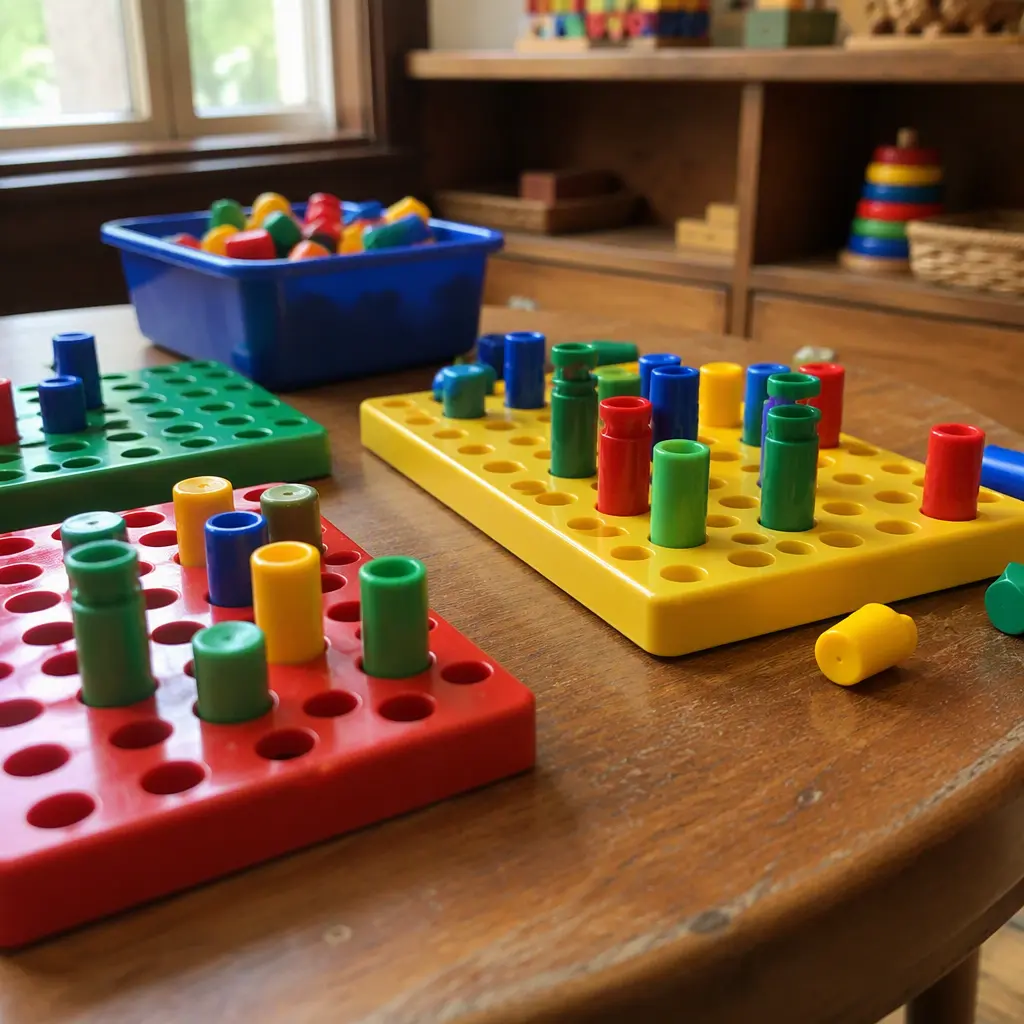
Few preschool toys look simpler than a pegboard. A child picks up a chunky peg, lines it up with a hole, pushes it into place, and repeats the process again and again. Yet Lauri Pegboards became one of the most recognizable examples of how basic play materials can support early development without flashing lights, batteries, or complicated rules. For decades, the toy has quietly appeared in homes, classrooms, therapy offices, and daycare centers, valued less for novelty than for how reliably it keeps small hands busy and focused.
Where it came from
Lauri introduced its pegboard sets in the early 1950s, during a period when educational toys were becoming more closely tied to child-development research. The company focused on durable learning materials designed for repeated use in classrooms and homes, and pegboards fit perfectly into that mission. The concept itself was not new; peg-and-hole matching toys had existed in various forms for years. What made Lauri stand out was the emphasis on child-friendly proportions, sturdy construction, and open-ended activity rather than strict game rules.
The original appeal was practical as much as playful. Teachers and parents saw pegboards as a way to help preschoolers strengthen hand coordination, recognize colors and patterns, and practice concentration. Occupational therapists also adopted similar toys because the repeated gripping and placement motions supported developing fine-motor control. Over time, the pegboards became associated with early-childhood learning environments in much the same way that wooden blocks or alphabet puzzles did.
Why it works
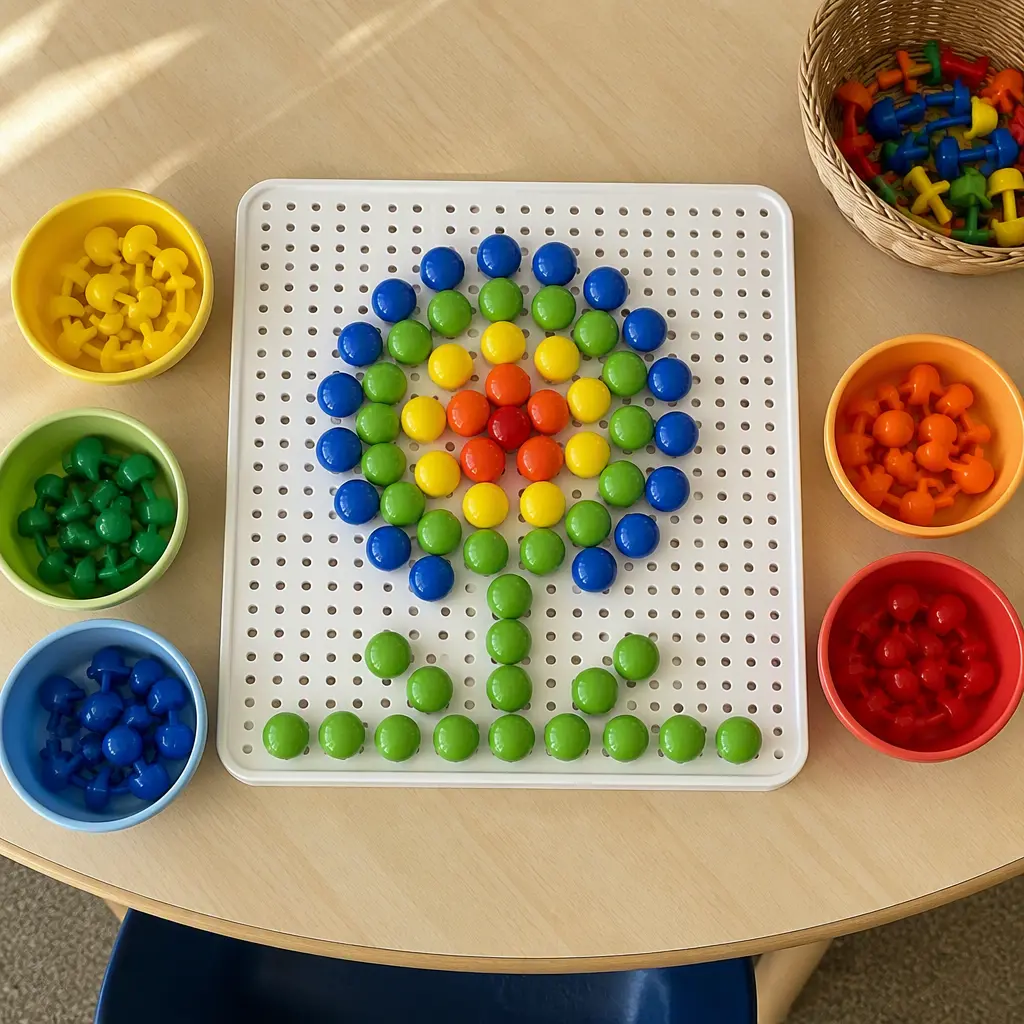
The enduring strength of Lauri Pegboards comes from how many kinds of play they support with very few pieces. Younger children may simply push pegs into holes randomly, enjoying the sensory rhythm of grabbing, pressing, and removing them. As children grow, the same toy naturally shifts into pattern making, counting games, color sorting, and simple picture creation. The learning curve feels almost invisible because the activity remains tactile and self-directed.
The physical design matters more than it first appears. The pegs are large enough for small hands to grasp securely, and the resistance of inserting them into the board creates a satisfying mechanical feedback. Children receive immediate visual confirmation when a peg clicks into place, which encourages repetition without requiring adult instruction. Unlike many electronic learning toys, pegboards leave room for experimentation and quiet concentration.
- Chunky pegs sized for preschool grip development
- Open-ended play with no fixed rules or winning condition
- Supports color matching, sorting, counting, and pattern recognition
- Durable boards designed for repeated classroom-style use
- Portable format that stores easily and travels well
Who it's for
Lauri Pegboards are most commonly associated with toddlers and preschoolers, especially children developing early hand strength and coordination. Many sets are aimed at ages around two to five, though older children may still enjoy creating patterns or mosaics. Adults often recognize the toy from classrooms or therapy settings, giving it a nostalgic appeal that newer learning toys sometimes lack. Parents who prefer quieter, screen-free activities also tend to appreciate how pegboards encourage independent play without overwhelming stimulation.
Variants and what to look for today
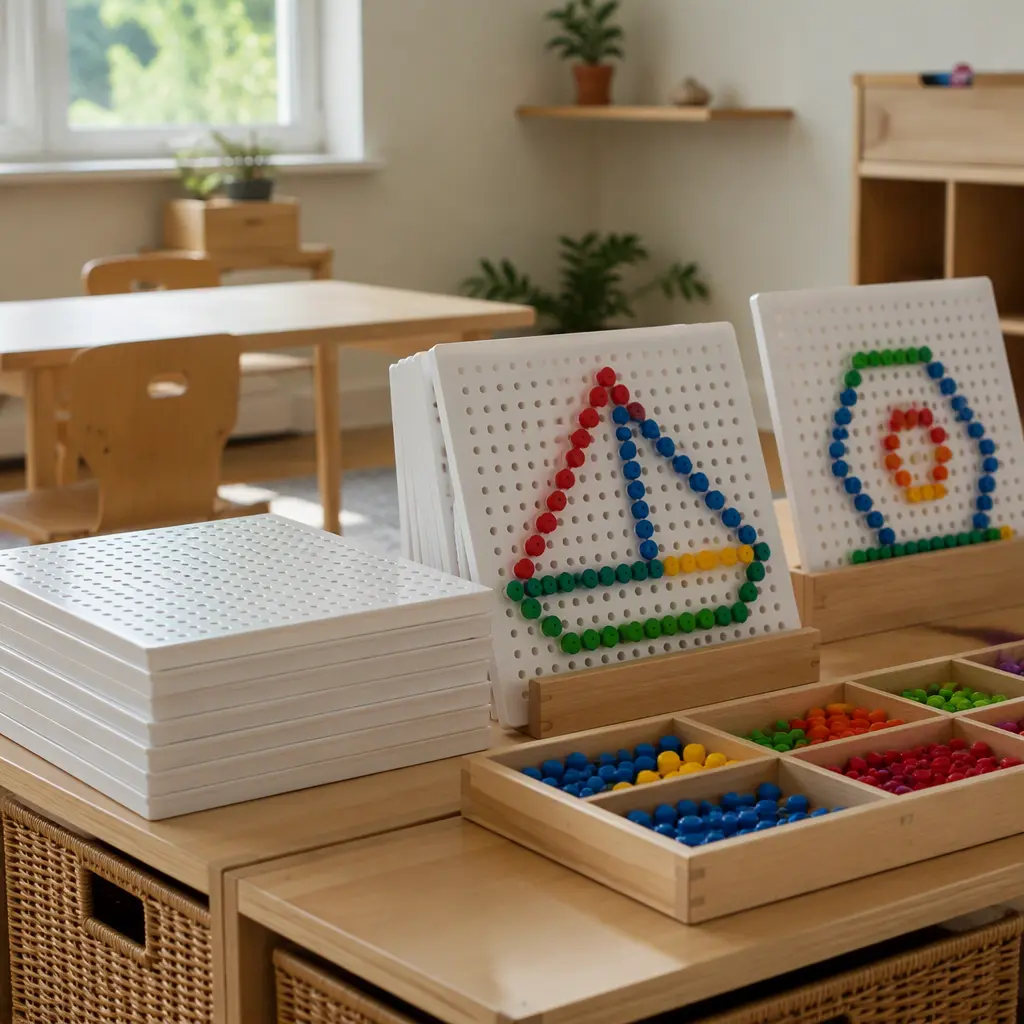
Modern pegboard sets still follow the same core formula, though materials and accessories vary. Some versions use softer plastic pegs for younger children, while others include activity cards with pattern suggestions. Travel-sized pegboards, larger classroom kits, and mosaic-style sets aimed at older kids have also become common. The overall concept has remained remarkably stable because the original design solved a straightforward problem effectively: giving children a simple way to practice coordinated movement while staying engaged.
When shopping today, durability is usually more important than extra features. Well-made pegs should fit firmly without requiring excessive force, and boards should resist bending or cracking under repeated use. Generic peg sets can vary widely in quality, particularly in how securely the pegs stay in place. Parents should also pay attention to peg size for younger children, since larger pieces are easier and safer for early preschool play.
- Look for thick, sturdy boards that stay flat on a table
- Choose peg sizes appropriate for the child's age and grip strength
- Simple color assortments are often more versatile than themed sets
- Storage trays or carrying cases help prevent lost pieces
- Avoid poorly molded pegs with rough plastic edges
Frequently asked questions
Are pegboards mainly educational toys?
They are often marketed as learning toys, but much of their value comes from free play. Children naturally practice coordination, planning, and visual matching while experimenting on their own.
Why do therapists use pegboard toys?
Pegboards encourage repeated pinching, gripping, and placement motions that help strengthen fine-motor skills and hand-eye coordination. The repetitive actions are easy to adjust for different ability levels.
Do children outgrow pegboards quickly?
Many children begin with simple insertion play and later move into more complex pattern making or counting games. The toy tends to evolve alongside early developmental stages rather than serving a single narrow purpose.
Are vintage pegboards still usable?
Older sets are often still functional because the design is mechanically simple and durable. Buyers should inspect vintage pieces for cracks, brittleness, or worn edges, especially if the toy has been heavily used in classrooms.
Lauri Pegboards never depended on trends, licensed characters, or electronics to stay relevant. Their staying power comes from something quieter: a design that respects how children learn through repetition, touch, and experimentation. In an era crowded with high-tech learning gadgets, the humble pegboard remains a reminder that some of the most effective toys are also the most straightforward.