The Little Tikes Slide: A backyard classic that shaped play
From 1970s patios to modern gardens, the Little Tikes slide became the quiet benchmark for safe, everyday outdoor play—and a first thrill for generations of toddlers.
Compare prices and availability
Check current prices and availability for this guide on eBay.
As an eBay Partner, we may be compensated if you make a purchase.
If you grew up with a garden, a patio, or even a shared bit of pavement, there’s a good chance your first taste of independent adventure came from a small plastic slide. The Little Tikes slide isn’t flashy, licensed, or tech-driven. It’s memorable because it didn’t need to be. For decades, it quietly defined what everyday outdoor play looked like for toddlers—low to the ground, sturdy underfoot, and just thrilling enough to invite “one more go.”
Where it came from
Little Tikes emerged in the early 1970s as part of a shift toward molded plastic toys designed specifically for younger children. Founded in the United States, the brand focused on durability, safety, and simplicity at a time when many outdoor toys were scaled-down versions of adult equipment. Around 1972, small freestanding slides began to appear in the company’s lineup, aimed squarely at toddlers and preschoolers.
The original purpose was practical rather than aspirational: give very young children a way to climb, sit, and slide without the risks of playground heights or metal frames. The idea fit neatly with changing family life, where backyards and patios became extensions of the playroom. Parents wanted something that could live outdoors, survive rough use, and still feel appropriate for a two- or three-year-old.
Why it works
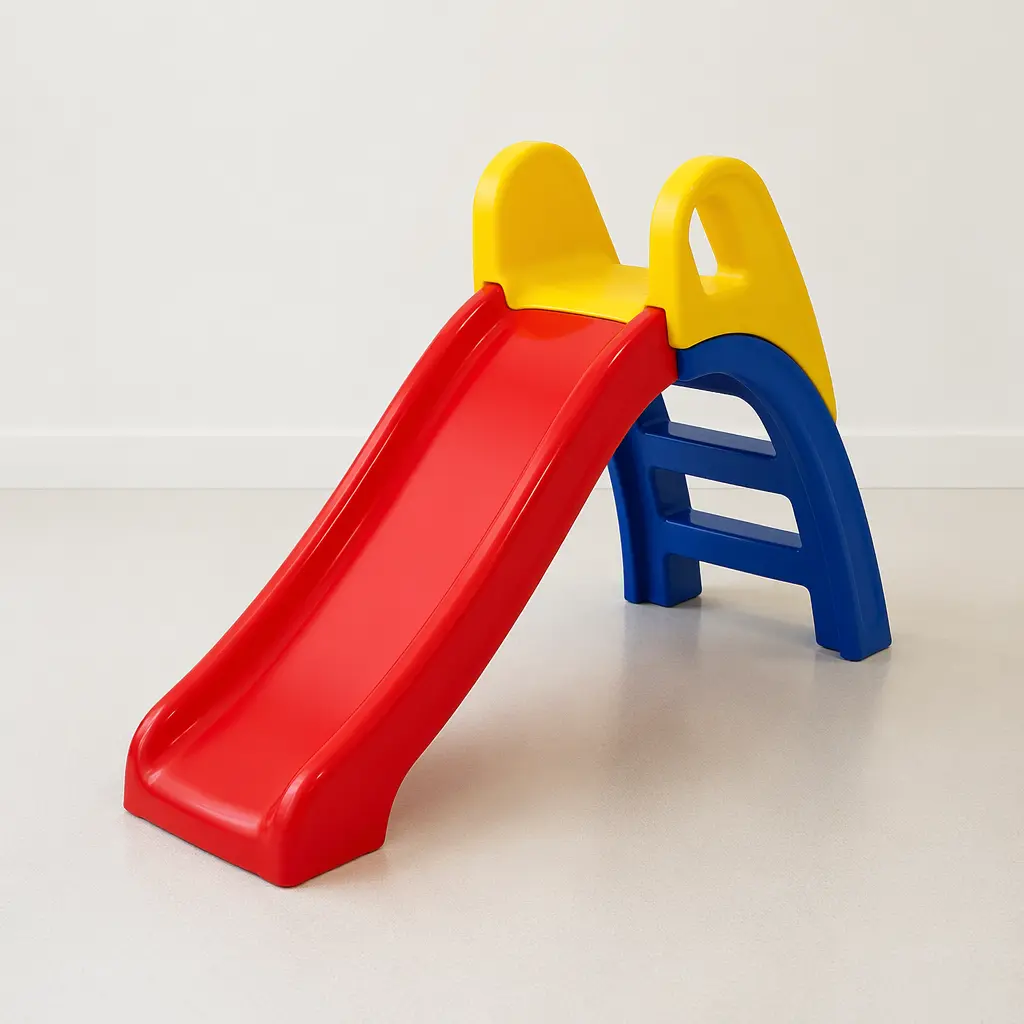
At heart, the Little Tikes slide works because it respects a toddler’s sense of scale. The steps are sized for short legs, the handholds are intuitive, and the slope delivers motion without intimidation. It offers a complete play loop—climb, turn, slide, repeat—without instructions or adult intervention once it’s set up.
The design also acknowledges parents’ priorities. Molded plastic means no splinters, rust, or sharp edges. The wide base lowers the center of gravity, making tipping unlikely on flat ground. And because the slide is light enough to move but heavy enough to stay put, it fits easily into everyday routines rather than becoming a special-occasion toy.
- Low height that feels exciting without being scary
- Wide, stable base for confidence and balance
- Molded steps that double as a climbing challenge
- Weather-resistant plastic suited to outdoor storage
- Simple form that invites repetition and mastery
Who it’s for
The classic Little Tikes slide is aimed at toddlers and young preschoolers, typically from around 18 months to four years. That said, its appeal often stretches beyond the child using it. For adults, it represents a safe first taste of physical independence—something a child can approach, try, and succeed at largely on their own. It’s also one of those toys that feels socially shared: siblings take turns, friends line up, and parents instinctively sit nearby rather than hovering.
Variants and what to look for today
Over the years, the basic slide has branched into small variations: slightly longer slopes, added water-play features for summer, or combined units with mini climbing walls. Despite these tweaks, the core idea remains the same. When looking today, the key differences tend to be size, foldability, and whether the slide is intended for indoor-outdoor use or strictly the garden.
It’s also worth being aware of generic lookalikes. Many capture the basic shape but may cut corners on plastic thickness or stability. At the family level, what you’re really looking for is a slide that feels solid under pressure, has smooth joins, and sits flat without wobble. Those qualities mattered in the 1970s and still matter now.
Frequently asked questions
Is the Little Tikes slide safe for very young toddlers?
Yes, when used as intended and with supervision. The low height and wide steps are designed for early climbers, but adults should always be nearby, especially for children under two.
Can it be used indoors?
Many families use small plastic slides indoors, particularly in playrooms. Just make sure there’s enough clear space at the bottom and that the slide is placed on a non-slip surface.
How long do children actually use it?
Most children enjoy a toddler slide for a couple of years. As balance and confidence grow, they tend to move on to taller playground equipment, but the slide often becomes a fondly remembered first step.
Does plastic hold up outdoors?
Quality molded plastic is designed to handle sun and rain, though long-term exposure can cause fading. Bringing it under cover in winter can extend its life.
The Little Tikes slide endures because it never tried to be more than it needed to be. It’s a modest piece of equipment that delivers a big developmental moment: the first time a child climbs up, sits down, and slides away smiling. In a world of increasingly complex toys, that simplicity is exactly why it still earns a place in the garden.