LivingAI EMO: The desktop robot that acts like a digital pet
LivingAI's EMO blends pet-style behavior, voice interaction and app-connected AI into a small desktop robot. Its charm comes with practical questions about microphones, cloud features and long-term support.
Compare prices and availability
Check current prices and availability for this guide on eBay.
As an eBay Partner, we may be compensated if you make a purchase.
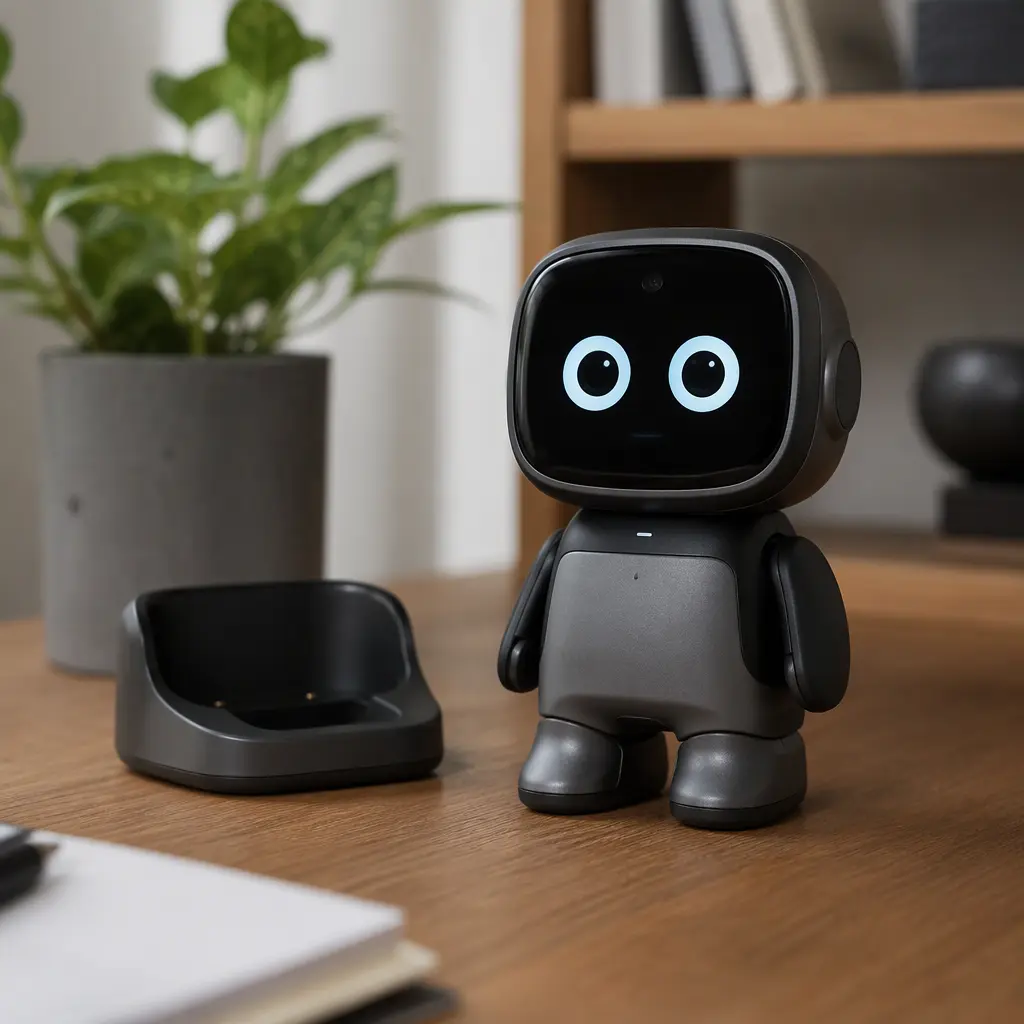
LivingAI EMO sits somewhere between a digital pet, a desktop companion and a compact consumer robot. Introduced during the recent wave of AI-powered home gadgets, the small walking robot is designed to react to voices, movement and touch while presenting a playful personality through animated eyes and sounds. Unlike a traditional remote-control toy, EMO aims to feel present in a room, wandering across a desk, responding to attention and occasionally surprising its owner with songs, games or comments.

Where it came from
EMO arrived in 2021 from LivingAI, a company focused on compact social robots and AI-driven desktop companions. The product appeared during a period when conversational AI, smart assistants and virtual pets were increasingly blending together. Earlier consumer robots often focused on programmable education or remote-control tricks, but EMO was marketed more as a personality-focused companion intended to stay visible on a desk throughout the day.
The robot combines several familiar technologies into one package: microphones for voice interaction, sensors that help it detect edges and movement, app connectivity for updates and customization, and animated digital expressions designed to create emotional attachment. Over time, LivingAI has promoted software updates and evolving features, which is both part of the appeal and part of the caution for families considering connected toys. Unlike offline electronic pets from earlier decades, EMO depends heavily on software support and an active ecosystem to deliver much of its personality.
Why it works
EMO succeeds when it feels unpredictable in small, entertaining ways. The robot does not simply wait for button presses. It moves around independently, reacts to sounds, appears to notice nearby activity and uses animation to suggest moods or curiosity. That illusion of personality is central to the experience. Even relatively simple actions can feel engaging when paired with expressive movement and responsive timing.
Another reason EMO stands out is the overlap between toy design and smart-device behavior. Some interactions are scripted animations and preprogrammed routines, while others rely on cloud-connected AI features and voice recognition. Families looking at products in this category should understand the difference. Scripted responses generally continue to function locally, while more advanced conversational features may depend on servers, apps or ongoing software support.
- Animated digital eyes and sound effects designed to simulate emotion and attention
- Built-in microphones for wake words, commands and conversational interaction
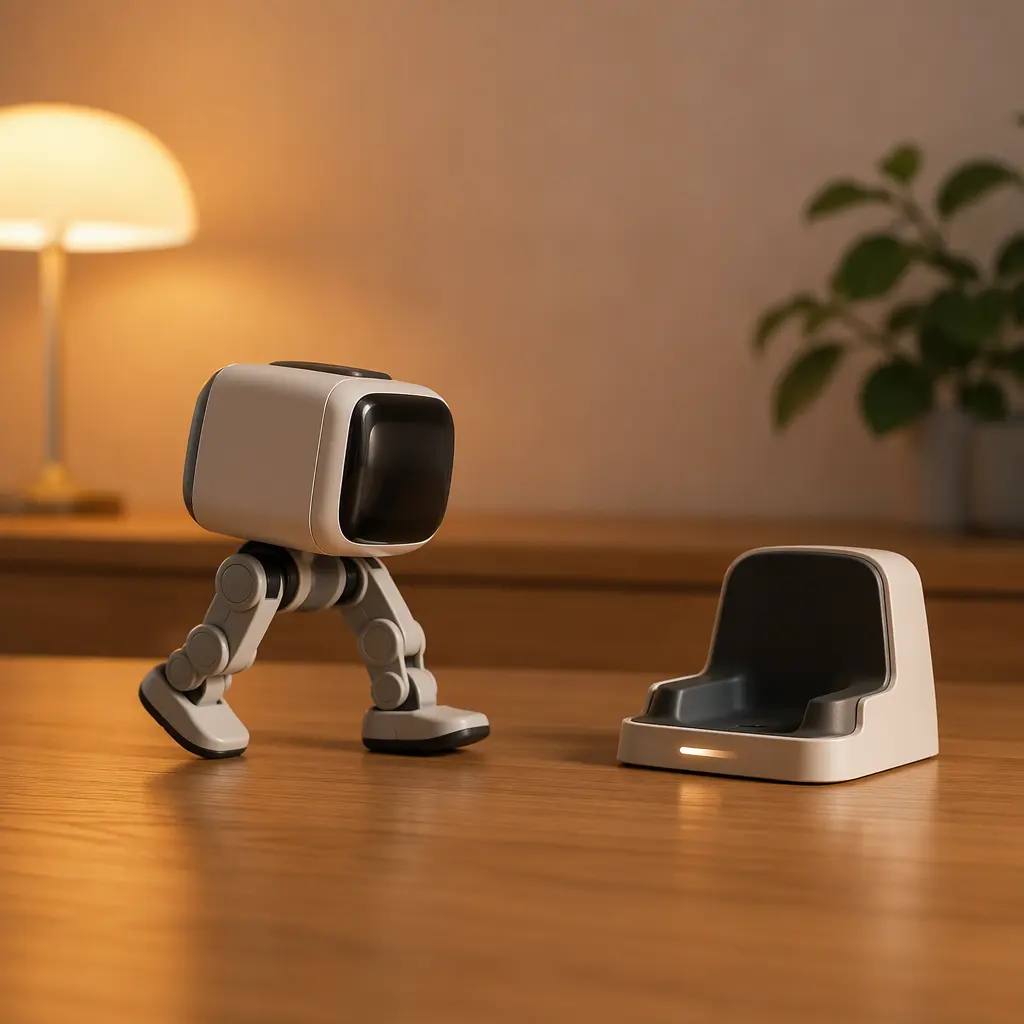
- Sensors intended to help the robot avoid desk edges and react to movement
- Mobile app connectivity for updates, settings and additional features
- Charging dock setup that encourages always-on desktop use
- Mix of preprogrammed behaviors and AI-assisted interactions depending on feature set
Who it's for
EMO is aimed at older children, teens and adults who enjoy gadget-style companions more than traditional action toys. Younger children may enjoy the robot's expressive behavior, but the setup process, app management and connected features make it better suited to households comfortable with smart devices. Adult collectors and technology enthusiasts are also a major part of the audience, especially people interested in robotics, desktop décor or AI-driven novelty devices. Because the robot uses microphones and app-linked systems, parents may want to supervise setup and review permissions before regular use.
Variants and what to look for today
The connected robot category changes quickly, and EMO exists in a market crowded with app-enabled pets, coding robots and conversational companions. Some products focus mainly on educational programming, while others lean into personality simulation and casual companionship. Prospective buyers should pay attention to what features work offline versus online, what devices are needed for setup and whether regional app support is available where they live.
Families should also approach marketing language carefully. Terms like AI-powered can describe anything from simple voice-command systems to cloud-based generative features. With EMO and similar robots, functionality may evolve through updates over time, which can improve the experience but also creates dependence on ongoing software support. Looking at manufacturer support pages, app-store compatibility information and privacy documentation is often more useful than focusing only on promotional videos.
- Check whether core interactions still function without a constant internet connection
- Confirm mobile app compatibility with current phones or tablets before purchasing
- Look for clear privacy and permissions information related to microphones and connected features
- Be cautious of unofficial sellers offering unclear accessories or unsupported versions
- Understand that software updates can change available features over time
Frequently asked questions
Does EMO work without the internet?
Some functions may continue offline, particularly preprogrammed behaviors and basic interactions, but connected features, updates and certain AI-driven responses can depend on internet access and cloud services. The exact balance may change as software evolves.
Is EMO using generative AI?
EMO combines scripted animations, programmed responses and AI-assisted features. Not every interaction is generated dynamically. Families should distinguish between fixed behavior routines and cloud-based conversational systems when evaluating privacy and expectations.
What should parents know about privacy?
The robot includes microphones for voice interaction, and app connectivity may involve user accounts, wireless setup and data processing. Parents should review permissions, account requirements and manufacturer privacy information before use, especially in homes with younger children.
Is EMO more like a toy or a smart device?
It occupies both categories. EMO is playful and character-driven like a toy, but it also behaves like a connected smart gadget that relies on apps, updates and software support. That combination is part of its appeal and one of the main considerations before buying.
EMO reflects the current direction of consumer robotics: small, expressive devices that blur the line between entertainment, companionship and connected technology. Its appeal comes less from raw technical capability and more from the feeling that something lively is sharing the desk with you. For families, that charm is worth weighing alongside practical questions about microphones, cloud dependence and long-term support. As connected toys become more sophisticated, products like EMO show both the possibilities and the trade-offs of bringing AI-flavored companions into everyday home life.