Magnetic Fishing Games: Small Catches, Big Skills
A quiet classic, the magnetic fishing game turns simple wooden fish into lessons in patience, coordination, and focus—one careful catch at a time.
Compare prices and availability
Check current prices and availability for this guide on eBay.
As an eBay Partner, we may be compensated if you make a purchase.
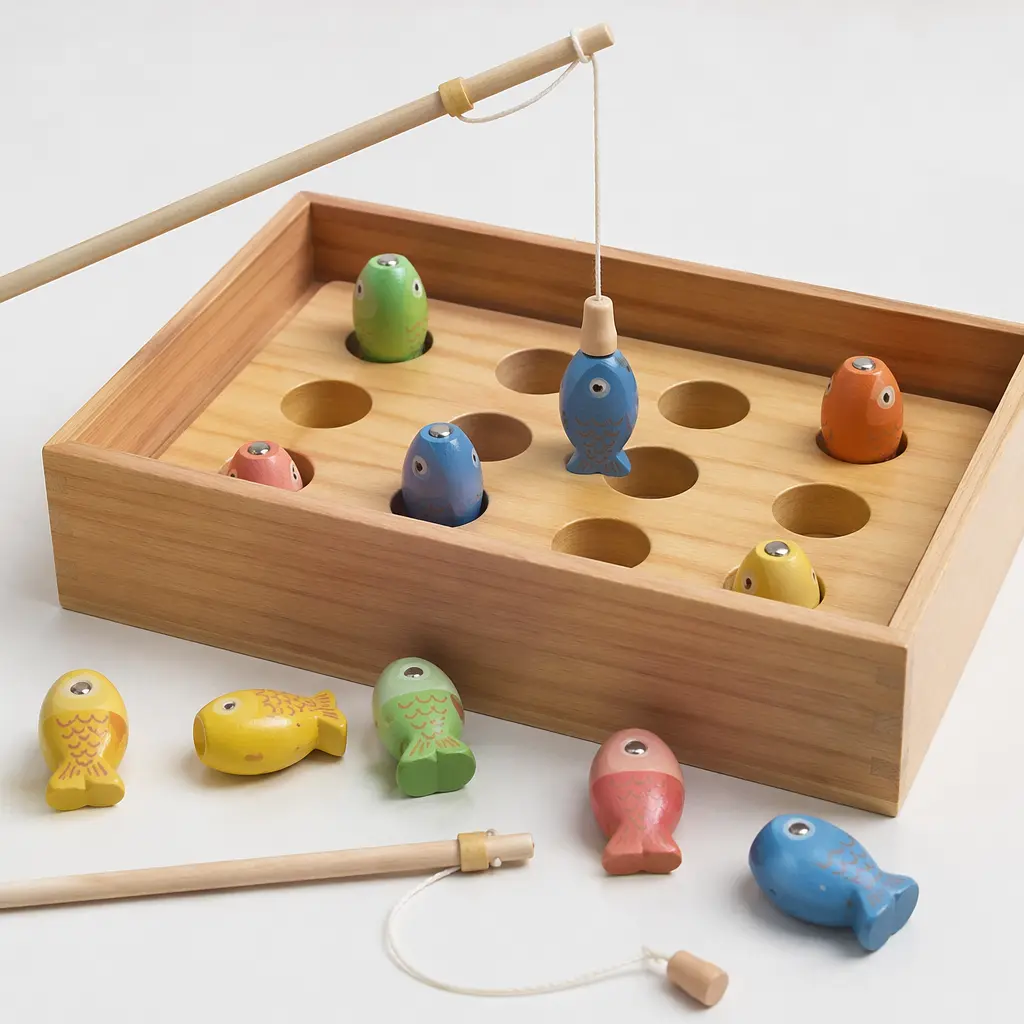
At first glance, a magnetic fishing game looks almost too simple to matter: a handful of wooden fish, a rod with a string, and a hidden magnet. Yet for decades, this quiet toy has held a steady place in nurseries and playrooms. Children lean in, steady their hands, and try—again and again—to make a careful catch. There’s no rush, no noise, and no flashing lights, just the slow satisfaction of mastering a small challenge.
Where it came from
Magnetic fishing games grew out of the broader tradition of mid‑20th‑century wooden toys, when durability and open‑ended play were priorities. As magnets became cheaper and safer to embed, toy makers found a clever way to simulate the familiar act of fishing without hooks, water, or risk. The result was a tabletop game that felt both playful and reassuringly controlled.
Early versions were often handmade or produced by small educational toy companies, designed for classrooms as much as for homes. Teachers used them to support hand‑eye coordination and turn‑taking, while parents appreciated a toy that could occupy children quietly and independently. Over time, the basic idea proved so robust that it barely needed updating.
Why it works
The appeal of a magnetic fishing game lies in its balance of ease and challenge. The magnet offers just enough help to make success possible, but not guaranteed. Children must slow down, align the rod, and control their movements—skills that don’t always come naturally in early childhood.
Unlike puzzles with a single right answer, fishing games invite repetition without pressure. Missing a fish isn’t failure; it’s part of the process. That low‑stakes loop encourages persistence and focus, which is why the toy feels calming rather than frustrating.
- Hidden magnets that reward careful alignment
- Chunky wooden pieces sized for small hands
- Clear cause‑and‑effect between movement and result
- Simple rules that support solo or shared play
Who it's for
Magnetic fishing games are typically aimed at preschoolers, often around ages three and up, when children are developing fine motor control and longer attention spans. They also work well in mixed‑age settings: younger children enjoy the novelty of the magnet, while older ones can add their own rules, such as sorting fish by color or racing to fill a bucket. Adults often find them appealing too, as a screen‑free activity that encourages calm, focused play.
Variants and what to look for today
Modern magnetic fishing games stick closely to the original formula, but there are small variations worth noting. Some sets include a pond board with holes to fish through, while others spread the fish loose on the floor or table. A few add numbers or patterns to support counting and early math, though the core experience remains the same.
When choosing one today, look for smooth finishes, securely enclosed magnets, and sturdy strings that won’t fray easily. Wooden sets tend to age better than plastic, developing a gentle wear that doesn’t affect play. Extremely cheap versions can be tempting, but loose magnets or sharp edges are worth avoiding.
Frequently asked questions
Does a magnetic fishing game really teach skills?
Yes, in a gentle way. The toy supports hand‑eye coordination, patience, and fine motor control without formal instruction. Children learn through repetition and self‑correction.
Is it safe for young children?
Most are designed with safety in mind, using large pieces and enclosed magnets. Adult supervision is still recommended, especially for children under three.
How long will children play with it?
Play often comes in bursts. A child may return to it repeatedly over months, especially as their coordination improves and they invent new ways to play.
Does it work for group play?
Absolutely. Taking turns, setting small challenges, or cooperative sorting games can easily turn a solo activity into a shared one.
In a world crowded with noisy, feature‑packed toys, the magnetic fishing game endures by doing very little—and doing it well. Its quiet challenge respects a child’s pace, offering satisfaction that comes not from winning, but from trying again. That simple promise is why it still earns a place on the playroom floor.