Mighty Max: The Tiny Playsets That Turned Horror Into Pocket Play
Mighty Max transformed compact toys into miniature adventure worlds in the early 1990s, blending monsters, traps, and fold-out environments into a collectible alternative to traditional dollhouse play.
Compare prices and availability
Check current prices and availability for this guide on eBay.
As an eBay Partner, we may be compensated if you make a purchase.
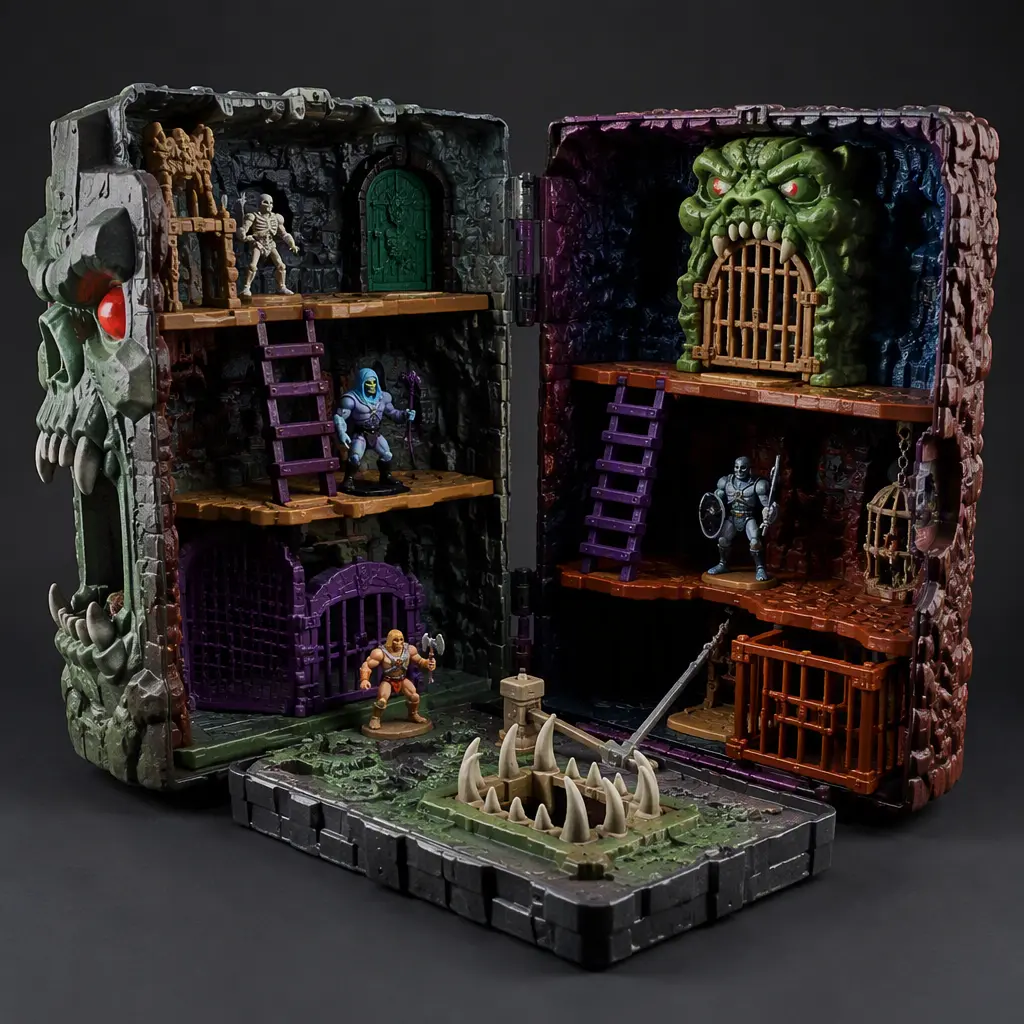
In the early 1990s, Mighty Max offered something that felt surprisingly large despite fitting in a pocket. Each tiny playset unfolded into a miniature world packed with monsters, hidden doors, trap features, and dramatic scenery. At a time when many pretend-play toys leaned toward houses, castles, or action figure vehicles, Mighty Max pushed compact play into darker fantasy territory. The toy line combined collectible appeal with imaginative storytelling, turning a small plastic shell into an entire adventure setting. For many children, the appeal was not just the figures themselves but the act of opening the toy and discovering a complete scene hidden inside.
Where it came from
Mighty Max launched in 1992 through Bluebird Toys, the British company already known for Polly Pocket. Where Polly Pocket focused on pastel domestic settings and compact dollhouse-style play, Mighty Max effectively reimagined the same fold-out concept for monster adventures, fantasy battles, and horror-inspired exploration. The idea was straightforward but clever: take the satisfying compact transformation of a tiny carry-along toy and apply it to boys' action-oriented play patterns that were popular at the time.
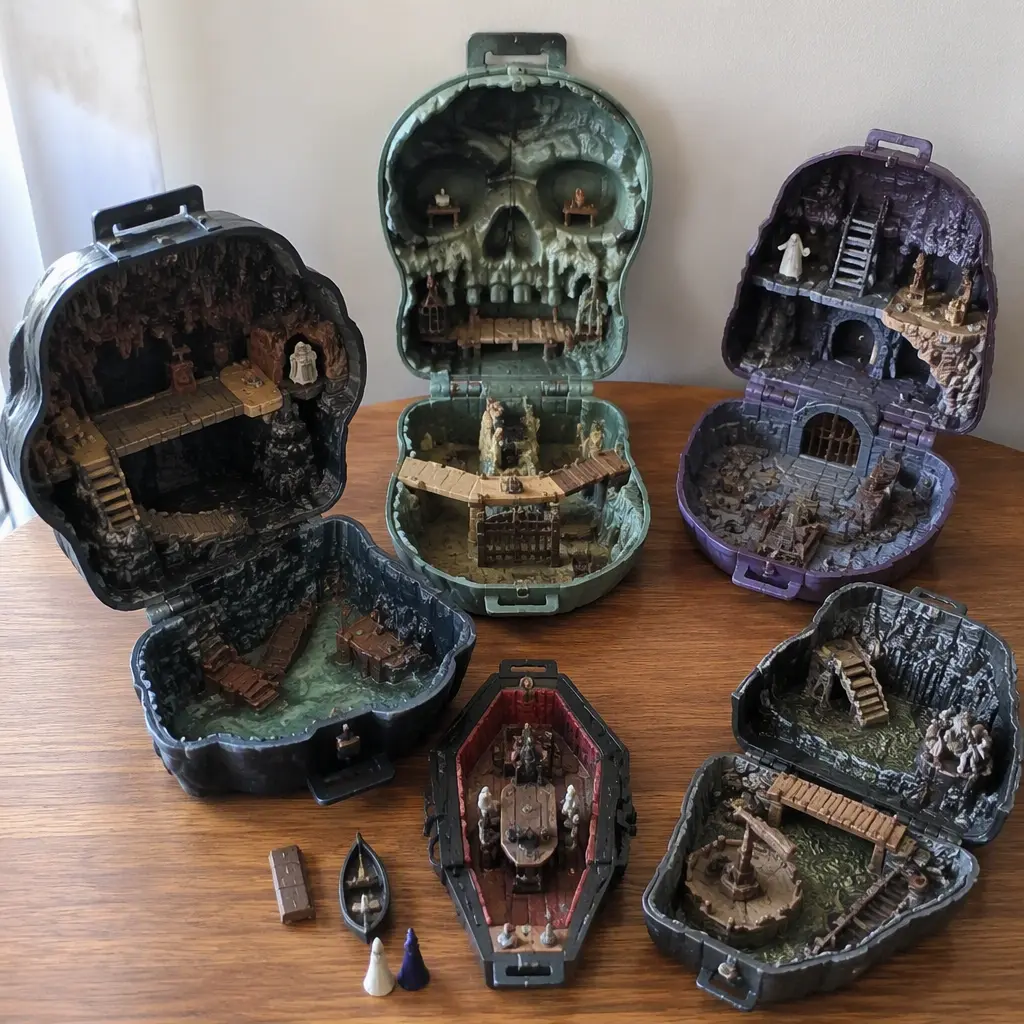
The timing mattered. The early 1990s toy market was full of collectible figures and media-driven action brands, but Mighty Max stood apart because each set doubled as both storage case and environment. Many of the playsets were shaped like skulls, snakes, monsters, or haunted structures that concealed detailed interiors. Opening one felt theatrical, almost like revealing a stage set. The toy line later expanded through cartoons and larger play environments, but the core identity remained rooted in portable worlds that rewarded curiosity and imaginative exploration.
Why it works
The central design trick behind Mighty Max was density. Designers packed a surprising amount of detail into very small spaces. Fold-out hinges revealed multiple rooms, moving traps, ladders, secret compartments, and tiny molded scenery. Unlike many action figure lines that relied on large vehicles or expensive headquarters, Mighty Max delivered an entire narrative environment in the palm of a hand. Children could invent rescues, monster hunts, escapes, or battles without needing a large play area.
The toys also benefited from tactile interaction. Opening clasps, swinging panels, and discovering hidden features created a sense of mechanical discovery that felt closer to a puzzle box than a standard action toy. The horror-inspired themes were stylized rather than graphic, giving the sets a spooky atmosphere without becoming especially intense for most children. The result was a toy family that appealed equally to collectors, imaginative players, and children who simply enjoyed tiny detailed objects.
- Compact fold-out design that doubled as storage and play environment
- Miniature worlds filled with hidden doors, traps, and moving parts
- Monster and fantasy themes that stood apart from traditional dollhouse toys
- Portable size that encouraged travel play and collecting
- Distinct sculpted exterior shells that looked interesting even when closed
Who it's for
Originally, Mighty Max targeted children who enjoyed action figures, monsters, fantasy settings, and collectible toys. The compact scale made the sets especially attractive for children with limited play space or families looking for portable toys during travel. Today, the line has a strong nostalgic following among adults who grew up during the 1990s toy boom. Collectors often appreciate the detailed sculpting and inventive engineering, while younger children still respond to the surprise-and-discovery aspect of opening each playset. Because many original sets contain very small parts, vintage examples are generally better suited to older children and supervised play.
Variants and what to look for today
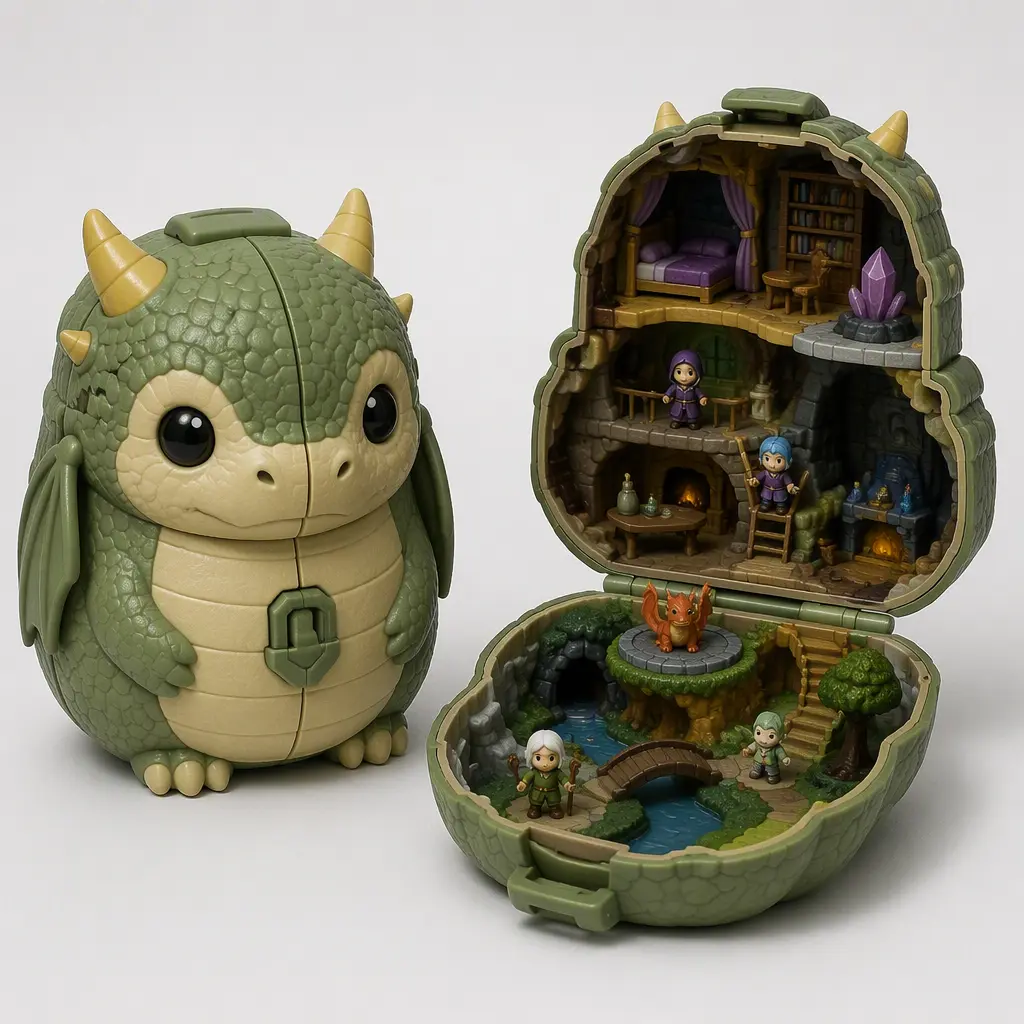
The original Mighty Max line covered a wide range of themes including haunted houses, monster lairs, alien worlds, castles, laboratories, and creature-inspired environments. Some sets emphasized traps and action features, while others focused more heavily on intricate scenery and collectibility. Larger connected playsets and carrying cases also appeared later in the line, expanding the tiny worlds into broader fantasy settings.
For collectors today, condition matters more than rarity claims. Hinges, clasps, ladders, and miniature accessories are often missing on older examples because the toys were heavily handled. Complete sets with original figures and intact mechanisms are usually more desirable than boxed packaging alone. Reproductions and imitation compact playsets also exist, so buyers often look closely at plastic quality, hinge strength, and sculpt detail. Even without collecting every variation, many fans enjoy choosing one or two memorable designs that capture the line's unusual mix of portability and imaginative world-building.
- Look for intact hinges and clasps that still open smoothly
- Check whether tiny accessories and figures are included
- Monster-themed shells with detailed interiors remain especially popular
- Later oversized play environments take up more storage space than the original pocket sets
- Avoid brittle plastic or cracked folding sections on heavily used vintage examples
Frequently asked questions
Was Mighty Max connected to Polly Pocket?
Yes. Both toy lines came from Bluebird Toys and shared the same compact fold-out playset concept. Mighty Max adapted the format into a monster-and-adventure theme aimed at action-oriented pretend play.
Why were the playsets so small?
The miniature scale was part of the appeal. The toys were designed to be portable, collectible, and easy to carry in a pocket or backpack while still unfolding into detailed environments.
Did Mighty Max have a cartoon series?
Yes. An animated television series helped expand the toy line's popularity during the 1990s. The show introduced recurring characters and adventure storylines that matched the toys' fantasy-horror atmosphere.
Are original Mighty Max toys still easy to find?
Many sets still appear through secondhand toy sellers, collector shops, and online marketplaces. Complete examples with all figures and accessories are usually harder to find than loose playsets.
Mighty Max remains memorable because it solved a simple problem in an inventive way: how to make a toy feel expansive without making it physically large. By compressing entire adventures into fold-out cases filled with detail and surprises, the line created a form of pretend play that felt collectible, portable, and theatrical all at once. Decades later, those tiny monster worlds still stand out as one of the more creative twists on compact play design from the 1990s toy industry.