Why the Cocomelon Boo Boo JJ Doll Fits Modern Preschool Play
Moonbug’s Cocomelon Boo Boo JJ Doll reflects the continuing demand for interactive care-play toys linked to streaming brands, blending familiar songs, nurturing routines and simple pretend play for preschoolers.
Compare prices and availability
Check current prices and availability for this guide on eBay.
As an eBay Partner, we may be compensated if you make a purchase.
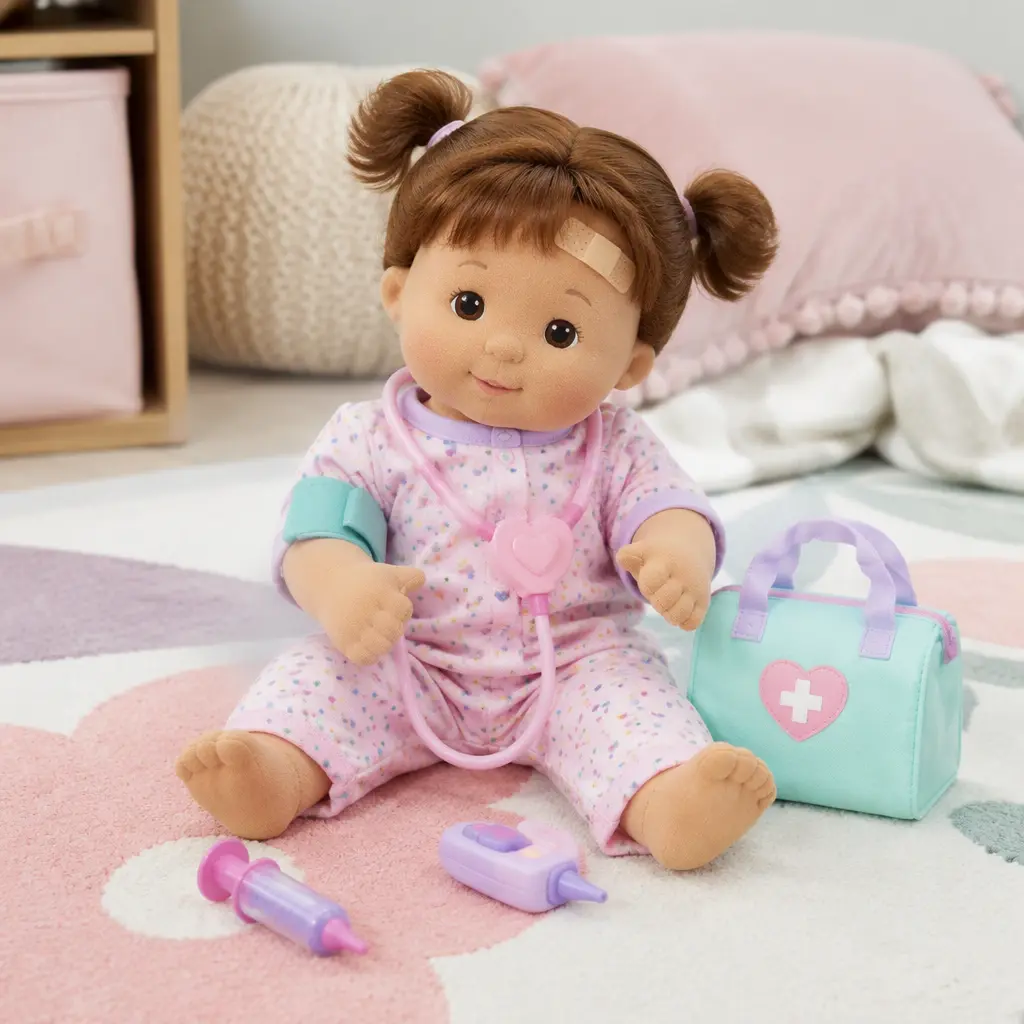
The Moonbug Cocomelon Boo Boo JJ Doll arrives at a moment when preschool toys are increasingly tied to streaming entertainment, yet still rooted in classic pretend play. The basic idea is familiar: a child comforts a doll that has a pretend injury, responds with caregiving routines and hears phrases, sounds or songs linked to a favorite screen character. What makes this category notable is how consistently it survives wider debates about children’s screen time. Parents may limit tablets or television sessions, but many still look for toys that extend familiar characters into hands-on, offline play. That combination has helped interactive care-play dolls remain a durable part of the preschool gift market.
Where it came from
Cocomelon grew from online children’s videos into one of the most recognizable preschool entertainment brands of the streaming era. Its songs, repetitive learning structure and family-focused themes made it especially visible on connected TVs and mobile devices, and toy companies quickly expanded the brand into plush toys, role-play items and interactive dolls. The Boo Boo JJ Doll fits into a long-running tradition of caregiving toys aimed at younger children, but with a modern twist: the emotional familiarity of a character already known from streaming media.
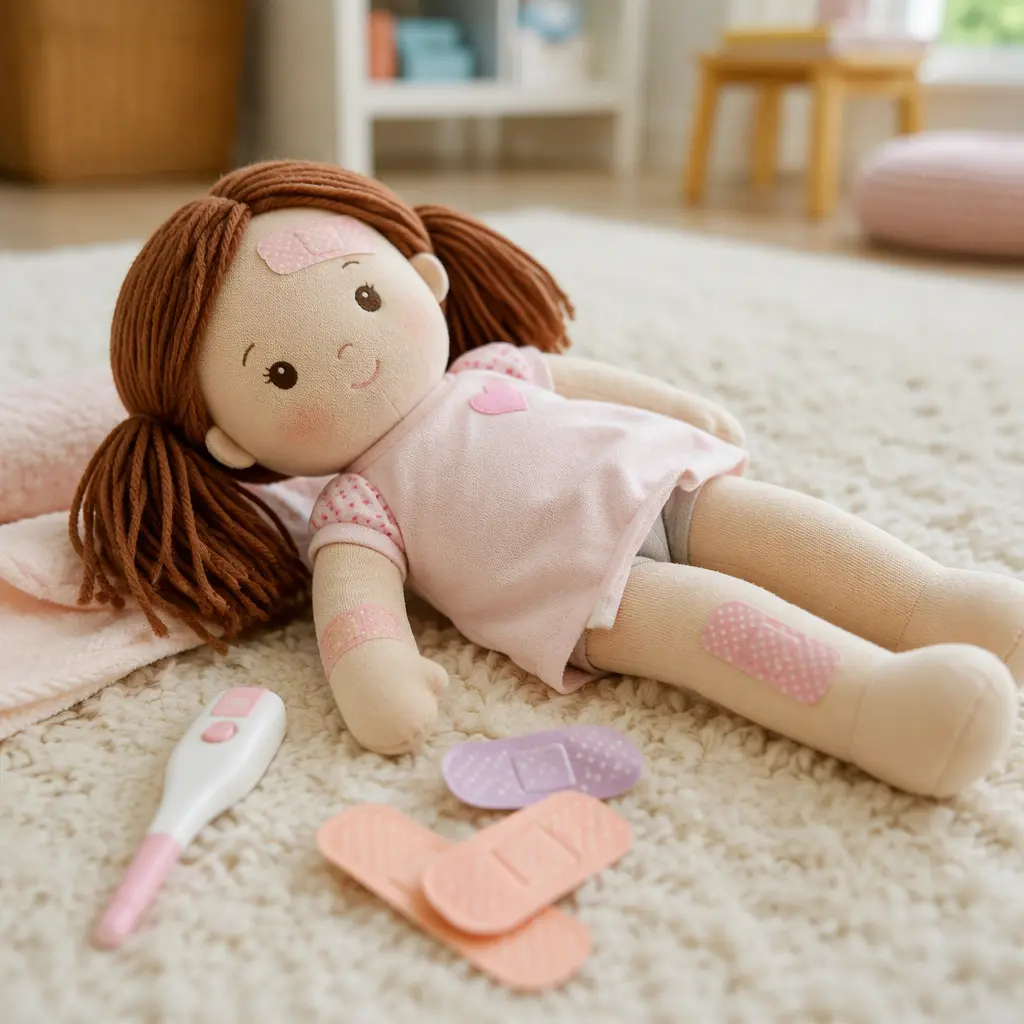
Care-play dolls have existed for decades because they tap into routines children already observe in daily life. Feeding, comforting and helping an injured doll gives preschoolers a way to practice empathy and role-play social interactions. Streaming brands add another layer by creating instant recognition. Instead of inventing a personality from scratch, the toy arrives with a voice, songs and emotional cues children may already associate with bedtime videos or nursery-rhyme playlists. That familiarity can make the toy feel approachable even for children who are just beginning imaginative play.
Why it works
Interactive preschool dolls succeed when the technology stays simple enough not to interrupt play. In the Boo Boo JJ Doll category, the appeal usually comes from a straightforward loop: the doll reacts to touch or accessories, the child performs a caregiving action and the toy rewards that action with sounds, phrases or music. Preschoolers tend to repeat these routines many times, which is part of the appeal rather than a limitation. Repetition helps younger children feel competent and in control of the interaction.
The design also balances screen-connected branding with physical play. Unlike a tablet game, a care-play doll encourages movement around a room, handling accessories and practicing small motor actions like placing a bandage or using a pretend thermometer. Even when electronic features are central to the product, the toy’s value usually depends on how well it supports open-ended pretend play once the novelty of the sounds wears off.
- Character familiarity linked to popular preschool streaming content
- Simple caregiving routines that encourage nurturing play
- Interactive phrases, sounds or songs that reward repeated actions
- Soft-bodied construction designed for hugging and carrying
- Pretend medical accessories that support role-play scenarios
Who it's for
Interactive care-play dolls are typically aimed at preschool-aged children who are beginning to imitate family routines and social interactions. Children who already recognize Cocomelon characters may engage with the toy more quickly, especially if they enjoy musical repetition or pretend caregiving games. Adults often view toys like this as a compromise between character-based entertainment and more tactile, imaginative play. For some families, the appeal lies in moving engagement with a familiar media brand away from a screen and into a physical toy box. Others may prefer to limit branded entertainment products altogether, particularly if they are trying to reduce character-driven purchasing requests. Much depends on how the toy fits into a household’s broader media habits.
Variants and what to look for today
The broader market for interactive preschool dolls now includes everything from simple sound toys to app-connected companions with microphones, cameras or cloud-linked features. The Boo Boo JJ Doll sits closer to the traditional end of that spectrum, focusing on direct toy interaction rather than advanced AI conversation. That distinction matters for parents comparing products. Some connected toys rely heavily on companion apps or online updates, while many care-play dolls function mostly offline once batteries are installed.
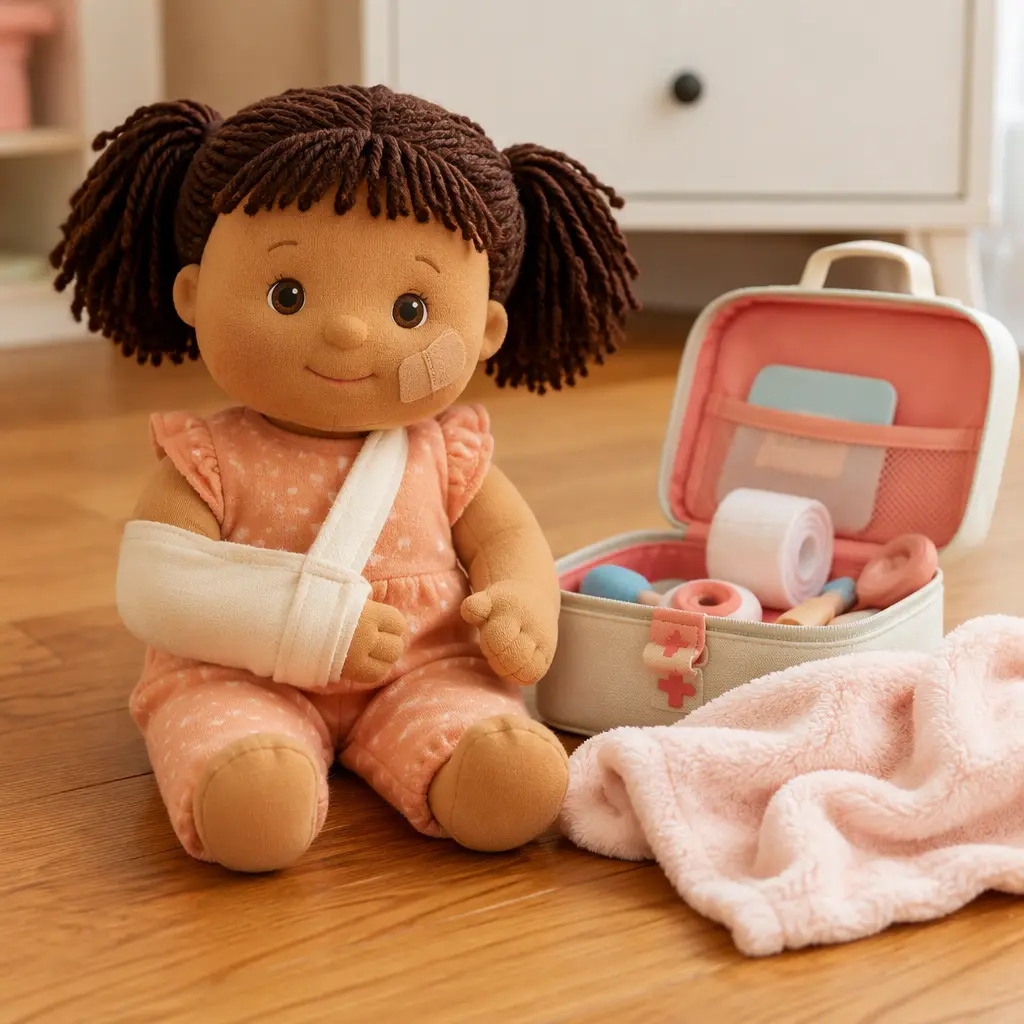
Shoppers looking at this category today often compare durability, sound volume, ease of cleaning and accessory design as much as electronic features. Character-branded dolls can vary widely in size and softness, and some are built primarily for display while others are intended for active preschool handling. It is also common to see generic lookalike dolls inspired by popular trends without the same materials or support from established toy makers.
- Check whether batteries are included or required separately
- Look for washable or wipe-clean materials where possible
- Consider whether sound features can be adjusted or muted
- Compare accessory size carefully for younger children
- Buy from established retailers to reduce the chance of poor-quality imitation products
Frequently asked questions
Are interactive dolls replacing traditional dolls?
Not entirely. Traditional dolls without electronics still sell widely, especially for open-ended pretend play. Interactive dolls occupy a parallel category that adds sound, reactions or guided routines to the experience.
Do toys tied to streaming brands encourage more screen time?
That depends on how they are used in a household. Some families see branded toys as an extension of screen-based entertainment, while others use them as a way to shift interest toward physical play away from a device.
Does the Boo Boo JJ Doll use generative AI?
Interactive preschool dolls in this style are generally based on pre-recorded sounds, scripted responses and simple sensors rather than generative AI systems. They typically react to actions in limited, predictable ways.
What should parents check before buying an interactive doll?
It helps to confirm battery requirements, cleaning instructions, accessory size and whether the toy depends on an app or internet connection. Parents may also want to consider how often sounds or music can realistically be tolerated in shared living spaces.
The Moonbug Cocomelon Boo Boo JJ Doll reflects a broader shift in preschool toys, where familiar streaming characters increasingly serve as the starting point for physical play rather than the end point. Whether families embrace or avoid heavily branded entertainment products, the continuing popularity of care-play dolls suggests that nurturing routines, repetition and imaginative role-play remain powerful parts of early childhood play patterns.