Plarail: The Blue-Track Train System That Never Stopped
Introduced in Japan in 1959, Plarail turned battery-powered toy trains into an expandable play system that has lasted for generations through durable design, simple mechanics, and constant reinvention.
Compare prices and availability
Check current prices and availability for this guide on eBay.
As an eBay Partner, we may be compensated if you make a purchase.
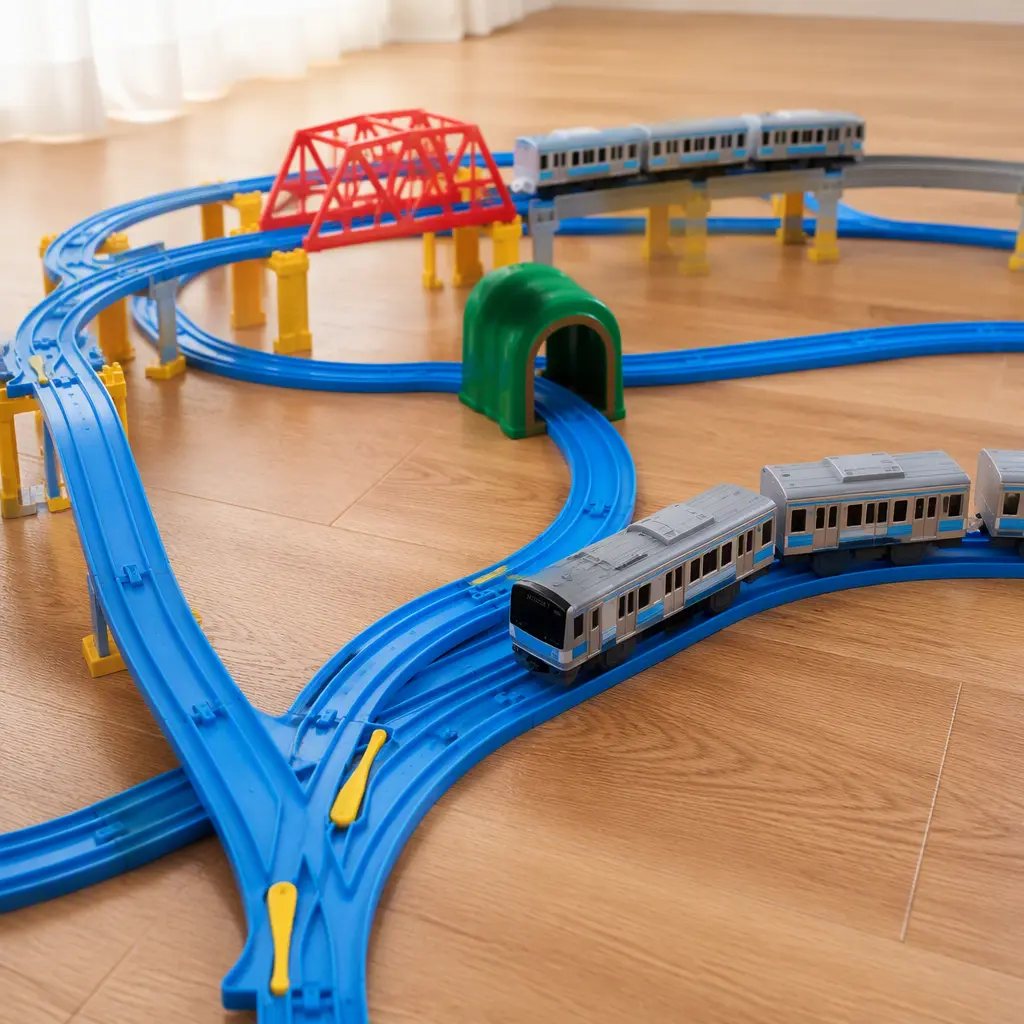
For many families in Japan, Plarail is less a single toy than a permanent fixture of childhood. The blue plastic tracks and battery-powered trains first appeared in 1959, and decades later the system still works in much the same way: children snap together lightweight track pieces, place a train on the rails, and watch it circle endlessly through bridges, stations, and improvised cities. What makes Plarail remarkable is not just its longevity, but how quietly consistent it has been. While many toy lines reinvent themselves every few years, Plarail kept refining the same core idea until it became one of the longest-running train systems in the world.
Where it came from
Plarail began in Japan in 1959 under the company Tomiyama, which later became Tomy and eventually part of Takara Tomy. The original concept was straightforward: affordable battery-powered trains running on modular plastic track. Earlier toy trains often relied on metal rails, clockwork motors, or expensive electric systems. Plarail simplified the experience into something sturdy enough for everyday family play and easy enough for young children to assemble without tools.
The timing mattered. Japan's postwar rail network was expanding rapidly, and trains occupied a visible place in daily life. Plarail reflected that culture by modeling recognizable commuter trains, express services, and later high-speed bullet trains. Yet the appeal traveled well beyond Japan because the system itself was universal. The track pieces clicked together intuitively, layouts could grow gradually over time, and the trains were durable enough to survive years of repeated use. Parents could buy one starter set and keep adding to it as children became more ambitious builders.
Why it works
At its heart, Plarail succeeds because it balances structure and freedom. The trains move automatically with simple battery-powered motors, giving younger children the satisfaction of motion without requiring complicated controls. At the same time, the track system encourages experimentation. Curves, switches, tunnels, bridges, and elevated loops let children redesign their layouts repeatedly. Unlike static toys that look the same every day, a train system naturally invites rebuilding.
The design also understands how children actually play. The bright blue track is lightweight and forgiving, making it easy to snap together and difficult to damage. Most trains are chunky enough for small hands but detailed enough to resemble real rolling stock. Because the system remained mechanically consistent across generations, older pieces often still connect with newer ones. That continuity helped create a secondhand market and a tradition of handing collections down within families.
- Battery-powered operation keeps play simple for younger children
- Modular track system supports open-ended layouts
- Lightweight plastic pieces are durable and easy to assemble
- Wide variety of train styles encourages collecting
- Compatibility across many generations extends the system's lifespan
Who it's for
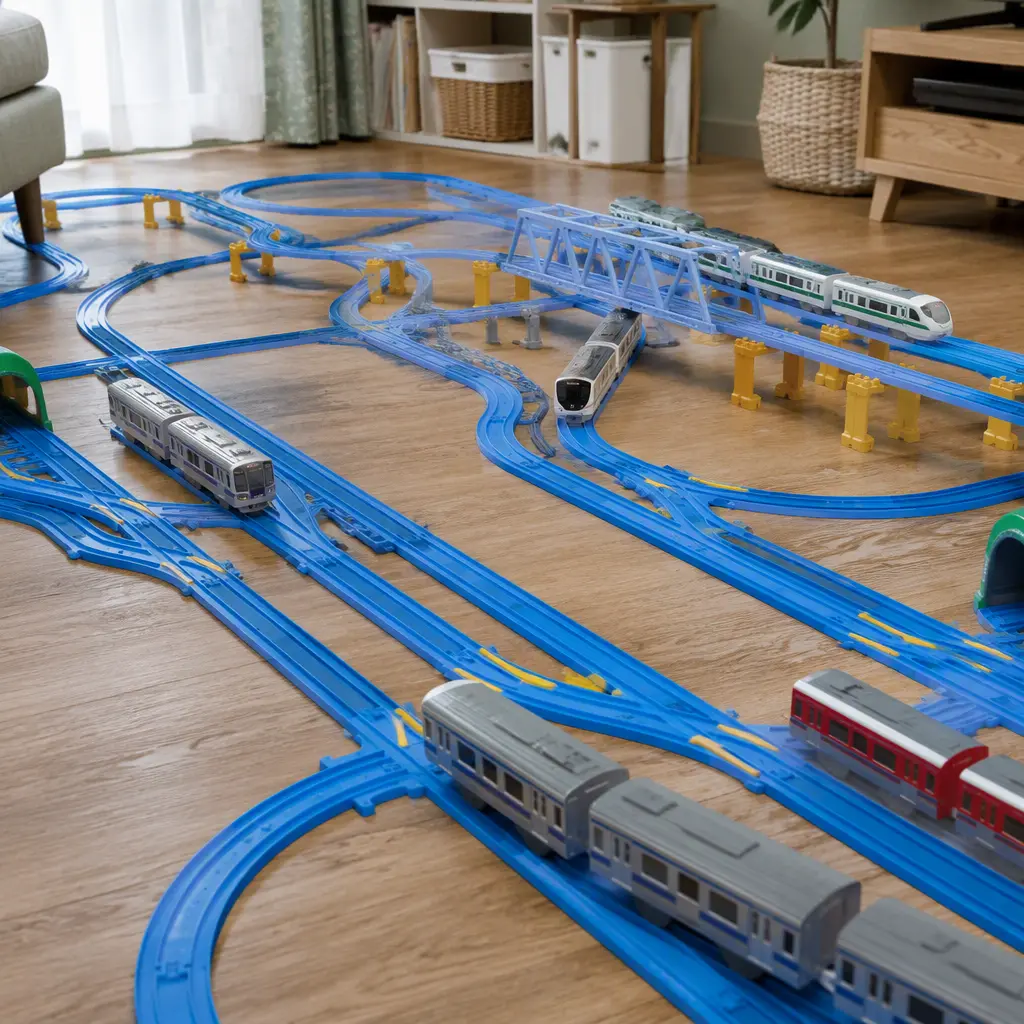
Plarail is usually aimed at preschool and early elementary-age children, but its audience stretches wider than that. Younger kids often enjoy the motion and repetitive play patterns, while older children become interested in engineering larger layouts with switches and layered track designs. Adults remain part of the fan base as well, especially railway enthusiasts and collectors interested in Japanese train culture. Some families treat Plarail as a collaborative toy that spreads across the floor for weekend building sessions rather than something used by one child alone.
Variants and what to look for today
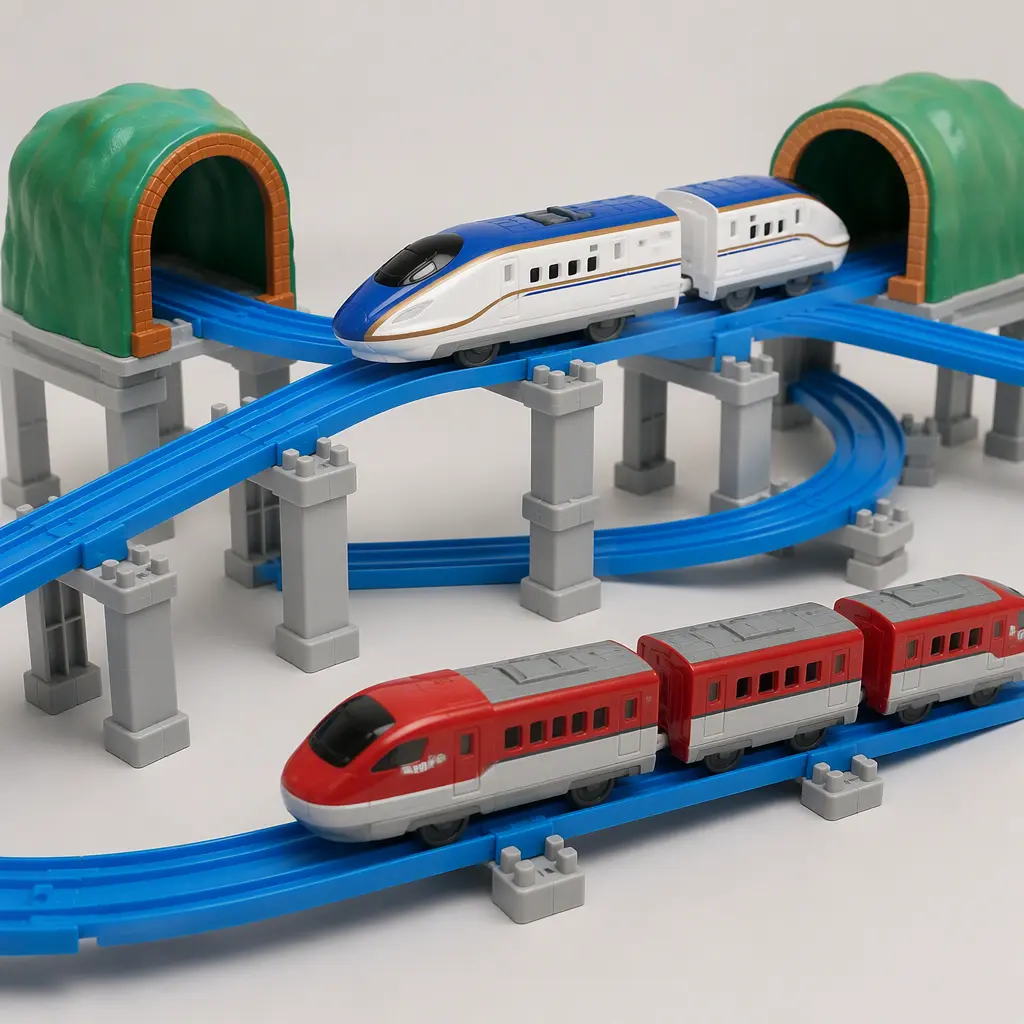
One reason Plarail endured is that it expanded without abandoning its core format. Over the years the line added bridges, stations, cargo yards, monorails, talking accessories, remote-control features, and themed train designs inspired by real rail systems. Modern sets often emphasize large layouts with multiple levels, while simpler starter kits still focus on basic loops and a single train. The familiar blue track remains the visual signature tying the generations together.
Buyers today will encounter both official Japanese releases and compatible alternatives from other brands. Older pieces are common in secondhand markets because the plastic track tends to survive long-term use surprisingly well. When shopping, the biggest differences usually involve motor quality, battery compartment condition, and track fit rather than cosmetic wear alone. Families starting fresh often benefit from choosing a basic starter layout first and adding expansion packs later rather than buying oversized collections immediately.
- Starter sets are useful for learning the track system before expanding
- Secondhand track can be a cost-effective way to build large layouts
- Battery compartments should be checked for corrosion in older trains
- Very small accessories may not suit younger toddlers
- Some compatible off-brand track pieces fit loosely compared with official parts
Frequently asked questions
Is Plarail the same as Thomas-style wooden train systems?
No. Wooden train systems usually rely on push-along play and magnetic couplings, while Plarail focuses on battery-powered movement and plastic snap-together track. The play style is more about motion, automation, and building large looping layouts.
Do older Plarail tracks still work with newer sets?
In many cases, yes. One of the line's strengths is long-term compatibility. Track geometry remained fairly consistent across decades, allowing many older and newer pieces to connect together.
Why are blue tracks so closely associated with Plarail?
The bright blue plastic became part of the brand identity over time. It is visually recognizable, durable, and easy for children to assemble. For many fans, the blue track is as iconic as the trains themselves.
Is Plarail mainly popular in Japan?
Japan remains the line's strongest market because of the country's rail culture and long history with the brand, but exported sets and international fan communities helped spread interest worldwide. Collectors outside Japan often seek out specific train styles unavailable in local toy stores.
Plarail never depended on complicated electronics or dramatic reinvention to survive. Its success came from consistency: reliable battery-powered trains, expandable track, and a system simple enough for children but flexible enough to grow over years of play. That combination turned a modest Japanese train toy into a multigenerational staple that continues to circle living room floors more than six decades after it first appeared.