Playmobil Castle Sets: Medieval Worlds Beyond Movie Tie-Ins
Playmobil castle sets turned simple medieval play into an enduring toy category. Decades after their 1974 debut, these modular forts and figures still attract children and collectors alike.
Compare prices and availability
Check current prices and availability for this guide on eBay.
As an eBay Partner, we may be compensated if you make a purchase.
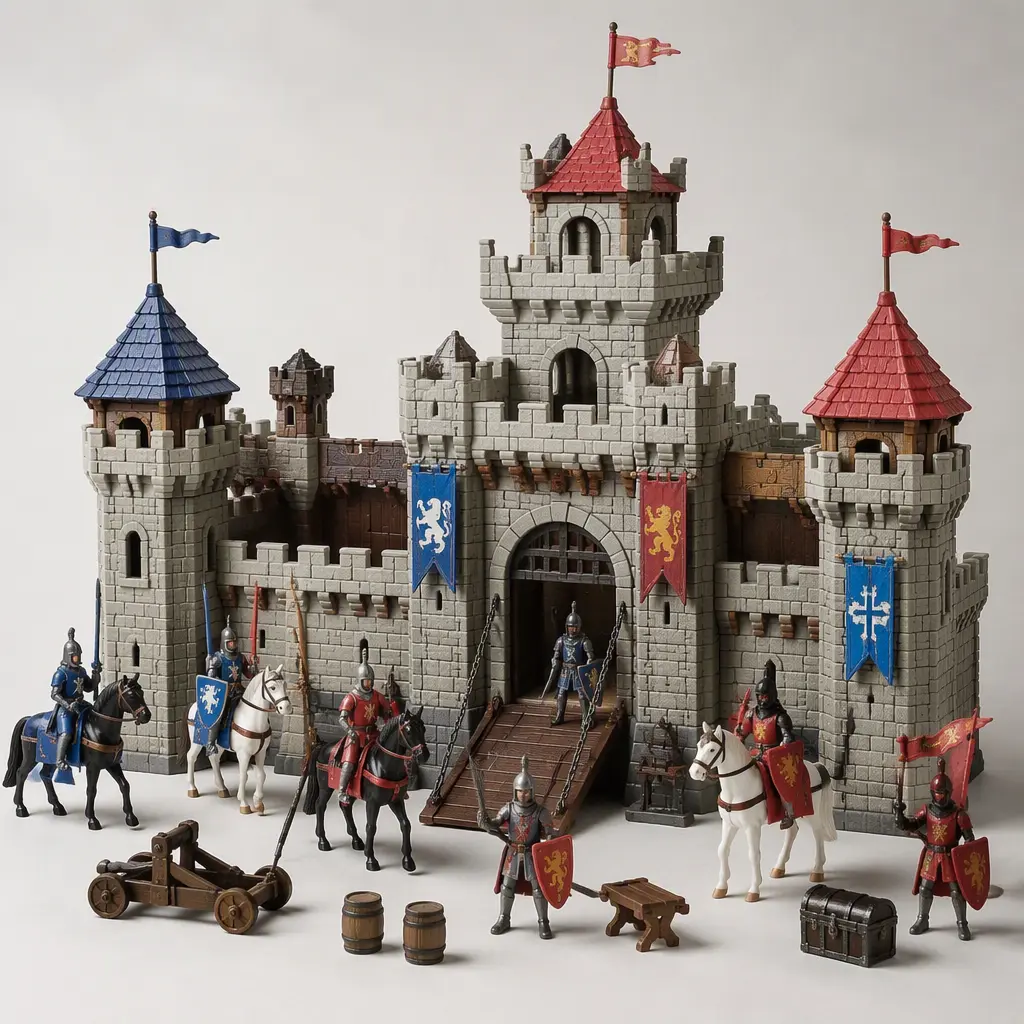
Playmobil castle sets occupy a particular corner of the toy world that has stayed surprisingly durable. While many play lines now depend on movie licenses, streaming tie-ins, or fast-changing character brands, medieval Playmobil sets continue to sell on the strength of open-ended imaginative play. Their castles, knights, horses, blacksmith shops, siege towers, and village scenes offer children a complete world to build and rearrange without requiring familiarity with a film or television story. That flexibility has helped the line survive changing toy trends for decades.
Where it came from
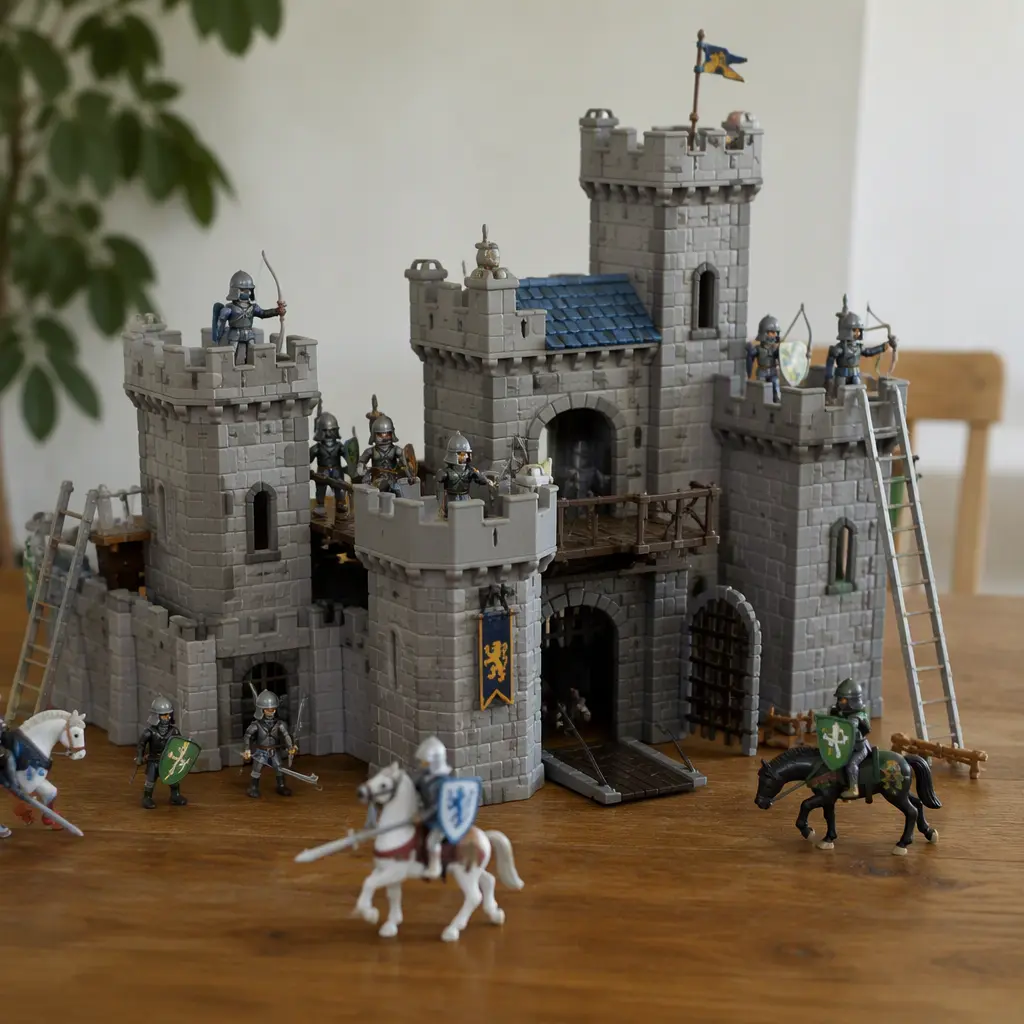
Playmobil was introduced by the German company Geobra Brandstätter in 1974 during a period when rising oil prices pushed toy makers to rethink how much plastic they used. Designer Hans Beck responded with a compact figure format built around simple movement and durable construction. The now-familiar figures measured just a few inches tall, with rotating heads, moving arms, and grasping hands that could hold accessories. Instead of focusing on realism or complex mechanics, the figures encouraged children to supply the story themselves.
Castle and medieval-themed sets became one of the brand’s most recognizable themes not long after launch. The setting made sense for Playmobil’s strengths. Castles naturally divide into rooms, towers, gates, walls, and defensive structures that can be expanded over time. Medieval play also supports many roles at once: knights, kings, stable workers, merchants, guards, archers, and travelers can all share the same play world. Unlike heavily scripted franchise toys, the medieval setting leaves plenty of room for children to invent alliances, battles, rescues, or everyday village life.
Why it works
A major reason Playmobil castle sets endure is their balance between structure and imagination. The toys provide enough detail to suggest a believable world, but not so much that play becomes rigid. Figures have simple expressions and standardized proportions, which makes it easy to mix characters from different themes and generations. A castle from one era of the line can usually connect visually with newer sets without feeling out of place.
The physical design also matters. Playmobil castles are large enough to feel immersive but typically less overwhelming than giant electronic playsets. Walls open for access, towers connect modularly, and accessories encourage handling rather than display-only collecting. Children can stage battles, organize defenses, care for horses, or simply rearrange furniture and equipment. The toys reward repeat play because the environment can change from session to session.
- Modular castle sections that can expand over time
- Simple articulated figures designed for active handling
- Large range of medieval accessories including horses, carts, weapons, and tools
- Mix-and-match compatibility across many years of releases
- Open-ended storytelling without dependence on licensed characters
Who it's for
Playmobil castle sets are generally aimed at children who enjoy imaginative role play and hands-on world building, often beginning around early elementary-school age depending on the complexity of the set. Smaller accessory-heavy sets may require more supervision for younger children because of tiny pieces. The appeal also extends well beyond kids. Adult collectors often appreciate the detailed architecture, nostalgic connection to childhood, and display possibilities. Some collectors focus on complete vintage castles from the 1970s and 1980s, while others combine modern and classic pieces into large custom medieval layouts.
Variants and what to look for today
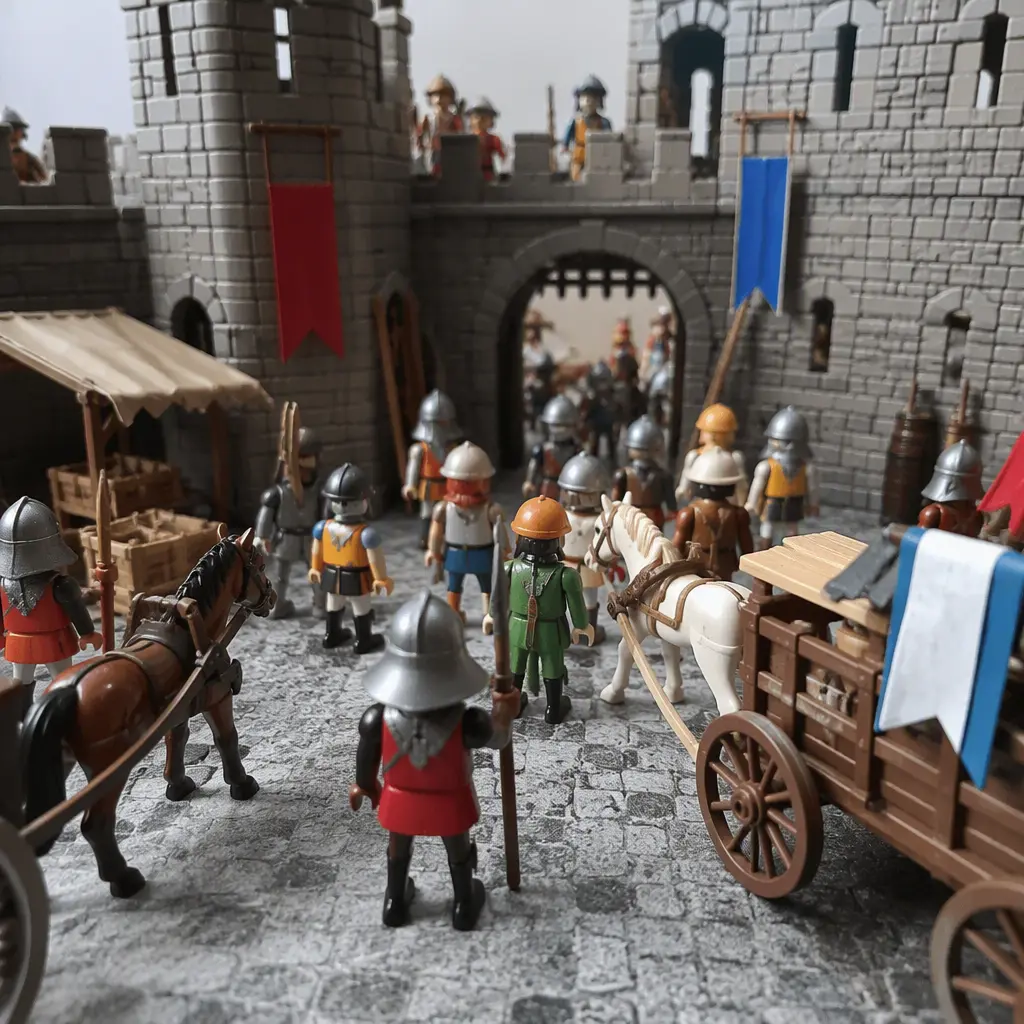
Over the years, Playmobil castle sets have ranged from compact guard towers to large multi-section fortresses with drawbridges, prisons, trapdoors, and battle equipment. Some editions lean toward realistic medieval life, while others introduce fantasy-inspired elements like dragons or oversized siege machines. The core design language, however, has stayed consistent enough that older and newer sets usually feel compatible when displayed together.
Buyers today will find a mix of new retail releases, secondhand vintage sets, and loose replacement parts. Condition matters more than rarity for most families. Hinges, clips, flags, ladders, and small accessories are commonly lost over time, so checking completeness can save frustration later. Generic imitation building figures also exist, but the original Playmobil system is known for sturdier plastic, reliable fit between accessories, and long-term compatibility across generations.
- Starter castles with a few figures are easier for younger children to manage
- Larger fortresses often include modular walls and multiple play zones
- Vintage sets may show color fading or missing accessories
- Loose replacement figures and animals are widely available through resale markets
- Storage bins help keep small medieval accessories organized between play sessions
Frequently asked questions
Are older Playmobil castle sets compatible with newer ones?
In most cases, yes. One of the strengths of the Playmobil system is long-term compatibility. Figures, horses, weapons, furniture, and many structural pieces from different decades can usually be combined without much difficulty.
Do Playmobil castle sets focus on battles?
Battle play is part of the theme, but the sets typically include broader medieval life elements as well. Markets, blacksmiths, stables, kitchens, and royal living spaces help create a fuller pretend-play environment rather than a purely combat-focused toy line.
Are these sets mainly for collectors now?
Not at all. Collectors remain an important audience, especially for vintage castles, but the line still functions primarily as an active children’s toy. Durability and imaginative flexibility remain central to the appeal.
Why have medieval themes lasted so long in toys?
Medieval settings offer a mix of adventure, architecture, animals, costumes, and clear storytelling roles that translate easily into play. Castles also create natural physical spaces for organizing stories, which helps children build ongoing imaginative worlds.
Playmobil castle sets have survived multiple generations of toy trends because they rely on a timeless idea: giving children a world they can shape themselves. In an industry increasingly driven by recognizable entertainment brands, these medieval playsets continue to prove that imaginative freedom still has lasting value.