The Playskool Shape Sorter: Learning to think before words
Long before letters and screens, the Playskool Shape Sorter helped toddlers learn problem-solving by feel. Here’s how this classic toy quietly shaped early learning for generations.
Compare prices and availability
Check current prices and availability for this guide on eBay.
As an eBay Partner, we may be compensated if you make a purchase.
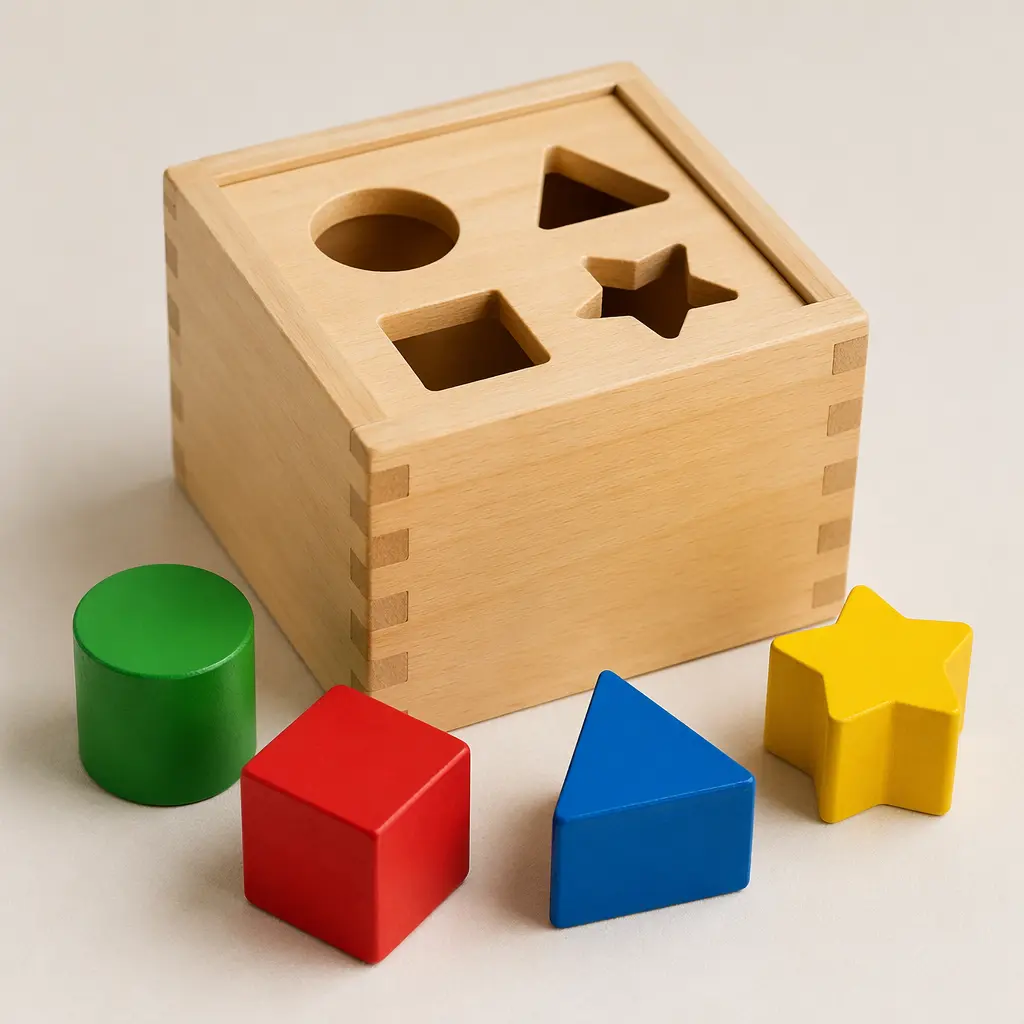
The Playskool Shape Sorter is the kind of toy many adults remember without remembering its name. A box. A handful of bright shapes. A simple challenge: match the piece to the hole. There are no instructions, no sounds, no screens—yet for babies and toddlers, it’s often their first real puzzle. Its quiet brilliance lies in teaching problem-solving before a child has the words to describe what they’re doing.
Where it came from
Playskool emerged in the early 20th century with a focus on learning-through-play, working alongside educators to design toys that matched how children actually develop. Shape-sorting toys became part of that mission in the mid-1900s, when early-childhood research began emphasizing hands-on exploration over rote instruction.
The Playskool Shape Sorter wasn’t created as a flashy product or a trend-chaser. Its original purpose was practical: help very young children practice coordination, spatial awareness, and cause-and-effect in a way that felt like play. Over time, the toy became a nursery staple, passed down and repurchased generation after generation with only minor changes to materials and colors.
Why it works
At its core, the shape sorter works because it aligns perfectly with how toddlers learn. Children experiment, fail, adjust, and try again—often without adult prompting. The reward isn’t a sound or a light, but the satisfying moment when the piece finally drops through.
The design removes distractions and focuses attention on a single challenge. That simplicity helps children build confidence while laying groundwork for later skills like logic, patience, and independent problem-solving.
- Clear cause-and-effect: correct matches lead to immediate success
- Chunky shapes sized for small hands
- Bright, contrasting colors that support visual discrimination
- Repetition without boredom, allowing mastery at a child’s pace
Who it's for
The Playskool Shape Sorter is typically aimed at babies and toddlers roughly 9 months to 2 years old, though many children return to it beyond that stage. Adults often appreciate it too, especially parents looking for toys that encourage independent play without noise or screens. Its open-ended nature makes it suitable for a wide range of developmental stages.
Variants and what to look for today
Modern Playskool-style shape sorters come in a variety of materials, from classic molded plastic to wood and soft fabric versions for younger babies. Some include handles, removable lids, or extra shapes to extend play value.
When choosing one today, look for sturdy construction, smooth edges, and shapes that are large enough to avoid choking hazards. Generic knock-offs can look similar but may use brittle plastics or poorly fitting shapes that frustrate rather than teach.
Frequently asked questions
At what age can babies start using a shape sorter?
Many babies begin exploring shape sorters around 9 months, often by mouthing or banging the pieces. Actual sorting typically emerges closer to 12–18 months.
Is a shape sorter still useful if my child can already match shapes?
Yes. Children often invent new ways to play, such as sorting by color, naming shapes, or using the box for imaginative play.
Do electronic versions offer the same benefits?
Electronic versions can be engaging, but they may reduce problem-solving by providing prompts or rewards too quickly. Traditional versions encourage deeper concentration.
Why has this toy lasted so long?
Because it addresses universal developmental needs with minimal complexity—something that doesn’t age or go out of style.
In a world crowded with blinking lights and digital distractions, the Playskool Shape Sorter remains quietly confident. It doesn’t shout for attention or promise miracles. Instead, it offers something rarer: a simple challenge that lets a child discover, on their own, that thinking things through can be rewarding.