Slinky: How a simple spring became an enduring toy classic
Invented by accident in 1945, the Slinky turned a steel spring into a cultural icon. This profile explores its origins, clever design, lasting appeal, and what to look for when buying one today.
Compare prices and availability
Check current prices and availability for this guide on eBay.
As an eBay Partner, we may be compensated if you make a purchase.
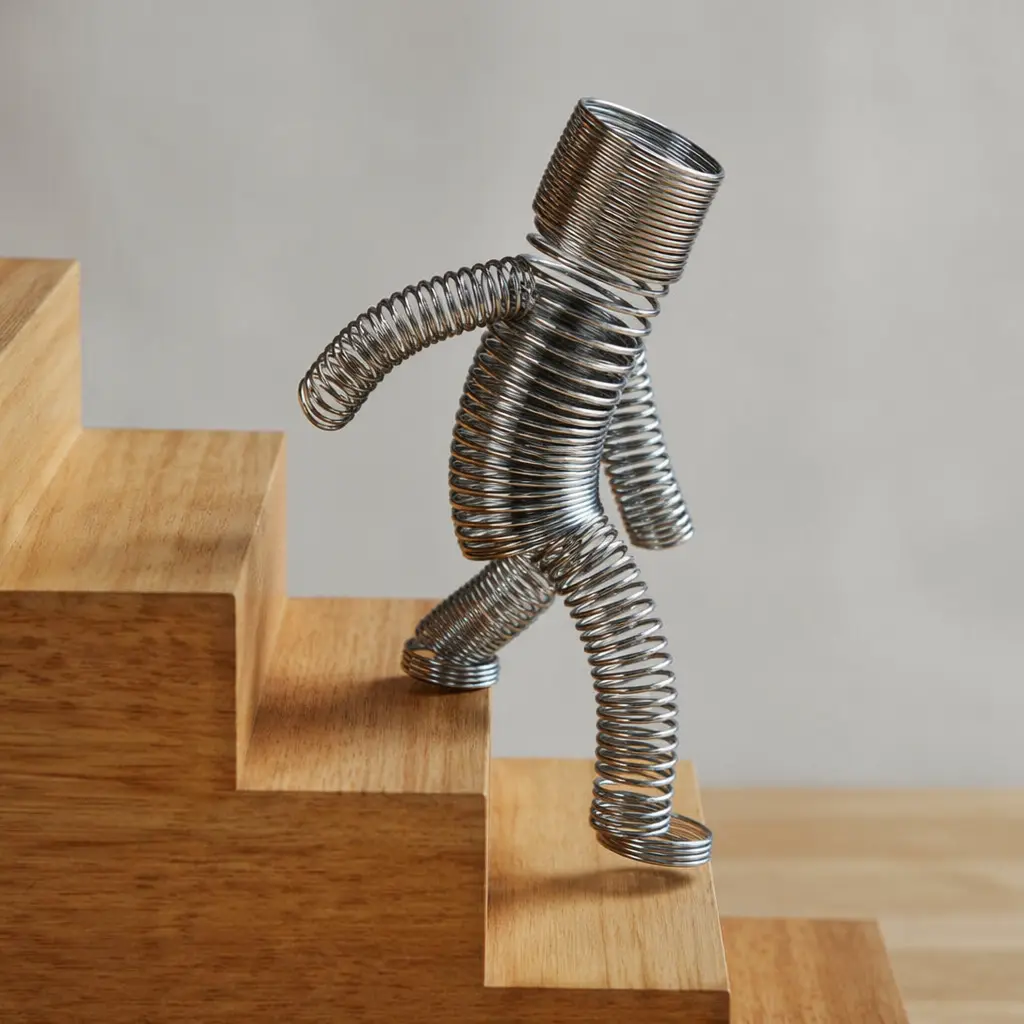
Few toys are as instantly recognisable—or as hard to explain—as the Slinky. It’s just a spring, after all. Yet for generations of children (and more than a few adults), watching a Slinky walk down a set of stairs or spill across the floor has been endlessly fascinating. With no batteries, screens, or rules, the Slinky proves how far a simple idea can go when physics and play line up just right.
Where it came from
The Slinky was born in 1945, thanks to a happy accident. Naval engineer Richard James was working with tension springs when one slipped off a shelf and began to ‘walk’ across the floor. Instead of snapping or rolling uselessly, it moved in a smooth, rhythmic way that caught his attention. James sensed there was something playful—and sellable—about the motion.
With his wife Betty helping to name and market the toy, James introduced the Slinky to the public in a Philadelphia department store. Early demonstrations sold out quickly, and the toy took off in post-war America. Its low price and mesmerising behaviour made it accessible at a time when families were eager for simple, joyful distractions.
Why it works
At its core, the Slinky is a lesson in physics you can hold in your hands. Gravity, momentum, and tension do all the work, creating motion that feels almost alive. There’s no right or wrong way to play with it, which invites experimentation and discovery rather than instruction.
- Balanced weight and tension that allow it to ‘walk’ smoothly
- Durable spring design that snaps back into shape
- Open-ended play with no rules or setup
- Satisfying visual and tactile feedback
This blend of simplicity and surprise is why the Slinky has endured. It’s equally at home as a science demo, a desk toy, or a source of quiet, repetitive play that can feel almost meditative.
Who it's for
The Slinky is typically recommended for children aged five and up, mainly because younger children may tangle or overstretch it. That said, much of its charm crosses age lines. Kids enjoy the movement and experimentation, while adults often rediscover it as a stress-reliever or nostalgia piece. It’s one of those rare toys that doesn’t talk down to any age group.
Variants and what to look for today
While the original metal Slinky remains the benchmark, today’s versions come in a range of materials and colours. Plastic Slinkys are lighter, quieter, and often more forgiving if bent out of shape, making them popular for younger children. Metal versions have the classic weight and motion many people remember.
When shopping today, look for evenly spaced coils and a spring that feels firm without being stiff. Poorly made copies may tangle easily or lose their shape after a few uses. Larger novelty sizes exist, but the standard size is still the most versatile and satisfying for everyday play.
Frequently asked questions
Is a metal or plastic Slinky better?
Metal Slinkys offer the classic look and smoother stair-walking motion, while plastic versions are lighter and safer around furniture and fingers. The best choice depends on age and preference.
Can a tangled Slinky be fixed?
Minor bends can sometimes be eased out by gently working the coils back into place. Severe tangles, especially in metal versions, are often permanent.
Is the Slinky educational?
Yes. It’s frequently used to demonstrate basic physics concepts like gravity, waves, and energy transfer in a hands-on, memorable way.
Does it still appeal to kids today?
Despite competing with digital toys, many children are still drawn to the Slinky’s movement and simplicity—especially when they discover it can do something unexpected.
More than 75 years after its debut, the Slinky remains a reminder that great toys don’t need complexity. A single, well-made spring continues to spark curiosity, calm busy hands, and connect generations through shared play.