Stikfas: The Figure Kits That Predicted Custom Collectibles
Launched in the early 2000s, Stikfas combined model-kit assembly with highly poseable action figures, anticipating today's customizable collectibles and creator-focused toy culture.
Compare prices and availability
Check current prices and availability for this guide on eBay.
As an eBay Partner, we may be compensated if you make a purchase.
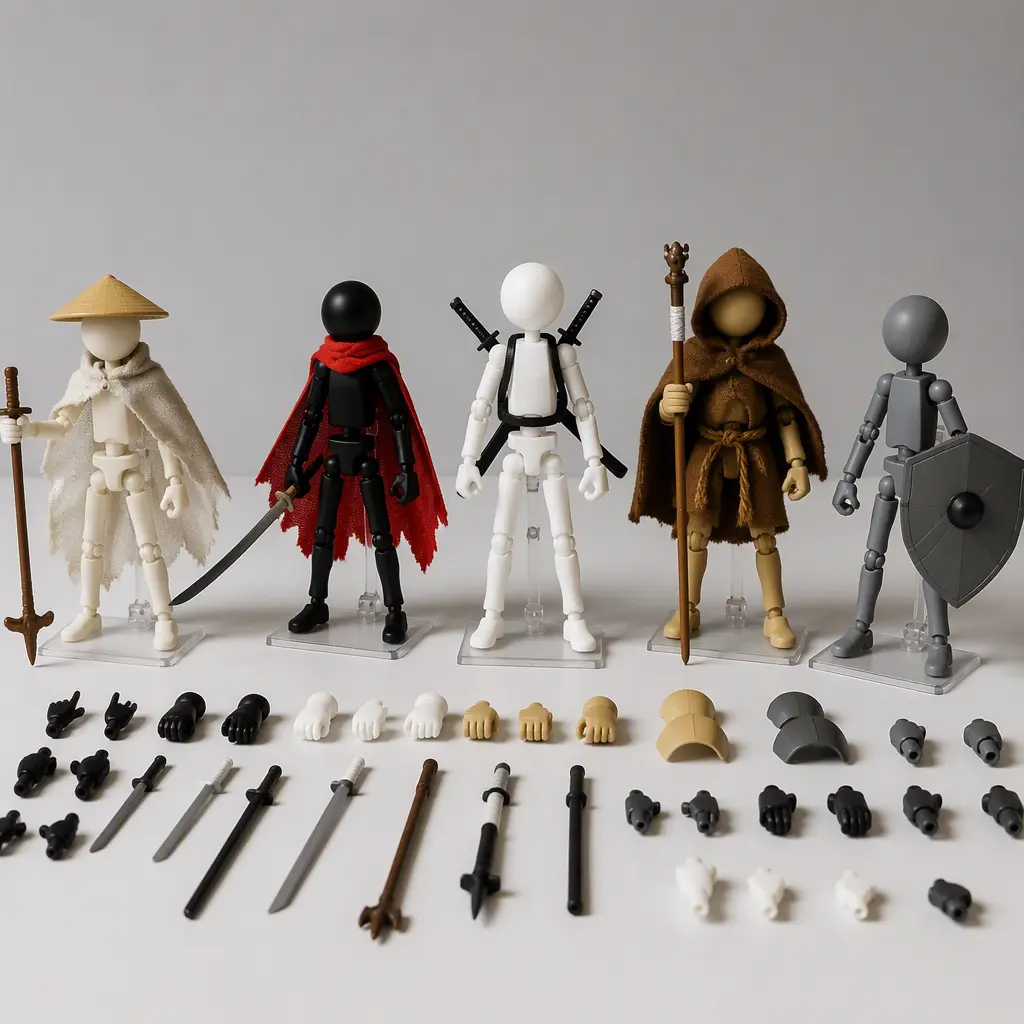
Stikfas arrived at an unusual moment in toy history. In the early 2000s, action figures were becoming more detailed, model kits were growing more niche, and online hobby communities were starting to influence what collectors wanted from toys. Stikfas combined pieces of all three worlds. The figures came as small kits that owners assembled themselves, but unlike traditional static models, they were designed to move, pose, swap parts, and encourage customization. At a glance they looked simple, almost skeletal, yet that simplicity became the point. Long before today's highly modular collectibles and creator-focused toy lines became common, Stikfas treated customization as the core experience rather than a side feature.
Where it came from
Stikfas was created by artist and designer Takara Tony Wong and first appeared in 2001. The concept stood apart from the heavily branded toy market of the era. Instead of relying on a movie license or established cartoon property, Stikfas focused on a flexible base body system that could support endless themes. The figures were built around a minimalist humanoid frame with ball-jointed articulation, allowing owners to snap together limbs, armor, costumes, and accessories in different combinations.
The original releases included science-fiction characters, military-inspired designs, fantasy adventurers, robots, and everyday archetypes. Each kit encouraged assembly straight out of the package, borrowing some DNA from plastic model kits while remaining accessible to younger hobbyists. Collectors quickly noticed another appeal: the standardized body system made the figures easy to repaint, modify, and combine. Internet forums and early fan sites became important parts of the toy's identity, with owners sharing custom builds and photography long before social media turned toy customization into a mainstream hobby.
Why it works
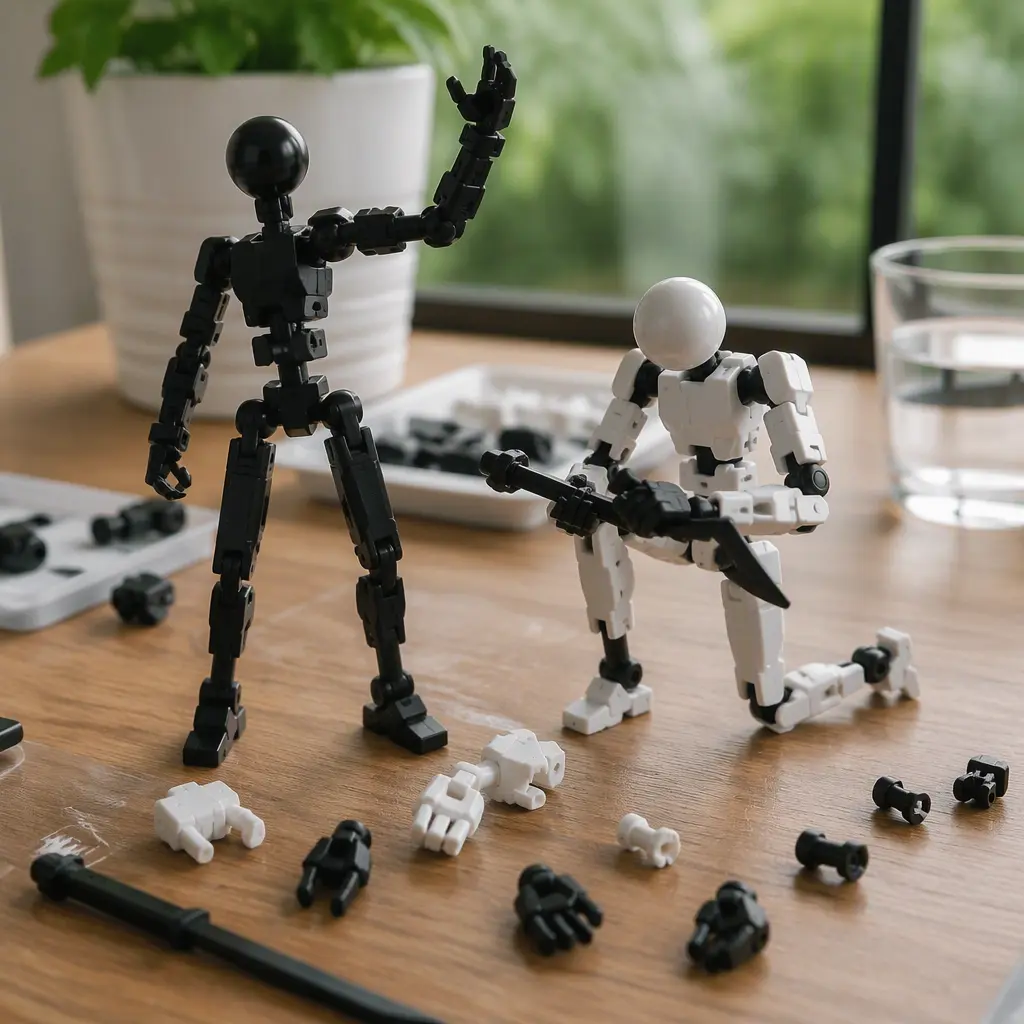
The appeal of Stikfas came from its balance between structure and creativity. The figures had a recognizable base design, but almost every release encouraged experimentation. Because the body was intentionally simplified, costumes and accessories stood out more clearly. Owners could swap heads, hands, gear, and armor without needing special tools, turning the toy into a kind of modular platform rather than a fixed character.
Articulation was another major draw. At a time when many mass-market action figures still had limited movement, Stikfas emphasized poseability. The ball-jointed construction allowed dramatic stances that appealed to toy photographers, animators, and collectors interested in display. Even people who never fully embraced the building aspect often appreciated the toy as a highly flexible desktop figure.
- Snap-together assembly that required little or no glue
- Ball-jointed articulation designed for expressive posing
- Interchangeable parts across many figure themes
- Minimalist body style that invited repainting and customization
- Compact size that made collecting and displaying easier
Who it's for
Stikfas occupied an interesting middle ground between children's toys and hobby collectibles. Older kids could enjoy the assembly and imaginative play, while teenagers and adults often treated the figures as creative projects. The small parts and assembly process meant the line generally worked better for patient builders than very young children. Adult collectors, meanwhile, were drawn to the open-ended design philosophy. For many hobbyists, Stikfas became an early introduction to customizing figures with paint, sculpting materials, or kit-bashed accessories. The line also appealed to people who liked action figures but wanted something less tied to a specific fictional universe.
Variants and what to look for today
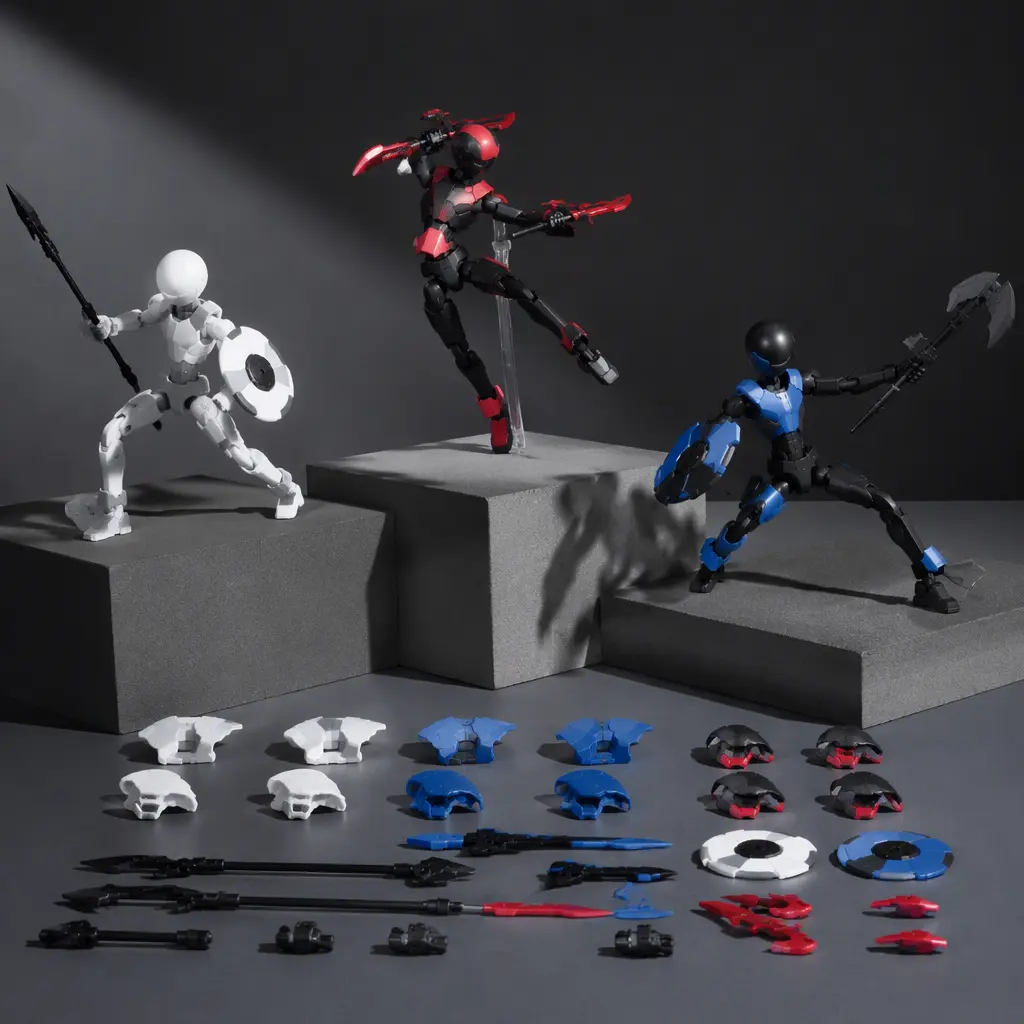
Over time, the Stikfas line expanded into many different themes and body styles. Some releases leaned heavily into science fiction, while others explored martial arts, fantasy, urban characters, robots, and military-inspired designs. The core engineering stayed recognizable even as accessories and silhouettes became more elaborate. That consistency helped collectors mix parts freely between releases, which strengthened the line's reputation among customizers.
Today, original Stikfas figures are mostly found through collector marketplaces, hobby resellers, and secondhand toy shops. Complete kits with unused parts are generally more desirable than loose figures missing joints or accessories. Since the toys were meant to be handled and modified, wear is common. Buyers should also watch for brittle plastic in older kits and check that joints still hold poses properly.
- Look for complete accessory sets if display value matters
- Loose figures can still be useful for customization projects
- Joint tightness is important for posing stability
- Stored kits may include unused sticker sheets or extra hands
- Generic imitation figures may lack the same articulation quality
Frequently asked questions
Were Stikfas toys model kits or action figures?
They sat somewhere between the two categories. Owners assembled the figures from parts like a model kit, but the finished result functioned as a fully articulated action figure designed for posing and customization.
Why do collectors still talk about Stikfas?
The line anticipated several trends that later became much larger in the toy industry, including modular figure systems, creator-driven customization, toy photography, and collector communities built around part swapping and posing.
Are Stikfas figures rare today?
Some releases are easier to find than others, especially loose figures without packaging. Certain themed kits and complete boxed sets can be harder to locate because the line had a smaller production footprint than mainstream action figure brands.
Did Stikfas influence later toy lines?
While it is difficult to measure direct influence, many later collectible figure systems adopted ideas that Stikfas explored early on, including highly modular bodies, interchangeable accessories, and hobby-oriented customization.
Stikfas never became a household-name toy line, but its influence can still be seen in modern collectibles. The idea that a figure could be assembled, modified, posed, photographed, and personalized by the owner now feels normal across much of the hobby industry. In the early 2000s, though, that approach felt fresh. Stikfas succeeded by giving people a framework instead of a finished answer, and that creative flexibility remains the reason collectors still remember it.