Tombot Jennie: A Robotic Puppy Built for Comfort
Tombot Jennie is an animatronic companion designed for older adults and people who cannot care for a live pet. Its realistic behavior, privacy tradeoffs and premium positioning set it apart from typical toy robots.

Compare prices and availability
Check current prices and availability for this guide on eBay.
As an eBay Partner, we may be compensated if you make a purchase.
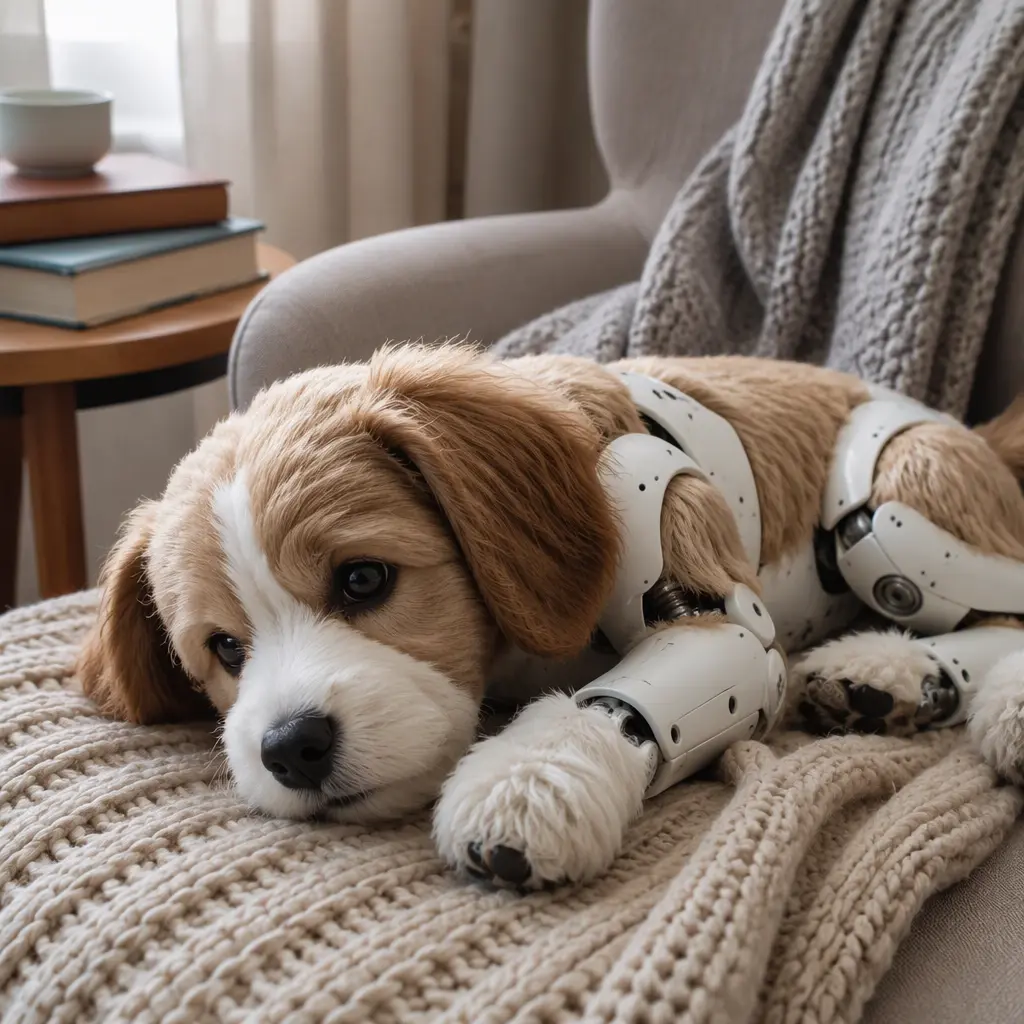
Tombot Jennie sits in an unusual category between consumer robotics, companion technology and comfort-focused assistive products. At a glance, it resembles a small sleeping puppy with lifelike fur, gentle movements and responsive behavior. Unlike many toy robots aimed at children, Jennie is marketed primarily toward adults, including older users, people living with cognitive decline and individuals who may no longer be able to care for a live animal. The idea is not to replace pet ownership entirely, but to recreate some of the calming routines and emotional familiarity associated with interacting with a dog.
Where it came from
Tombot introduced Jennie as part of a growing wave of social and companion robots designed for emotional engagement rather than utility tasks. The company has publicly discussed the product in the context of people who cannot keep live pets because of housing restrictions, allergies, mobility limitations or care demands. That framing places Jennie closer to therapeutic companion devices than to novelty electronic pets from earlier decades.
The design draws from both robotics and animatronics. Instead of scripted arcade-style play patterns or exaggerated cartoon reactions, Jennie aims for more subdued and believable dog-like behavior. Movements are intended to mimic the body language of a real puppy, including head motion, vocal responses and reactions to touch. The emphasis on realism is deliberate: companion robots intended for adults often rely less on gamified interaction and more on familiarity, routine and sensory comfort.
Why it works
Jennie's appeal comes from restraint. Many consumer robot pets exaggerate sound effects, flashing lights or app-connected tricks to hold attention. Tombot instead focuses on predictable, calming interactions. A realistic appearance, soft materials and quieter responses make the device feel less like a gadget demonstration and more like an ambient companion object. That distinction matters for users who may find noisy electronics stressful or confusing.
The product also arrives during a broader cultural shift around companion technology. Social isolation, aging populations and interest in assistive robotics have created demand for devices that provide interaction without the responsibilities attached to live animals. Research into animal-assisted therapy has often shown emotional and behavioral benefits from contact with pets, but translating those benefits to robotic substitutes is more complicated. Some small studies around robotic companion devices suggest possible comfort or engagement effects for certain users, especially in care settings, yet that does not amount to broad clinical proof. Jennie should be viewed as a comfort-oriented consumer product rather than a medically validated treatment device.
- Realistic puppy-inspired body language instead of cartoon-style animation
- Touch-responsive interaction designed around petting and holding
- Adult-oriented presentation compared with traditional toy robots
- No feeding, walking or veterinary care requirements
- Designed to provide companionship in settings where live pets may be impractical
Who it's for
Although classified broadly within electronics and robotic toys, Jennie is better understood as a companion device for teens and adults. The intended audience includes older adults, people in assisted living environments, users with limited mobility and households unable to keep live animals. Adult children and caregivers are also part of the target market, particularly when looking for lower-maintenance alternatives to pet ownership. Younger children may still find the robot appealing, but its slower interaction style and emotional positioning differ from entertainment-focused robotic pets built around games or surprise reactions.

Variants and what to look for today
Companion robots are still a relatively niche category, and availability can vary by region and production cycle. Prospective buyers should pay close attention to official manufacturer information, shipping policies and support availability rather than assuming toy-store style distribution. Because products like Jennie combine electronics, mechanics and fabric materials, long-term support and repair options matter more than they might for a standard plush toy.
Price is another important consideration. Companion robots with realistic movement systems typically sit at a much higher price point than ordinary interactive toys or plush animals. Buyers are paying for animatronics, sensors and specialized design rather than broad entertainment features. Before purchasing, it is worth clarifying what functions operate fully offline, whether firmware updates are required and whether companion apps, cloud features or mobile-device compatibility are part of the experience. Privacy expectations should also be examined carefully if microphones, connectivity or data-linked features are involved.
- Check official support and warranty information before ordering
- Confirm whether internet access or apps are required for core features
- Look for replaceable or serviceable power components where possible
- Be cautious of imitation robotic pets using copied marketing photos
- Review cleaning guidance for fur-covered electronics and moving parts
Frequently asked questions
Is Tombot Jennie a toy or a medical device?
Jennie is presented as a consumer companion robot rather than a certified medical treatment device. While companion robots may be used in therapeutic or caregiving environments, emotional comfort claims should be separated from clinical evidence.
Does Jennie use artificial intelligence?
Public descriptions focus mainly on responsive animatronic behavior and interaction systems rather than open-ended generative AI conversation. Potential buyers should review current manufacturer specifications to understand exactly how responses, sensors and connectivity features operate.
Are there privacy concerns with companion robots?
As with any connected or sensor-equipped device, buyers should review what data may be collected, whether microphones are present and how software updates are handled. Companion robots intended for vulnerable users deserve especially careful scrutiny around privacy and account management.
Can a robotic pet replace a real dog?
For some people, a robotic companion can recreate familiar routines and provide comfort without the demands of animal care. However, it does not fully replicate the unpredictability, emotional reciprocity or caregiving relationship associated with a live pet.
Tombot Jennie reflects a broader shift in how robotic products are being positioned in homes and care environments. Rather than competing with fast-moving entertainment gadgets, it aims to deliver reassurance, familiarity and low-pressure interaction. That makes it compelling for some users and difficult to categorize for others. The strongest case for Jennie is practical rather than futuristic: a calmer, lower-maintenance companion experience for people who want aspects of pet ownership without the responsibilities or barriers that can come with caring for a real animal.