V.Smile: The Learning Console That Introduced Preschool Gaming
VTech’s V.Smile turned educational software into a living-room experience for young children, blending simple controls, bright visuals, and age-focused games in the mid-2000s.
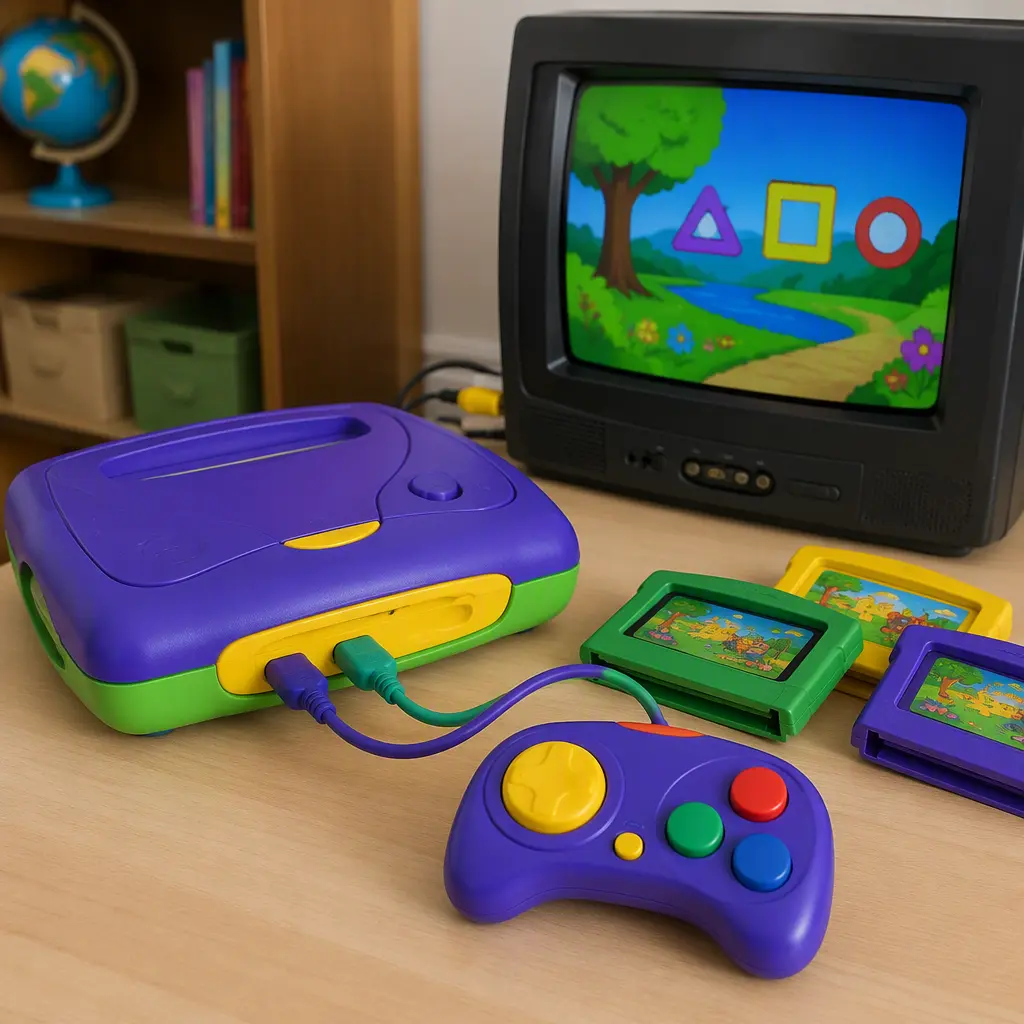
Compare prices and availability
Check current prices and availability for this guide on eBay.
As an eBay Partner, we may be compensated if you make a purchase.
For many children in the mid-2000s, the V.Smile was a first introduction to video games. Released by VTech in 2004, the plug-and-play learning console sat somewhere between a toy and a game system, using oversized controls and simple educational games aimed at preschool and early elementary-age players. At a time when mainstream consoles were becoming more complicated and expensive, the V.Smile took the opposite approach: bright colors, durable hardware, and games designed around spelling, numbers, shapes, and basic problem-solving.
Where it came from
VTech had already built a strong reputation in electronic learning toys before introducing the V.Smile. The company saw an opening between traditional educational toys and the rapidly growing home-console market. Nintendo, Sony, and Microsoft were competing for older children and adults, but there were fewer systems built specifically for preschoolers who wanted to imitate older siblings playing games.
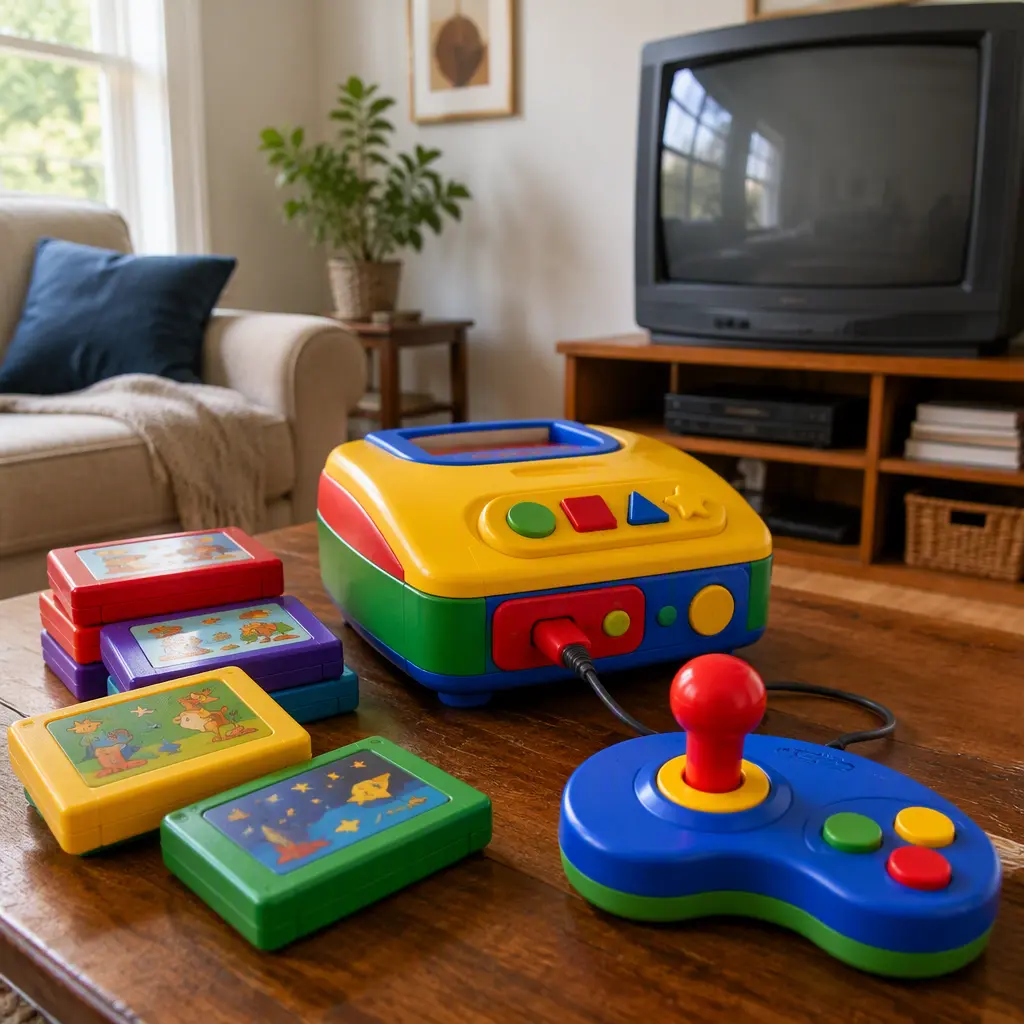
The V.Smile arrived in 2004 with a simple idea: combine television-based gaming with educational software designed around school-readiness skills. The console used interchangeable cartridges and connected directly to a TV, making it feel like a “real” game system to children. The controller featured a large joystick and oversized buttons sized for small hands, while many games adapted recognizable adventure or sports themes into slower-paced educational activities. Sequels and updated versions followed, including portable variations and models with motion-style controls as the market evolved.
Why it works
Part of the V.Smile’s success came from how carefully its design matched its audience. Young children often struggle with standard game controllers, which rely on combinations of shoulder buttons, dual thumbsticks, and rapid reactions. The V.Smile simplified everything. Most games only required directional movement, a few large buttons, and clear on-screen prompts. The hardware itself was sturdy enough to survive rough handling, which mattered in homes with preschool-age players.
The games also balanced entertainment with repetition in a way that felt closer to play than formal instruction. Activities often mixed counting, letter recognition, memory tasks, or logic puzzles with cartoon-style movement and rewards. While many educational products of the era felt rigid or classroom-like, the V.Smile leaned into colorful visuals and game mechanics borrowed from platformers, racing games, and mini-game collections.
- Large joystick-style controls designed for younger children
- Cartridge-based games that were easy for families to swap and store
- Educational activities built around reading, math, logic, and coordination
- Durable plastic construction suited to repeated use
- TV connectivity that made it feel closer to a mainstream game console
- A library that mixed original educational themes with licensed-style adventure concepts
Who it's for
The V.Smile was primarily aimed at children roughly between ages three and seven, especially kids curious about video games but not ready for more complex systems. Parents often treated it as a stepping stone between standalone learning toys and traditional consoles. The simple controls helped younger children play independently, while short activity-based sessions worked well for family rooms and shared spaces. Today, adult collectors and retro-gaming fans are also interested in the system as part of the broader history of educational electronics from the 2000s.
Variants and what to look for today
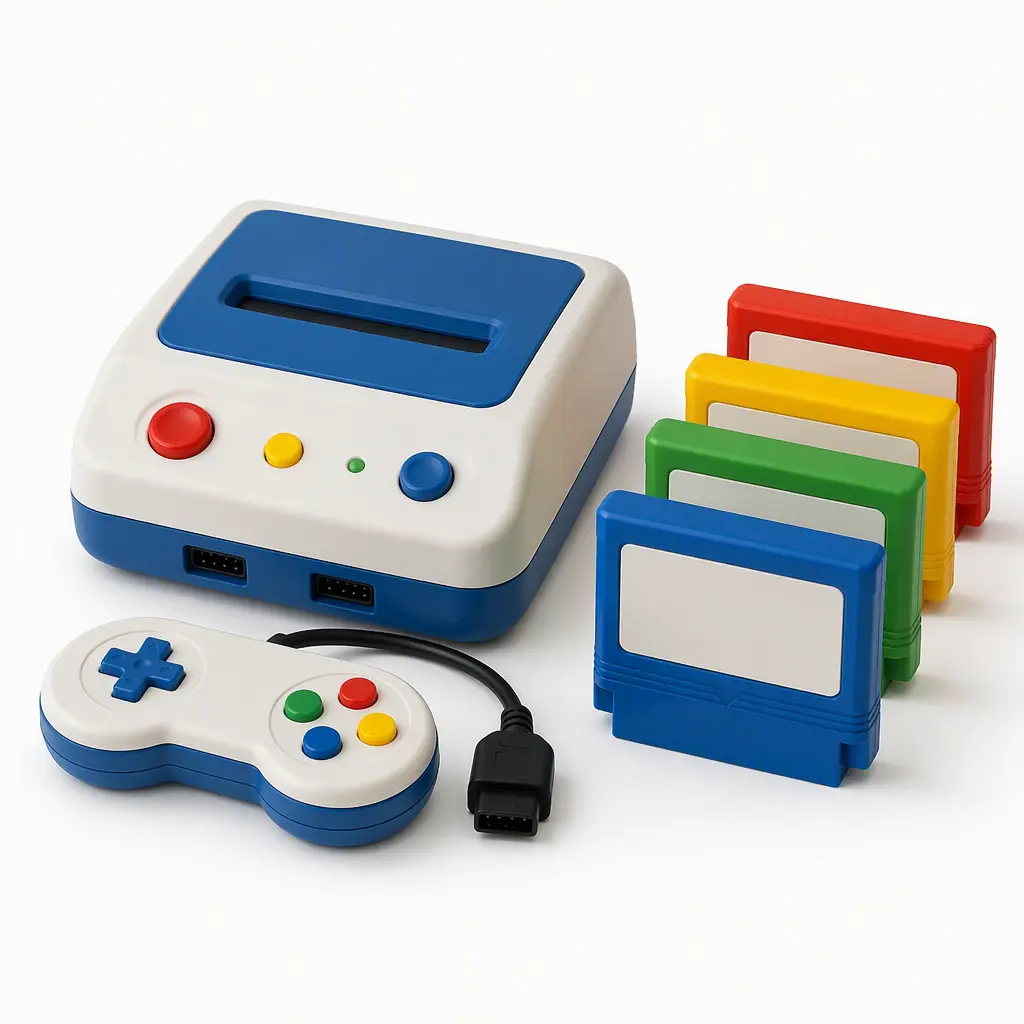
Over time, the V.Smile family expanded into several versions. Some models remained focused on living-room TV play, while others added portability or motion-based interaction. Portable editions attempted to capture the feel of handheld gaming devices, and later revisions introduced more active gameplay concepts inspired by the popularity of motion-controlled systems in the late 2000s.
Collectors and parents looking for a working V.Smile today usually focus on condition rather than rarity. Because the systems were built for younger children, wear is common. Battery corrosion, missing cartridge doors, and damaged controllers are typical issues in secondhand units. It is also worth checking cable compatibility for modern televisions, since many systems originally relied on older analog connections.
- Look for complete systems with controllers and TV cables included
- Test cartridge slots carefully, since heavy use can affect connections
- Portable versions may need battery compartment cleaning
- Some later models support different accessories, so verify compatibility
- Generic replacement power adapters should match voltage requirements carefully
Frequently asked questions
Was the V.Smile considered a real game console?
Technically, yes. It used interchangeable cartridges, connected to a television, and ran dedicated software through its own hardware platform. Its educational focus set it apart from mainstream gaming systems, but children often experienced it as their first console.
Did the games actually teach anything?
The educational content focused on foundational skills like counting, reading readiness, matching, memory, and problem-solving. While no toy replaces direct teaching or reading practice, the V.Smile succeeded at making repeated learning activities feel interactive and approachable for younger players.
Why do adults remember it so clearly?
For many families, the V.Smile occupied a very specific moment in home technology. It arrived when educational software, CRT televisions, and cartridge-based systems still overlapped. Children who grew up with it often remember the oversized controller, colorful menus, and the feeling of having a console built especially for them.
Are V.Smile systems still usable today?
Many are, provided the hardware has been stored well. Cartridge contacts may need cleaning, and modern TVs sometimes require adapters, but working systems remain fairly common on the secondhand market compared with rarer retro consoles.
The V.Smile never tried to compete directly with high-end gaming hardware, and that was part of its appeal. It offered a gentler introduction to interactive entertainment at a time when gaming culture was rapidly expanding. For a generation of preschoolers, it transformed educational screen time into something that felt playful, independent, and surprisingly close to the “big kid” gaming experience happening elsewhere in the living room.