The Xylophone Pull Toy: A Rolling Classic for Early Play
Part instrument, part pull toy, the wooden xylophone cart became a nursery staple by blending movement, sound, and hands-on discovery into one durable early childhood toy.
Compare prices and availability
Check current prices and availability for this guide on eBay.
As an eBay Partner, we may be compensated if you make a purchase.
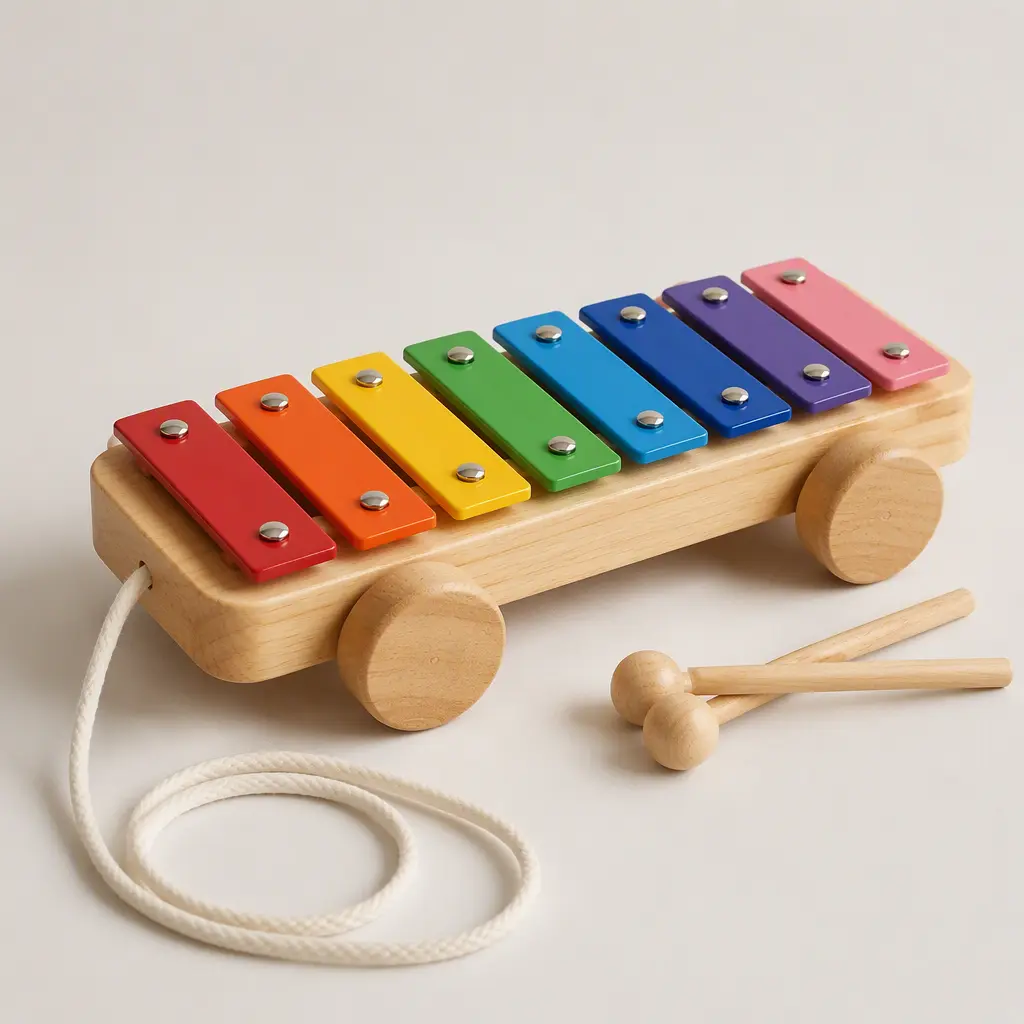
Few toys combine movement, music, and simple mechanical play as neatly as the xylophone pull toy. Usually built from painted wood with metal sound bars mounted on wheels, the toy has been a familiar sight in nurseries and playrooms for generations. Children can pull it across the floor, strike the bars with a small mallet, or simply explore the different sounds and colors at their own pace. Its appeal comes from that combination of activities: part musical instrument, part wagon, and part sensory toy.
Where it came from
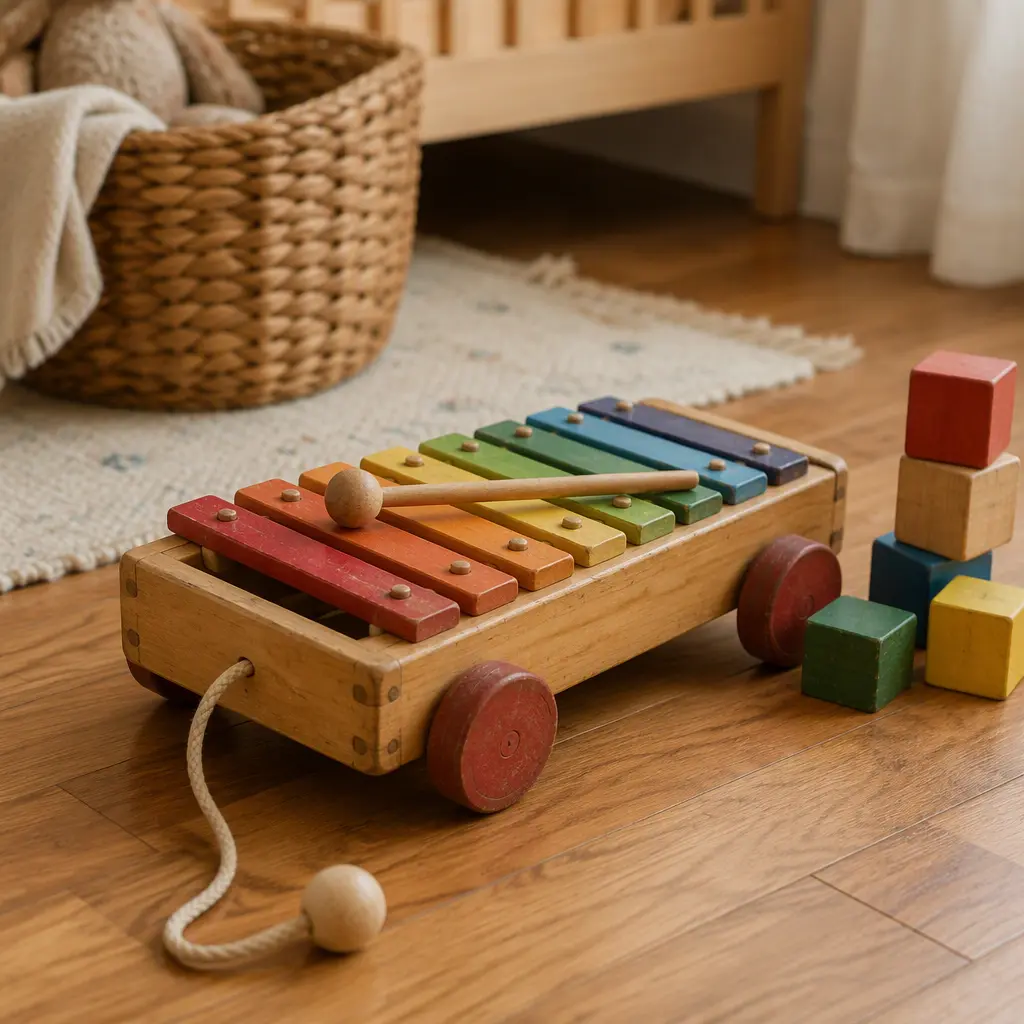
The xylophone itself has roots that stretch back centuries across Africa, Asia, and Europe, where tuned wooden bars were used in folk and ceremonial music. Toy makers adapted the idea for children during the early 20th century, especially as educational toy companies began focusing on hands-on learning and motor development. By the postwar years, wooden pull toys with attached musical elements had become especially common in North America and Europe.
The pull-toy version reflected a larger trend in nursery design. Parents increasingly wanted toys that encouraged active play rather than passive observation. Rolling toys helped toddlers practice balance and coordination, while simple instruments introduced ideas about rhythm, sound, and cause-and-effect. Combining the two made practical sense. The xylophone pull toy could entertain a child in multiple ways without relying on batteries, screens, or complicated instructions.
Why it works
The design succeeds because it gives young children immediate feedback. Pull the cord and the wheels move. Strike a bar and it rings out. Push the toy across the floor and it rattles softly as the mallet bounces. These direct physical responses are especially appealing to toddlers, who are still learning how actions connect to outcomes.
Color also plays an important role. Many versions use rainbow-painted bars arranged from low to high notes, helping children notice visual patterns alongside sound differences. The toy's compact size makes it approachable, and its sturdy construction means it can survive years of dragging, tapping, and accidental drops. Unlike more advanced children's instruments, the xylophone pull toy does not demand skill before it becomes fun.
- Combines music-making with active movement
- Encourages hand-eye coordination and fine motor skills
- Simple cause-and-effect play that works for toddlers
- Usually made from durable wood and metal parts
- Easy for siblings of different ages to share
- Works without batteries or electronic features
Who it's for
Most xylophone pull toys are aimed at toddlers and preschoolers, especially children learning to walk or refine basic coordination. The pull cord encourages movement around the room, while the mallet play supports grasping and controlled hand motion. Parents often appreciate that the toy grows with a child. Younger toddlers may simply enjoy rolling it around, while older preschoolers start experimenting with rhythms and simple melodies. Adults also tend to respond positively to the toy's classic design. Wooden pull toys carry a sense of nostalgia that keeps them popular as gifts for birthdays, baby showers, and first holidays.
Variants and what to look for today
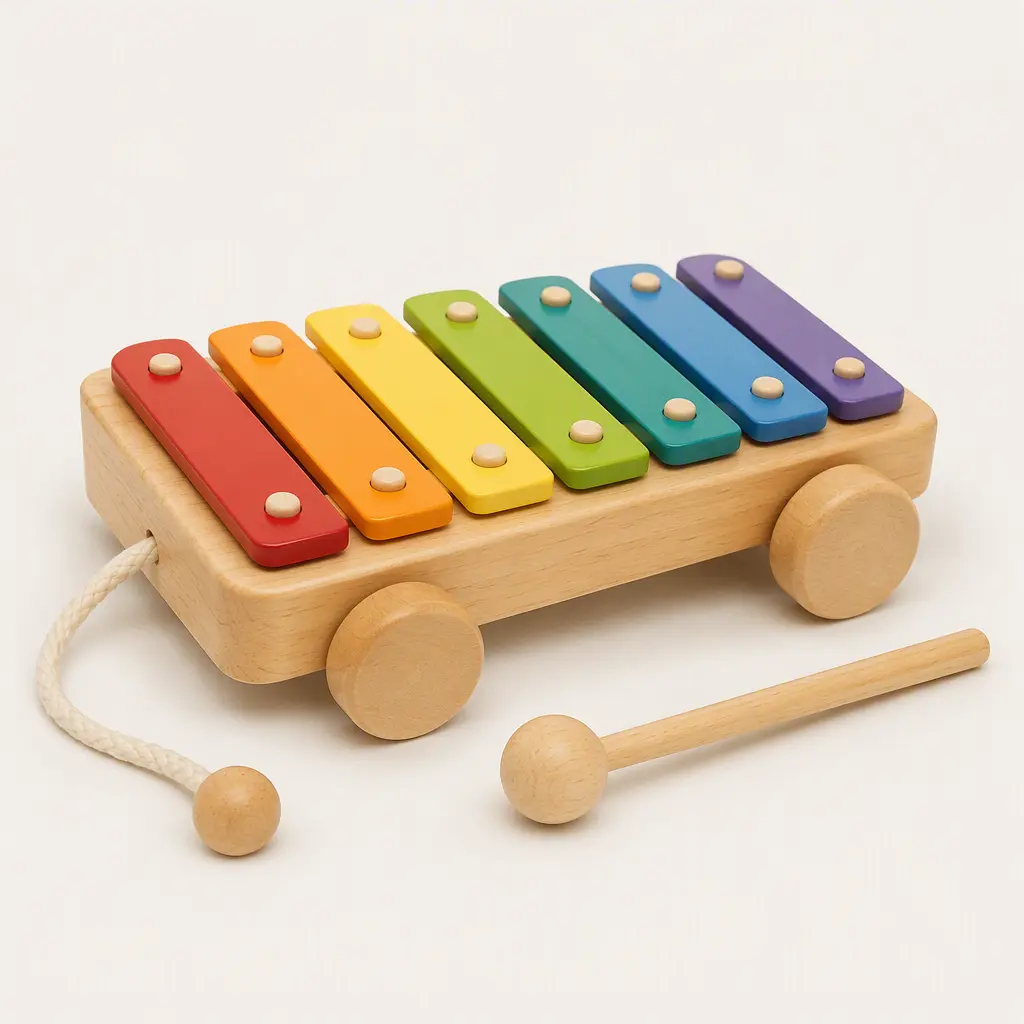
Modern xylophone pull toys range from simple wooden classics to softer contemporary designs with muted colors and rounded edges. Some versions focus heavily on musical play with tuned bars that produce clearer notes, while others emphasize mobility with larger wheels and sturdy pull cords. A few include storage slots for the mallet or removable instrument sections that can be played separately from the wheeled base.
Materials matter more than brand names in this category. Many parents look for smooth wood finishes, securely attached wheels, and non-toxic paints or coatings. The best versions feel solid without being overly heavy for a toddler to move. Since the toy is often pulled across hard floors, wheel construction can also affect noise levels and durability.
- Look for rounded edges and securely fastened metal bars
- Check that the pull cord length meets modern safety standards
- Solid wood construction tends to hold up longer than thin composite materials
- Rubber-lined wheels can reduce floor noise and slipping
- Avoid poorly assembled versions with loose screws or rough paint finishes
Frequently asked questions
Is a xylophone pull toy a real instrument?
It is usually more of an introductory musical toy than a precision instrument. Some higher-quality versions are tuned closely enough for simple songs, but most are designed for exploration and sensory play rather than formal music education.
What age is best for this toy?
Many children start engaging with pull toys and simple percussion instruments between 12 and 24 months, though interest often continues into the preschool years. Parents should always check manufacturer guidance for age suitability and safety details.
Why are wooden versions still so common?
Wood remains popular because it is durable, stable, and easy to shape into smooth rounded forms. It also gives the toy a classic appearance that fits well with both traditional and modern nursery styles.
Do children actually learn music from it?
The toy introduces basic concepts like rhythm, pitch differences, and coordinated movement. While it does not replace formal music lessons, it can help children become comfortable experimenting with sound and pattern recognition at an early age.
The xylophone pull toy has endured because it speaks to a very early kind of curiosity. Children want to move, touch, listen, and repeat actions that produce interesting results. This toy answers all of those instincts with a design that has changed surprisingly little over the decades. In a market crowded with electronic gadgets and short-lived trends, the simple rolling xylophone continues to earn its place by being sturdy, understandable, and genuinely fun to use.