Aquabeads: The bead craft that tames mess with water
Aquabeads turned bead crafting into a calmer, parent-friendly activity by using water instead of heat or glue. Here’s how a 2004 idea became a modern arts-and-crafts staple.
Compare prices and availability
Check current prices and availability for this guide on eBay.
As an eBay Partner, we may be compensated if you make a purchase.
Aquabeads is one of those toys parents often discover through relief. It promises the satisfaction of bead art without hot irons, sticky glue, or permanent stains. Since arriving in the mid‑2000s, it has carved out a steady place in playrooms by solving a simple but stressful problem: how to let kids make detailed bead pictures safely and independently.
Where it came from
Aquabeads was introduced in 2004 by Japanese toy company Epoch, a brand with a long history in family games and creative toys. The original idea was deceptively simple: plastic beads that fuse together when sprayed with water. No heat. No adhesives. Just a chemical coating that activates when wet and dries solid.
At the time, bead crafts already existed, most notably iron‑on bead systems that required adult supervision and careful timing. Aquabeads positioned itself as a safer alternative for younger children, especially in homes and classrooms where hot irons were impractical. The concept spread quickly from Japan to Europe and beyond, helped by clear demonstrations and word‑of‑mouth among parents.
Why it works
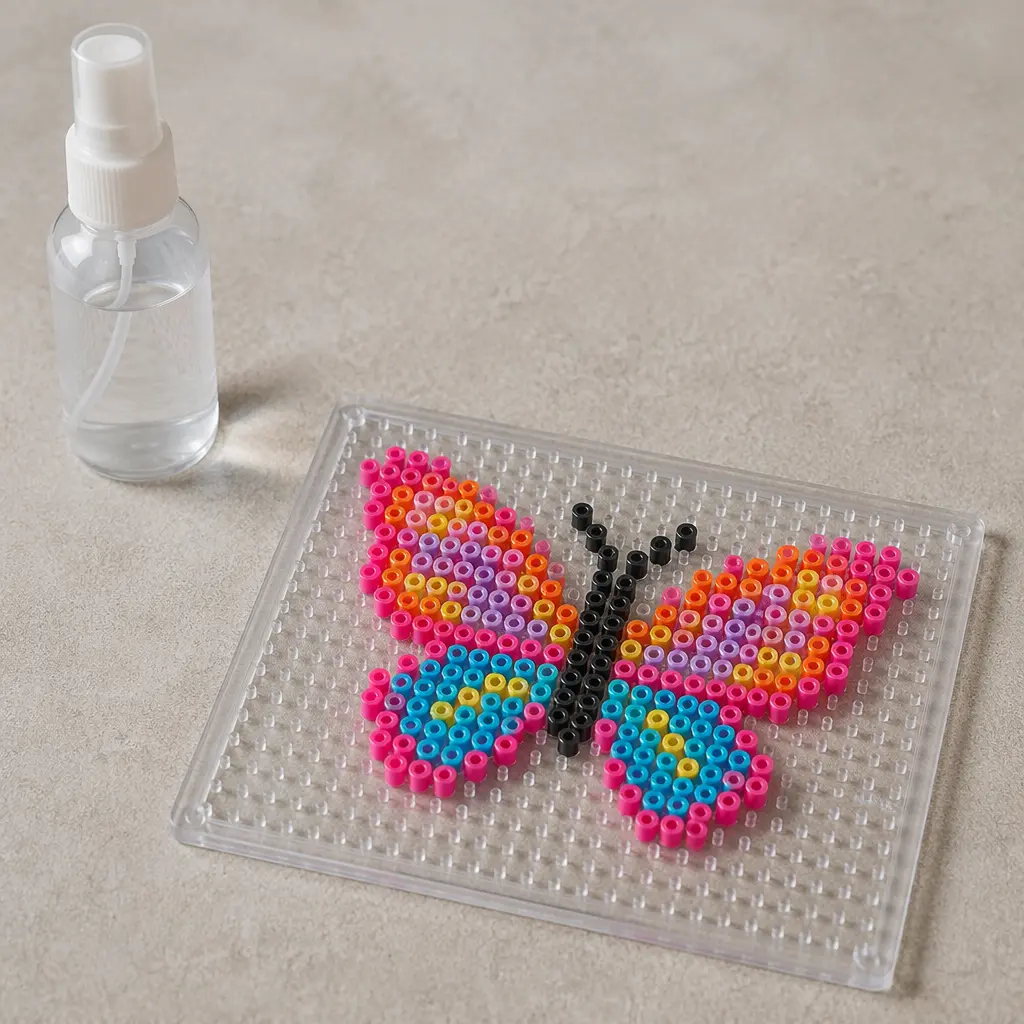
The appeal of Aquabeads lies in its balance of freedom and control. Children place beads onto a peg board, following a pattern or inventing their own design. A light spray of water activates the beads, which bond as they dry. The result feels finished and durable, yet the process stays calm and manageable.
Design-wise, it hits several sweet spots for young makers:
- Water-activated bonding removes the need for heat or glue
- Peg boards provide structure without limiting creativity
- Bright, consistent bead colours make patterns easy to follow
- Finished designs can be handled and displayed once dry
Importantly, mistakes are low-stakes. A misplaced bead can be nudged back into place before spraying, and even after drying, projects don’t feel precious in a way that discourages experimentation. That combination keeps children engaged without raising anxiety for adults.
Who it’s for
Aquabeads is typically aimed at children around preschool to early primary age, when fine motor skills and colour recognition are developing. It works well for solo play but is also easy to share at a table, making it popular for siblings or playdates. Adults often find it quietly satisfying too, especially when helping with patterns or creating display pieces together.
Variants and what to look for today
Over the years, Aquabeads has expanded into a broad family of sets. Starter kits usually include a small peg board, beads, and a water sprayer. Larger sets add more colours, themed templates, and multiple board shapes. There are also refill packs designed to keep existing kits going without rebuying everything.
When shopping today, it’s worth checking that beads are water-activated rather than iron-on lookalikes, as knock-offs can be confusingly similar. Storage trays and bead cases are also practical upgrades, helping keep colours organised and floors bead-free.
Frequently asked questions
Does Aquabeads really hold together with just water?
Yes. The beads are coated with a material that bonds when wet and hardens as it dries. No additional heat or glue is required for standard projects.
Is it safe for younger children?
Aquabeads is designed with safety in mind, but the beads are small, so supervision is recommended for children who might still put objects in their mouths.
Can you reuse the beads?
Once bonded and dried, beads are intended to stay together. Loose beads from refills or unused designs can be reused, but finished pieces are generally permanent.
How long do projects take to dry?
Most designs set within an hour, though thicker or larger pieces benefit from being left overnight before handling.
Aquabeads endures because it respects both sides of the craft table. Children get colour, creativity, and independence. Parents get a quieter activity that doesn’t revolve around timers, warnings, or cleanup panic. In the crowded world of arts and crafts, that simple trade-off has proven surprisingly powerful.