Dominoes: How simple numbered tiles became a global language
From ancient China to kitchen tables worldwide, dominoes show how a simple set of numbered tiles became one of the most adaptable and enduring games ever made.
Compare prices and availability
Check current prices and availability for this guide on eBay.
As an eBay Partner, we may be compensated if you make a purchase.
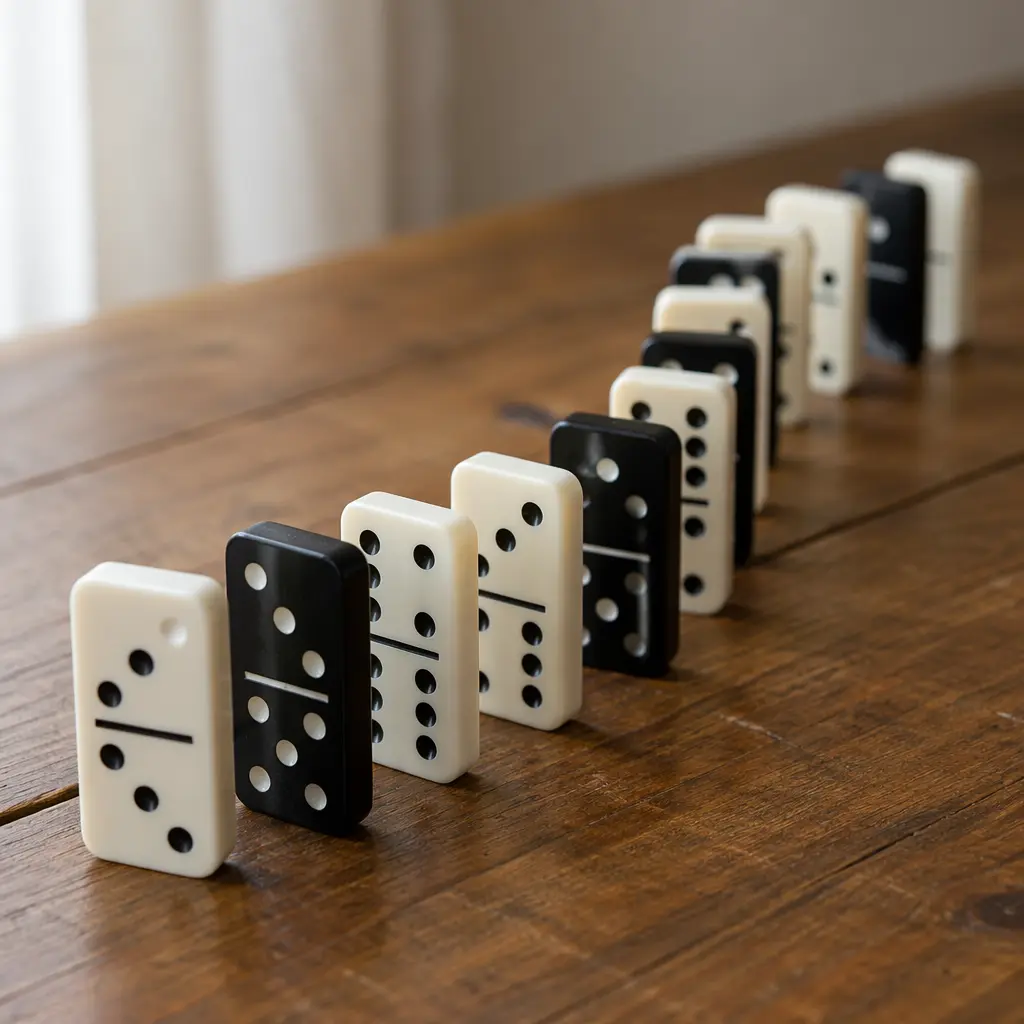
Dominoes are about as simple as games get: small rectangular tiles, divided in two, marked with dots. And yet those humble pieces have carried centuries of play across cultures, generations, and skill levels. Whether snapped down in a fast-paced family game or carefully arranged for a tumbling chain reaction, dominoes have become a shared language of play almost anywhere you go.
Where it came from
The roots of dominoes stretch back far earlier than many people realise. Variants of the game appeared in China over a thousand years ago, likely evolving from dice-based games. These early domino tiles represented combinations of dice throws, translating chance into a tactile, reusable form.
Dominoes arrived in Europe much later, probably through trade routes, and were adapted along the way. The European version simplified the set, settling into the familiar double-six format most people recognise today. From there, dominoes spread rapidly, becoming a staple in homes, cafés, and social clubs across Europe, the Americas, and beyond.
Why it works
At its heart, dominoes succeed because they balance structure with freedom. The rules are easy to grasp, but the outcomes depend on memory, pattern recognition, and a bit of psychology. Players must watch the board, track which numbers have appeared, and anticipate what others might be holding.
The design of the tiles themselves also matters. They are sturdy, tactile, and satisfying to handle. A standard set offers enough variety to support dozens of rule variations without ever feeling overwhelming.
- Simple visual language using dots rather than numbers
- Balanced mix of luck and strategy
- Flexible rules that support many regional games
- Durable pieces that withstand years of play
Who it's for
Dominoes are unusually inclusive. Young children can learn basic matching games with a reduced set, while older kids and adults enjoy deeper strategic versions. Many adults are introduced to dominoes through family traditions or community play, which gives the game a social warmth that lasts well into later life.
Variants and what to look for today
While the classic double-six set remains the most common, many households and clubs use expanded sets such as double-nine or double-twelve, which allow more players or longer games. Materials vary too, from traditional plastic and resin to wood or heavier, casino-style tiles.
When buying dominoes today, it pays to think about how they will be used. Heavier tiles are easier to shuffle and handle, while larger pips help with visibility. Very cheap sets may have uneven tiles or poorly marked dots, which can frustrate play over time.
Frequently asked questions
How many games can you play with one set?
A standard domino set supports dozens of different games, many of them passed down regionally. Even within one household, rules often evolve over time.
Are dominoes educational?
Yes. Dominoes help reinforce counting, pattern recognition, turn-taking, and strategic thinking, making them a quiet educational tool as well as a game.
What's the difference between dominoes and tile-matching games?
Dominoes are a specific family of tile games with standardised sets and long-established rules. Many modern tile games borrow the matching idea but add new mechanics.
Can dominoes be played solo?
Some people enjoy solo pattern challenges or arranging domino runs, but the game truly shines as a social experience with others.
In an age of screens and constantly changing entertainment, dominoes endure by doing one thing very well. They offer a shared, hands-on experience that adapts to who is sitting at the table. That simplicity is not a limitation; it is the reason dominoes continue to connect players around the world.