The Rubik’s Cube: Why a 1974 puzzle still turns heads
Invented in 1974, the Rubik’s Cube became a global obsession through smart design and endless challenge. This profile looks at its origins, why it works, and what to know if you want one today.
Compare prices and availability
Check current prices and availability for this guide on eBay.
As an eBay Partner, we may be compensated if you make a purchase.
Few toys cross generations, cultures, and classrooms quite like the Rubik’s Cube. Part brain teaser, part fidget, part cultural icon, it’s a small plastic cube that has frustrated, delighted, and quietly educated millions of people for more than 50 years. Whether you solved one in a single afternoon or never quite cracked it, the cube’s staying power is hard to ignore.
Where it came from
The Rubik’s Cube was invented in 1974 by Ernő Rubik, a Hungarian architect and design professor. His original goal wasn’t to create a toy at all, but to help students understand three‑dimensional movement. The first version, made from wood and held together with elastic bands, was called the “Magic Cube” and used as a teaching aid.
Once it became clear that the puzzle could be scrambled and returned to order, its wider appeal emerged. By the late 1970s it was being manufactured for the public, and in the early 1980s it exploded into a global phenomenon. At its peak, the cube was everywhere: toy shops, classrooms, offices, and even competitive stages, where speed-solving became a serious pursuit.
Why it works
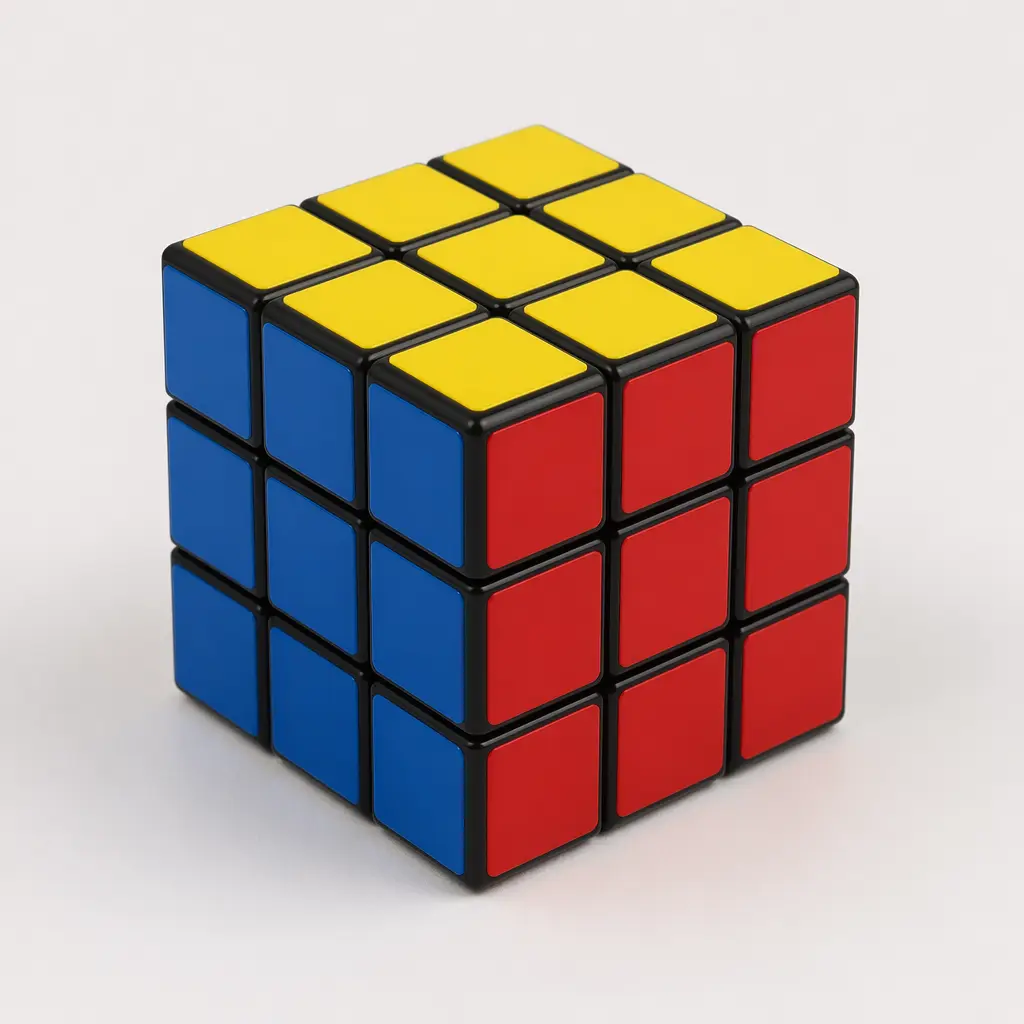
At heart, the Rubik’s Cube is a study in elegant design. Six faces, each a different colour, must be aligned so every face is uniform. The rules are simple, but the solution is not. This balance between accessibility and depth is a big part of the cube’s appeal.
It also offers something rare: visible progress. Each twist changes the state of the puzzle, encouraging experimentation and pattern recognition. You don’t need instructions to begin, but you can spend years refining your approach if you want to.
- Simple goal that’s easy to understand
- Compact, handheld design
- Near-endless combinations and challenges
- Works as both a toy and a learning tool
- Satisfying tactile movement
Who it’s for
The Rubik’s Cube is typically recommended for ages 8 and up, but in practice it spans a much wider range. Children enjoy the colour matching and twisting action, while teens and adults are often drawn to the logical challenge. Many parents appreciate that it encourages patience and problem-solving without screens. It’s also one of those rare toys adults are happy to keep on their desks, solving a few turns between tasks.
Variants and what to look for today
While the classic 3x3 cube remains the most recognisable version, today’s market offers many variations. Larger cubes increase complexity, while simplified versions reduce it for beginners. There are also smoother-turning designs aimed at speed-solvers, where precision and durability matter more than nostalgia.
When shopping, look for a cube that turns smoothly without catching or grinding. Poorly made copies can feel stiff or fall apart with regular use. For younger children, simpler colour-matching cubes with fewer pieces can be less frustrating and more rewarding.
Frequently asked questions
Is the Rubik’s Cube educational?
Yes. It encourages logical thinking, spatial awareness, and perseverance. Many teachers and parents use it as a hands-on way to introduce problem-solving concepts.
How long does it take to learn to solve one?
That varies widely. Some people learn a basic method in an afternoon, while others take weeks. Mastery and speed-solving can take much longer, depending on interest.
Are modern cubes different from older ones?
Modern cubes often turn more smoothly and are more durable than early versions. The core concept is the same, but materials and engineering have improved.
Does solving it require maths?
Advanced solving methods are based on mathematical principles, but you don’t need to know maths to solve one. Many people learn through patterns and repetition.
Half a century on, the Rubik’s Cube remains a quiet triumph of design. It doesn’t need updates, batteries, or storylines to stay relevant. A few coloured squares and a clever mechanism are enough—and have been, for generations.