Pick-Up Sticks: The quiet game of patience that never ages
With nothing more than a bundle of sticks and a steady hand, Pick-Up Sticks has challenged patience for centuries. This classic game proves that simple rules can create lasting family fun.
Compare prices and availability
Check current prices and availability for this guide on eBay.
As an eBay Partner, we may be compensated if you make a purchase.
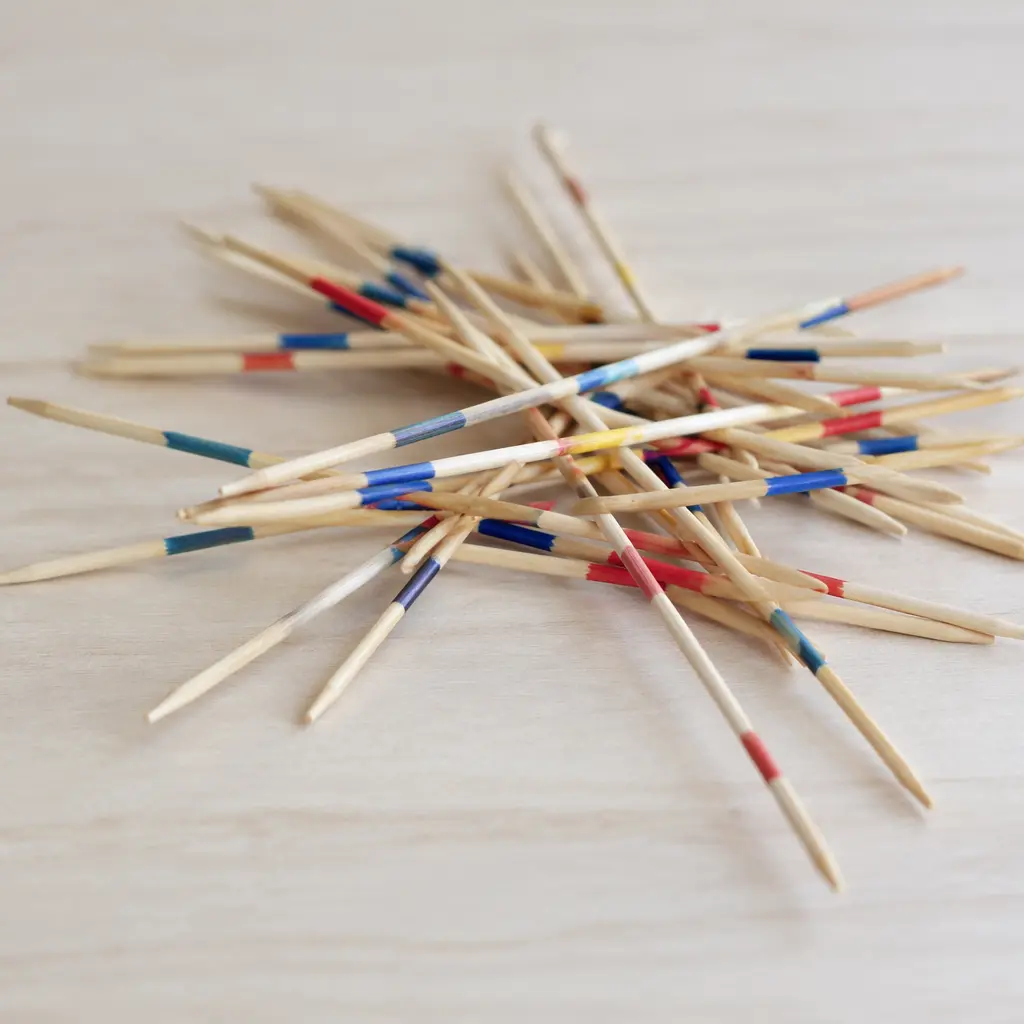
Pick-Up Sticks is one of those games almost everyone recognises, even if they haven’t played it in years. A small bundle of thin sticks is dropped in a heap, and players take turns removing them one by one without disturbing the rest. There’s no board, no batteries, and no storyline — just concentration, control, and the occasional shaky hand.
Where it came from
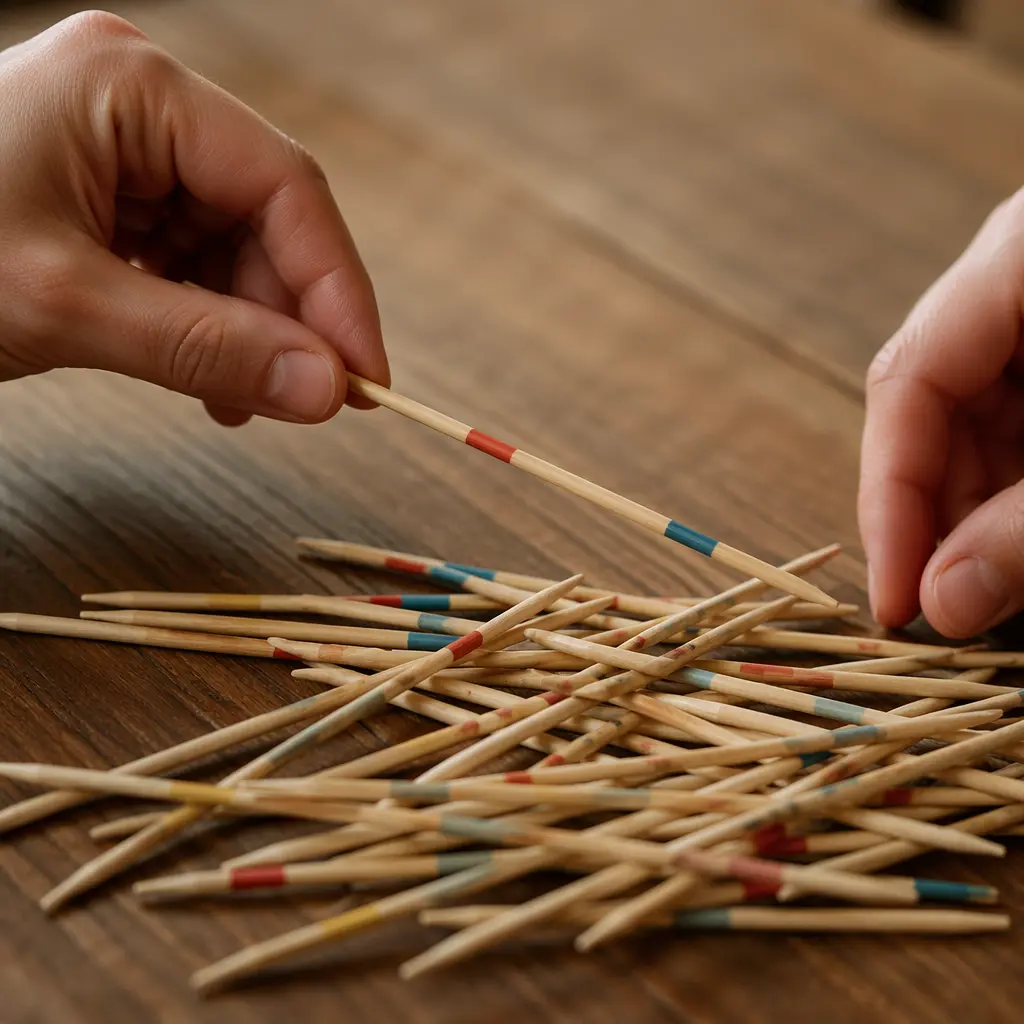
The roots of Pick-Up Sticks go back much further than most people realise. Variations of the game appear across Europe and Asia, often under the name “Mikado,” referencing the Japanese emperor. The basic idea — testing dexterity by removing objects without moving others — likely evolved independently in different cultures.
By the late 19th and early 20th centuries, Pick-Up Sticks had become a packaged parlour game in Europe and North America. Its appeal was immediate: it was inexpensive to make, easy to explain, and suitable for mixed-age groups at a time when family games were often complicated or competitive.
Why it works
At its core, Pick-Up Sticks is about restraint. The game slows players down and asks for focus rather than speed. Every turn carries tension, because even the slightest nudge can end your go. That quiet drama is what keeps people leaning in.
- Simple rules that take seconds to learn
- Short turns that keep everyone engaged
- A mix of luck (how the sticks fall) and skill (how you remove them)
- Physical feedback that rewards steady hands and patience
Who it's for
Pick-Up Sticks works well for children from around five or six upwards, once fine motor skills are developed. It’s also quietly popular with adults, particularly as a low-pressure game to play while chatting. Because it doesn’t rely on reading or complex scoring, it’s accessible across generations and abilities.
Variants and what to look for today
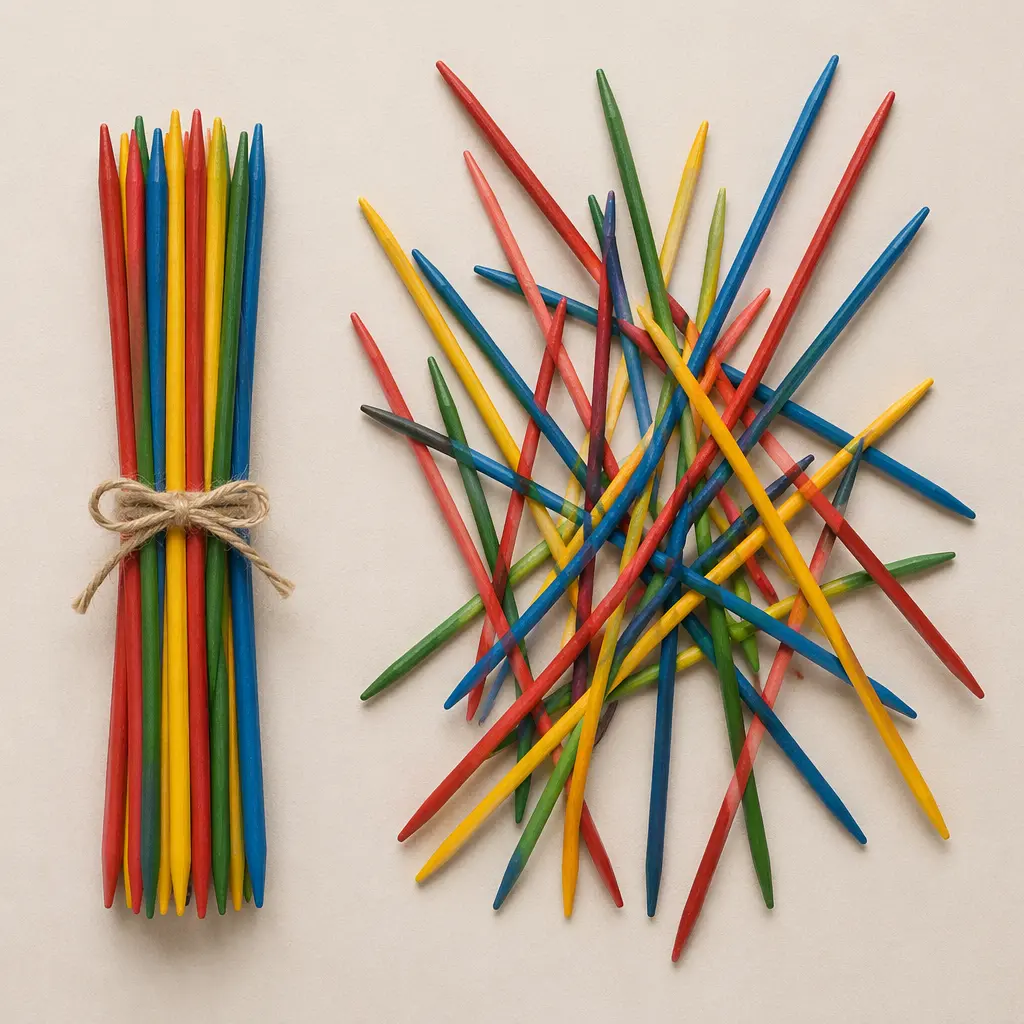
Modern Pick-Up Sticks sets stay close to the original formula. Most include 30 to 50 wooden sticks, sometimes colour-coded to indicate different point values. You’ll also see larger versions for younger children, where thicker sticks are easier to grip.
When buying today, look for smooth finishes and straight sticks, as rough edges can make play frustrating. Plastic versions exist and are durable for classrooms, but many families still prefer the feel and weight of wood. Extremely cheap sets may warp over time, which changes how the sticks fall.
Frequently asked questions
How do you win Pick-Up Sticks?
Players usually score points based on the colours or markings of the sticks they collect. The winner is the player with the highest total once all sticks are removed.
Is Pick-Up Sticks good for learning skills?
Yes. It helps develop fine motor control, hand-eye coordination, patience, and turn-taking, especially for younger players.
Can you play without scoring?
Many families do. Playing cooperatively or just seeing who can remove the most sticks in a single turn keeps the game light and flexible.
Is it the same as Mikado?
They are closely related. Mikado is a traditional name for the same style of game, often with specific scoring rules tied to stick designs.
Pick-Up Sticks endures because it doesn’t try to impress. It offers a few quiet minutes of focus in a world full of noise, and that modest promise has kept it on shelves — and tables — for generations.