Jacks: The pocket skill game that ruled the playground
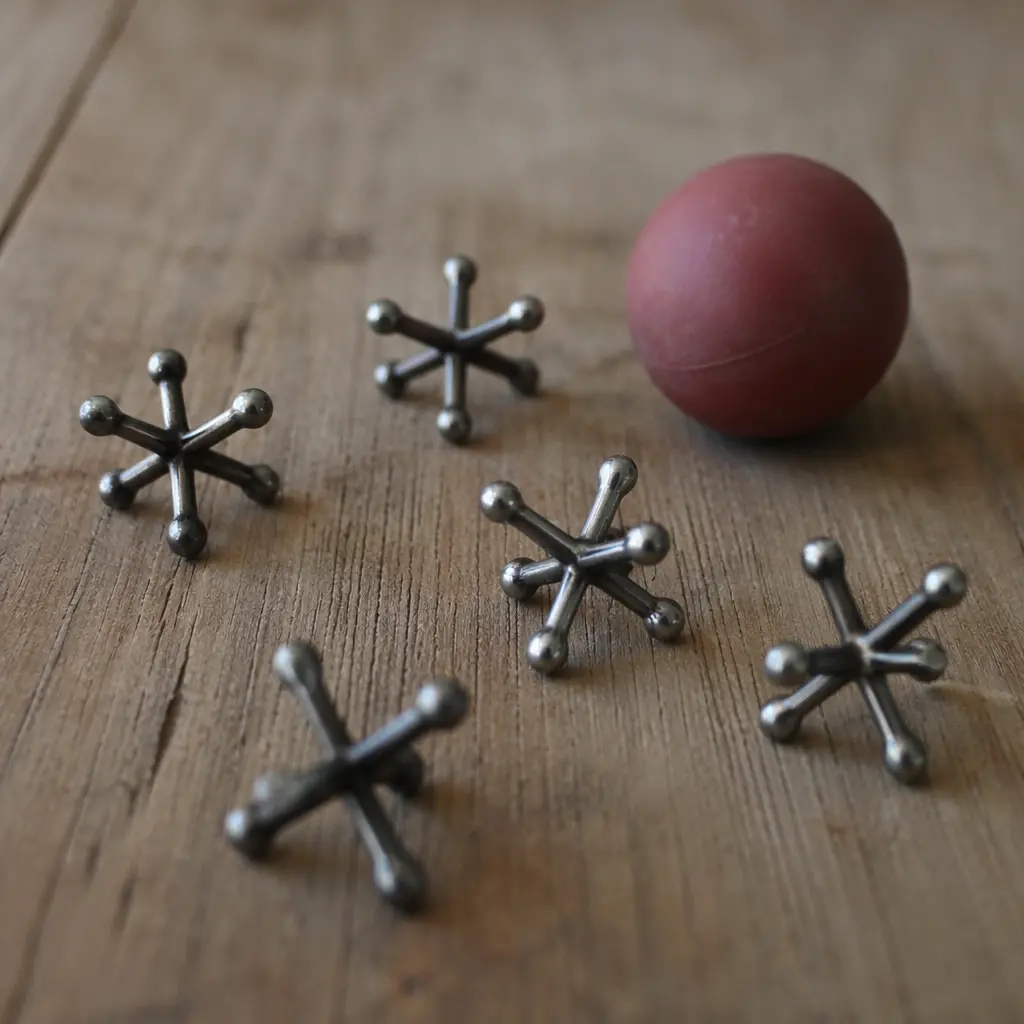
Simple metal pieces, one bouncy ball, and total focus. Jacks turned schoolyards into quiet contests of timing and dexterity—and it still rewards patient hands today.
Compare prices and availability
Check current prices and availability for this guide on eBay.
As an eBay Partner, we may be compensated if you make a purchase.
Jacks is the kind of game that looks almost too simple to matter. A small ball, a handful of spiky metal pieces, and a set of rules you can explain in a minute. Yet for generations of children, it created moments of total silence on otherwise noisy playgrounds. Everyone watched the same hands, waiting to see if the ball would be caught cleanly or fumbled at the last second.
Where it came from
Jacks has deep roots. Variations of the game can be traced back thousands of years, with similar toss-and-grab games played in ancient Greece and Rome using stones or knucklebones. The modern version—metal jacks paired with a rubber ball—became widespread in the late 19th and early 20th centuries as mass-produced toys became affordable.
In the mid-20th century, jacks became a standard part of childhood in many countries, especially in school playgrounds and at home on the living room floor. It required no board, no batteries, and no adult setup. If you had a flat surface and a few minutes, you could play. That accessibility helped it spread and stick.
Why it works
At its core, jacks is a test of coordination, rhythm, and nerve. Players toss the ball, scoop up jacks in increasingly difficult combinations, and catch the ball before it hits the ground. Each round builds on the last, turning small successes into mounting pressure.
- Simple equipment with clear, physical feedback
- Short turns that keep players engaged
- Difficulty that scales naturally as skills improve
- A quiet, focused style of competition
- Easy to pause and resume without setup
Unlike many action games, jacks rewards calm hands and concentration rather than speed alone. That balance makes it satisfying for beginners and still challenging for experienced players who push for flawless rounds.
Who it's for
Jacks is typically suitable for children around age five and up, once basic hand-eye coordination is in place. It’s also a rare playground game that adults often remember fondly—and can still enjoy. Parents and grandparents often find themselves teaching rules they haven’t thought about in decades, making it an easy bridge between generations.
Variants and what to look for today
Today’s jacks sets range from classic metal pieces to brightly colored plastic versions designed for younger hands. Some sets include larger balls or softer materials to make early rounds less frustrating.
When shopping, look for solid construction and smooth edges, especially if younger children will play. Extremely lightweight pieces can bounce unpredictably, while very small jacks may be easy to lose. As with many classic toys, simple and sturdy is usually best.
Frequently asked questions
How many jacks are in a standard game?
Most traditional sets include ten jacks and one ball, though smaller sets with five or six jacks are common for beginners.
Is jacks a solo or group game?
It can be both. Players can practice alone to improve skill, or take turns in a group, with others watching and waiting for a mistake.
Does it help develop skills?
Yes. Jacks supports hand-eye coordination, fine motor control, counting, and focus—all without feeling like structured learning.
In a world of loud, screen-based play, jacks remains quietly confident. It doesn’t compete for attention—it earns it. That may be why, long after trends fade, this small pocket game still finds its way into children’s hands.