Magna-Tiles: The magnetic tiles that made building click
Since the late 1990s, Magna-Tiles have turned geometry into play. Clear, clicky magnetic shapes invite open-ended building that grows with kids—and keeps adults at the table too.
Compare prices and availability
Check current prices and availability for this guide on eBay.
As an eBay Partner, we may be compensated if you make a purchase.
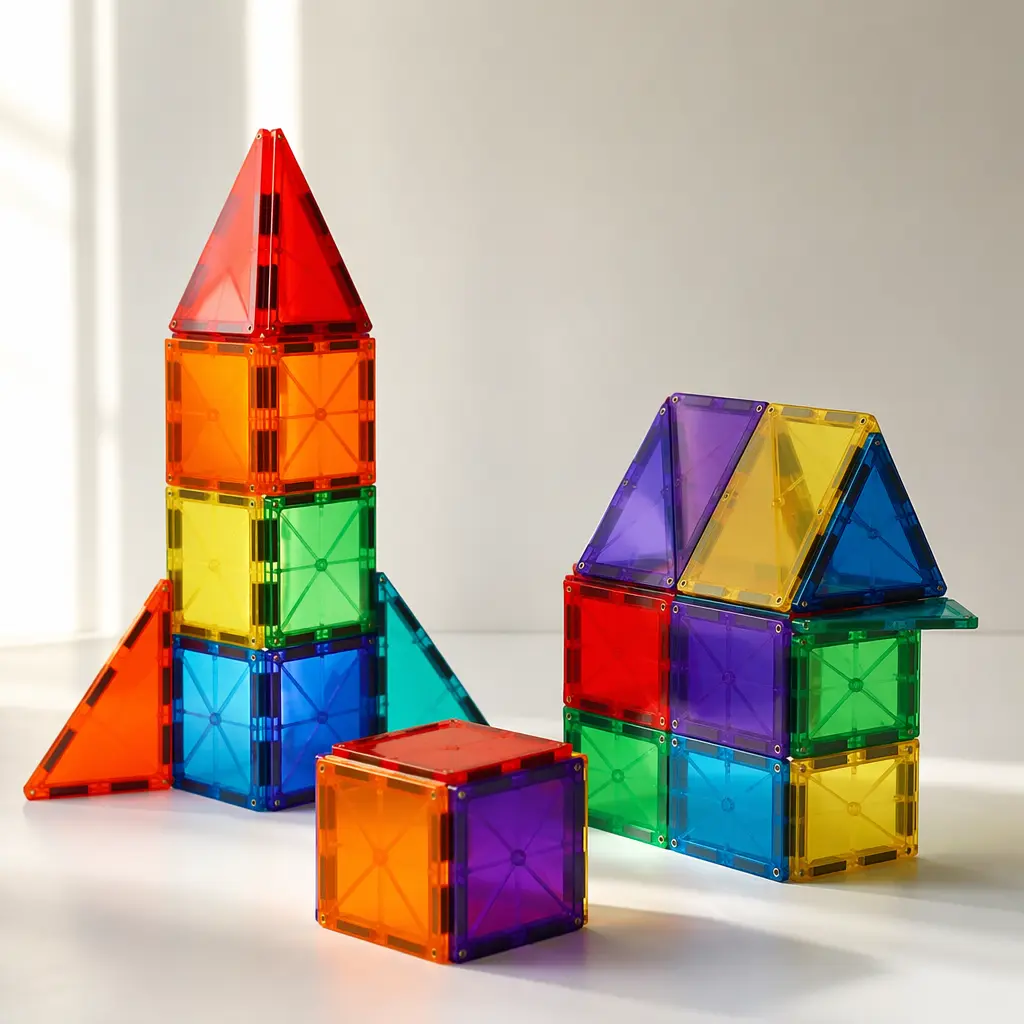
Magna-Tiles are one of those toys parents notice before kids do. Spread across a table, the translucent shapes catch the light, click together with a satisfying snap, and quietly invite experimentation. There are no instructions to follow and no right answer—just flat pieces that become towers, houses, animals, and patterns, again and again.
Where it came from
Magna-Tiles trace their roots to 1997, when educator and innovator Valtech sought a hands-on way to teach math and spatial concepts. The idea was simple but powerful: sealed magnets inside durable plastic shapes that connect edge to edge, allowing children to explore geometry through play rather than worksheets.
What began as an educational aid quickly crossed into homes and classrooms. Teachers valued the way the tiles demonstrated symmetry, angles, and three-dimensional thinking. Parents appreciated that kids could play independently without screens or batteries. Over time, the brand became synonymous with magnetic tiles as a category, even as competitors entered the market.
Why it works
The appeal of Magna-Tiles lies in the balance between constraint and freedom. The shapes are limited—squares, triangles, and a few specialty pieces—but the combinations feel endless. The magnets do just enough work to hold a structure together without removing the challenge of balance and planning.
Standout design features include:
- Translucent plastic that lets light pass through, making builds visually rewarding
- Magnets sealed safely inside each edge, creating an audible, tactile “click”
- Uniform sizing that allows pieces from different sets to work together
- Flat shapes that encourage both 2D patterns and 3D structures
Because the tiles don’t prescribe a narrative, play evolves with the child. Toddlers stack and knock down. Preschoolers name colors and shapes. Older kids plan bridges and domes. The same pieces support all of it.
Who it’s for
Magna-Tiles are typically recommended for ages three and up, largely due to magnet safety standards. In practice, they span a wide age range. Young children enjoy the sensory click and bright colors, while older children use them for more complex builds. Adults often find themselves joining in—whether to help stabilize a tall tower or to experiment with designs of their own.
Variants and what to look for today
Today’s Magna-Tiles ecosystem includes a range of sets: classic starter packs, large collections for classrooms, and themed expansions that introduce new shapes. The core idea remains unchanged, but modern sets often add variety—curved pieces, windows, or wheeled bases—to spark different kinds of builds.
When choosing a set, look for sturdy construction with securely sealed magnets and consistent sizing across pieces. Many families expand gradually, adding more tiles over time. Be cautious with very cheap magnetic tile sets that may use weaker magnets or thinner plastic; durability matters when towers inevitably fall.
Frequently asked questions
Are Magna-Tiles educational or just for fun?
They’re both. While kids experience them as pure play, the tiles naturally reinforce concepts like shapes, symmetry, balance, and cause-and-effect. That dual purpose is a big reason they’re common in classrooms.
Do different magnetic tile brands work together?
Many magnetic tiles are compatible in size, but magnet strength and plastic thickness can vary. Mixing brands can work, though builds may feel uneven if the magnets don’t match in strength.
How many tiles do you really need?
A small starter set is enough to explore the basics, but larger builds quickly require more pieces. Families often start small and add sets as interest grows.
Are they worth the space they take up?
Compared with bulky toys, Magna-Tiles store flat and scale with use. A single box can support years of play, which makes them easier to justify on a crowded shelf.
Nearly three decades after their introduction, Magna-Tiles still feel current. They succeed not by chasing trends, but by trusting a simple idea: give kids well-made pieces, step back, and let imagination do the rest. Few toys age as gracefully.