TileBlox Rainbow Packs and the Rise of Design-Led Play
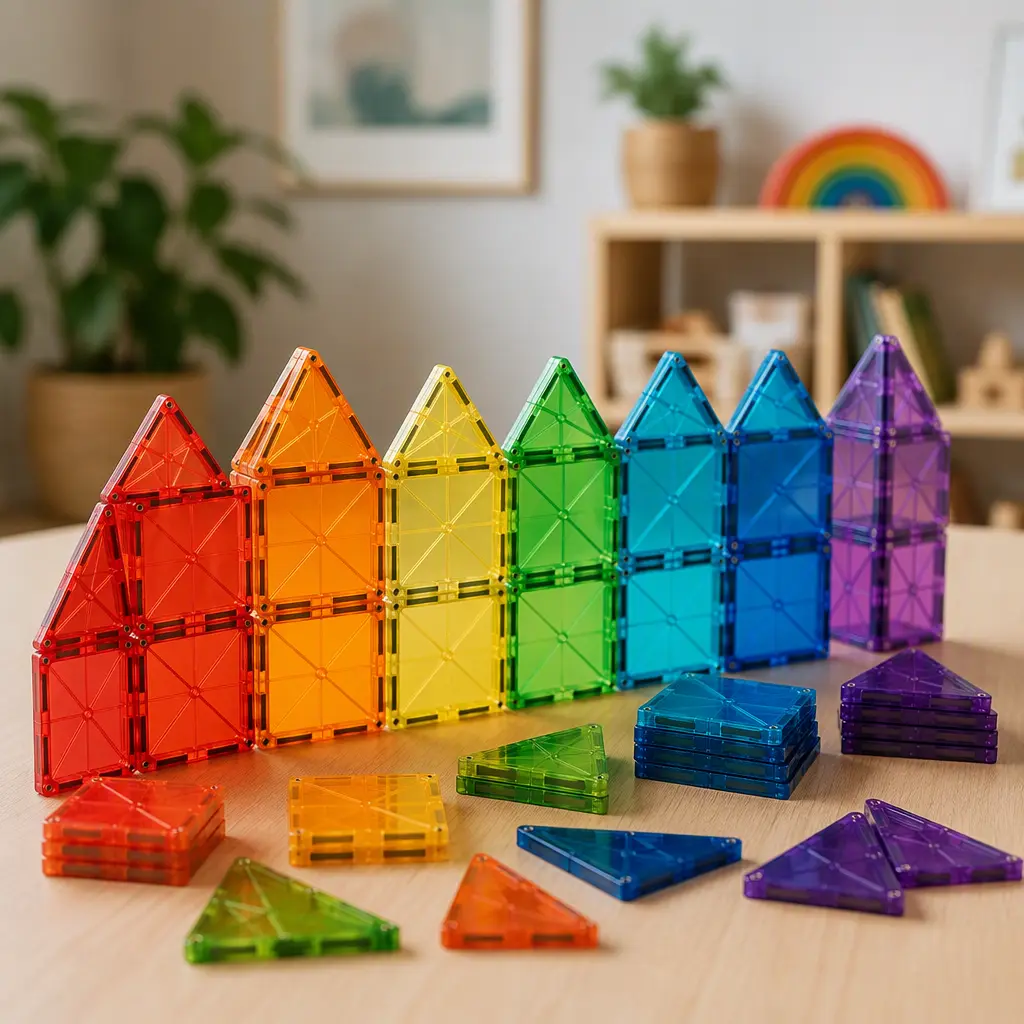
TileBlox Rainbow Packs turned magnetic building sets into color-focused design toys, blending open-ended construction with decor-friendly palettes that appeal to both kids and adults.
Compare prices and availability
Check current prices and availability for this guide on eBay.
As an eBay Partner, we may be compensated if you make a purchase.
TileBlox Rainbow Packs arrived at a moment when many family toys were being reconsidered not just as playthings, but as objects that shared living space with modern homes. The idea behind the line was simple: magnetic construction tiles organized around carefully coordinated color palettes rather than mixed assortments. That small shift changed how many families approached building play. Instead of treating magnetic tiles as purely educational tools, Rainbow Packs leaned into visual design, collaborative creativity, and display-worthy construction that could stay on the coffee table long after playtime ended.
Where it came from
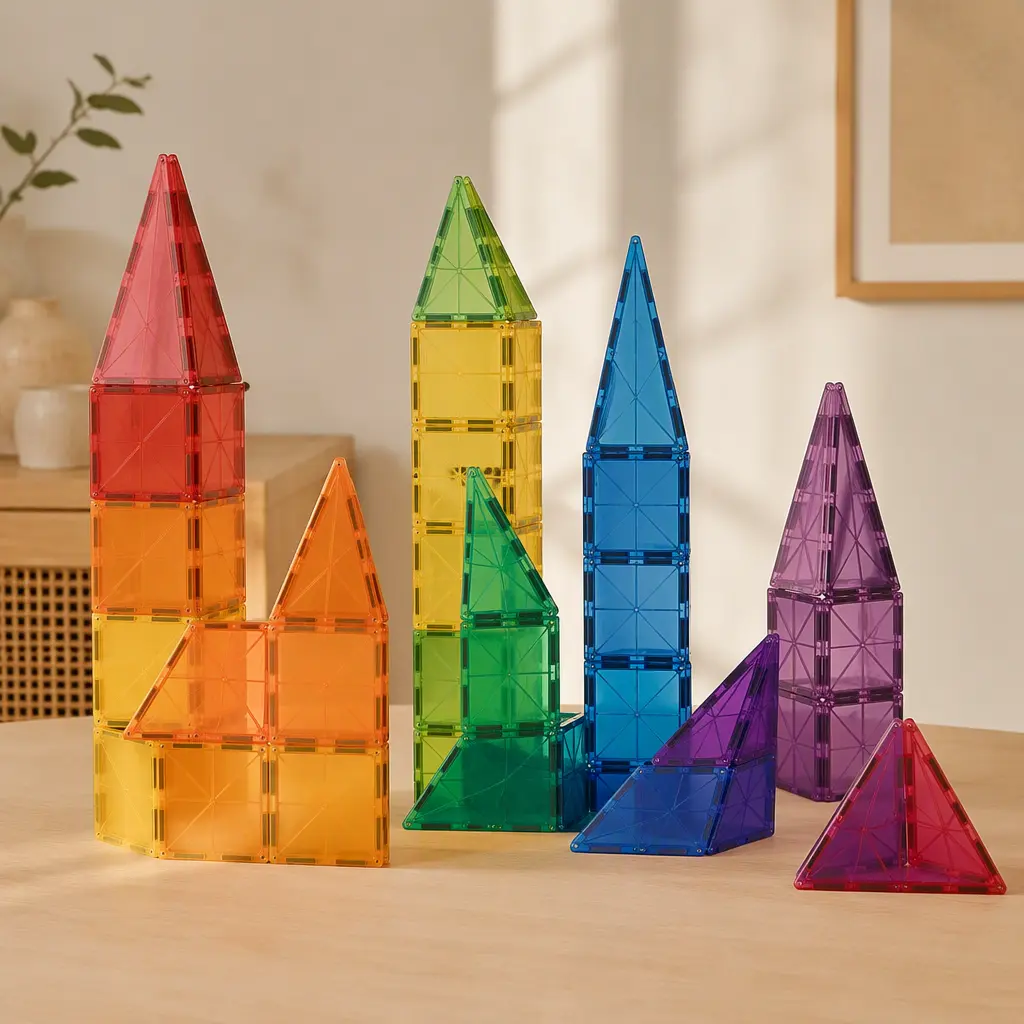
Magnetic building tiles have existed for decades in one form or another, but the modern category expanded rapidly in the late 2010s and early 2020s as parents looked for toys that combined STEM learning with open-ended creativity. TileBlox Rainbow Packs, introduced in 2022, reflected a newer trend inside that larger market: toys designed with aesthetics in mind as much as educational value.
The Rainbow Packs concept drew from several overlapping influences. Montessori-inspired play spaces had already pushed families toward toys with calm colors and uncluttered design. At the same time, social media platforms filled with images of elaborate magnetic-tile castles, marble runs, and light-catching window displays. TileBlox responded by packaging tiles in intentionally curated color groups that encouraged visual planning alongside structural building. The toy became part construction set, part art material, and part family activity that could involve children and adults at the same table.
Why it works
The core mechanic remains familiar: lightweight geometric tiles with embedded magnets snap together at the edges, allowing builders to create both flat mosaics and three-dimensional structures. What distinguishes Rainbow Packs is the emphasis on color relationships. Builders naturally begin experimenting with gradients, symmetry, repeating patterns, and architectural balance because the pieces invite that kind of thinking.
The tiles also benefit from the forgiving nature of magnetic construction. Unlike brick systems that require force and precision, magnetic pieces connect quickly and come apart without frustration. Younger children can successfully build tall structures early on, while older kids often shift toward more complex engineering experiments. Adults frequently end up participating too, partly because the visual results can look surprisingly polished when sunlight passes through the translucent pieces.
- Translucent magnetic tiles that interact dramatically with natural light
- Color-coordinated packs that encourage pattern and design exploration
- Open-ended building with no fixed storyline or required outcome
- Flat and three-dimensional construction possibilities
- Collaborative play that works across wide age ranges
Who it's for
Rainbow-style magnetic tile sets generally appeal to children from preschool age through late elementary years, though the experience changes considerably by age. Younger kids tend to focus on stacking, sorting colors, and simple shapes. Older children often move into architectural builds, bridges, marble paths, and symmetrical designs. The family appeal is a major part of the category's growth. Many adults enjoy the calming, puzzle-like process of arranging color patterns or constructing elaborate displays with children. Because the pieces are durable and visually tidy, families often leave builds assembled for days rather than treating them as disposable play sessions.
Variants and what to look for today
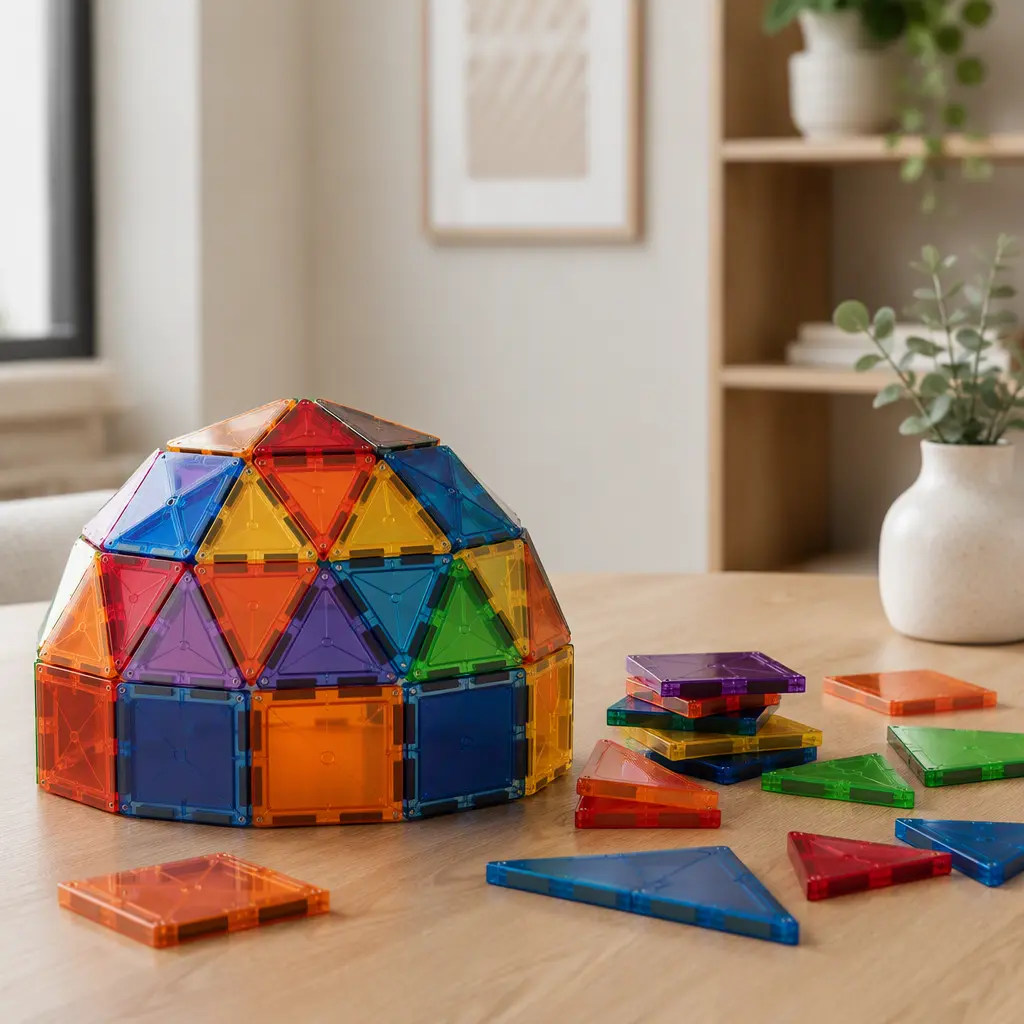
The broader magnetic tile market now includes everything from pastel minimalist sets to highly saturated neon collections, along with themed accessory packs that introduce wheels, tracks, windows, or ball-run elements. Rainbow-focused collections typically prioritize visual consistency over sheer piece count. Some are organized by gradient, while others separate warm and cool tones or emphasize transparent jewel-like finishes.
Compatibility is one of the biggest considerations when shopping today. Many magnetic tile systems use similar sizing standards, but build quality can vary widely. Strong magnets, securely sealed edges, and scratch-resistant surfaces matter more than flashy packaging. Families who already own mixed magnetic tile collections often use Rainbow Packs as expansion sets for more visually coordinated projects.
- Look for securely enclosed magnets and smooth edge construction
- Larger starter assortments allow more ambitious building projects
- Clear or translucent finishes create stronger light effects near windows
- Storage bins or stackable trays help keep color sets organized
- Very thin or weakly magnetized off-brand tiles may collapse during taller builds
Frequently asked questions
Are Rainbow Packs mainly educational toys?
They are often marketed with STEM language, but much of the appeal comes from creative and visual play. Children naturally practice spatial reasoning, balance, and pattern recognition while building, though many families simply use them as open-ended construction toys.
Do magnetic building tiles work for mixed-age siblings?
Yes. The simplicity of the magnetic connection system allows younger children to participate immediately, while older children can create more advanced structures using the same pieces. That flexibility is one reason magnetic tile sets remain popular in shared play spaces.
Why are color-focused packs so popular with parents?
The coordinated palettes photograph well, look less visually chaotic in living spaces, and encourage design-oriented building. Many parents also appreciate toys that can remain visible in family rooms without feeling overly loud or cluttered.
Can these sets replace traditional building bricks?
Not entirely. Magnetic tiles and interlocking bricks encourage different kinds of play. Bricks often support detailed mechanical builds, while magnetic tiles emphasize rapid experimentation, large geometric forms, and collaborative construction.
TileBlox Rainbow Packs reflect a broader shift in the toy industry toward products that blend creativity, education, and home-friendly design. Their success shows how a familiar category can feel fresh again through presentation and play style rather than radical reinvention. By focusing on color, light, and collaborative building, Rainbow Packs turned magnetic construction from a classroom-style activity into something closer to a shared creative hobby for modern families.