Walkie Talkies: The Toy That Turned Yards Into Missions
Long before smartphones, walkie talkies gave kids private channels for backyard missions, neighborhood games, and imaginative teamwork. Their simple push-to-talk design still holds up today.
Compare prices and availability
Check current prices and availability for this guide on eBay.
As an eBay Partner, we may be compensated if you make a purchase.
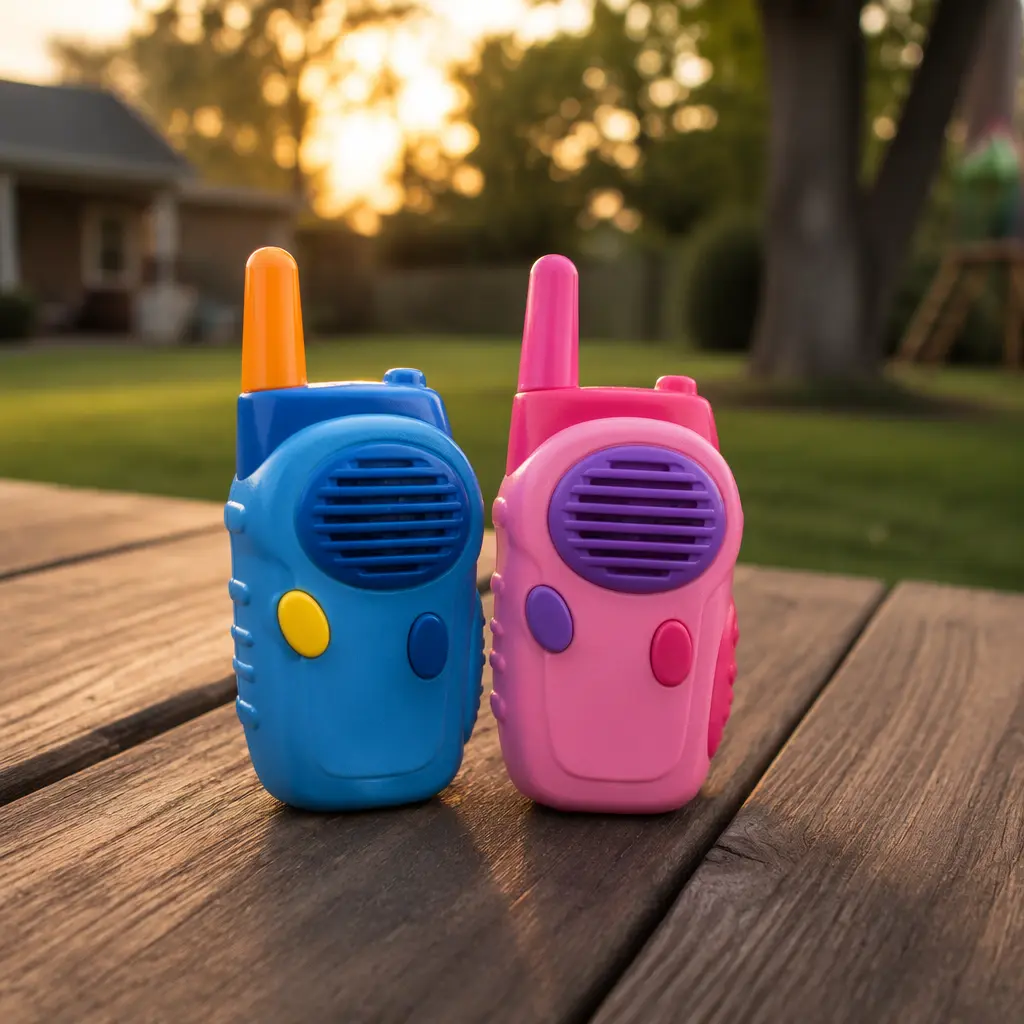
Few toys made ordinary neighborhoods feel bigger than walkie talkies. A driveway became a launch pad, a treehouse became a command center, and siblings in opposite corners of the house suddenly sounded like explorers on an important mission. The appeal was simple: push a button, speak, and hear a voice come back through static and crackle. That tiny delay and radio hiss often made the experience feel more exciting, not less. Even in an era filled with instant messaging and video calls, toy walkie talkies still offer something different — communication that feels active, physical, and tied to play.
Where it came from
Walkie talkies began as practical communication tools developed during the early 20th century, with portable two-way radios becoming especially important during World War II. Military field radios inspired the compact handheld format that later entered civilian life. By the middle of the century, toy makers recognized that children were fascinated by the idea of communicating over distance without wires. Toy versions soon appeared in department stores, often marketed alongside spy kits, camping gear, and adventure-themed playsets.
The toy fit perfectly into postwar outdoor culture. Kids were spending long afternoons riding bikes, building forts, and roaming neighborhoods with friends. Walkie talkies added structure and imagination to those activities. Suddenly games had code names, secret plans, and coordinated teamwork. Over time, the designs evolved from bulky plastic radios with metal antennas into lighter, more durable devices with brighter colors, rechargeable batteries, weather-resistant shells, and clearer audio.
Why it works
The core mechanic of a walkie talkie is almost unchanged decades later: press a button to talk, release it to listen. That simplicity is part of the toy’s lasting appeal. Unlike many electronic toys that guide children toward a specific game or scripted interaction, walkie talkies create a tool and leave the rest to imagination. Kids invent the story, the mission, and the rules.
They also encourage movement and cooperation in a way screens often do not. Communication only becomes interesting when players separate, hide, explore, or coordinate. That naturally pushes play outdoors or across larger spaces indoors. Many parents also appreciate that walkie talkies can feel exciting without being overly complicated.
- Push-to-talk controls that are easy for younger children to learn
- Open-ended imaginative play rather than scripted activities
- Encourages teamwork, problem-solving, and outdoor movement
- Distinctive radio crackle and delay that add to the experience
- Works well for siblings, friends, camping trips, and scavenger hunts
Who it's for
Toy walkie talkies are typically aimed at children old enough to understand turn-taking in conversation, often around early elementary age and up. Simpler models with large buttons and fewer channels are easier for younger kids, while older children may enjoy longer-range sets designed for camping, hiking, or neighborhood games. Adults still use them casually during family trips, outdoor events, and road travel, partly because the format remains dependable and easy to understand. Their nostalgic appeal is strong too. Many parents remember using walkie talkies themselves and enjoy introducing the same style of play to a new generation.
Variants and what to look for today
Modern walkie talkies range from basic indoor play sets to more capable outdoor units with rechargeable batteries, multiple channels, flashlights, belt clips, or weather-resistant casings. Some lean heavily into adventure themes with camouflage colors or rugged styling, while others are designed with softer shapes and brighter colors for younger children.
When shopping today, it helps to focus less on exaggerated range claims and more on build quality and ease of use. Real-world performance often depends on walls, hills, weather, and interference from other devices. Comfortable buttons, clear sound, and sturdy battery compartments usually matter more during actual play.
- Look for simple controls if the toy is for younger children
- Rechargeable battery models can reduce long-term battery costs
- Weather-resistant designs are useful for camping and outdoor games
- Headset compatibility can make role-play more immersive
- Very cheap sets may suffer from weak audio or fragile antennas
Frequently asked questions
Do toy walkie talkies still work without mobile service?
Yes. Walkie talkies communicate directly by radio and do not require cellular coverage, Wi‑Fi, or internet access. That is part of their appeal for camping trips and outdoor play.
How far can toy walkie talkies usually reach?
Actual range varies widely depending on terrain and obstacles. Open outdoor spaces generally work much better than heavily built-up neighborhoods or large buildings.
Are walkie talkies good for group play?
They work especially well for team-based games, scavenger hunts, hide-and-seek, and backyard adventures. Even simple communication can make familiar spaces feel more exciting.
What makes older walkie talkies nostalgic?
Many adults remember the tactile details: extending antennas, pressing chunky side buttons, hearing static bursts, and creating secret codes with friends. Those sensory elements remain closely tied to childhood outdoor play.
Walkie talkies have survived multiple generations of technology because they offer more than communication. They turn distance into drama and cooperation into play. Whether clipped onto a backpack during a camping trip or passed between kids in neighboring yards, the toy still creates the feeling that something important — or at least exciting — is happening just beyond sight.