Best Pretend Play Sets That Grow With Kids (Ages 3–8)
A parent-friendly guide to pretend play sets that adapt from preschool to early elementary. Learn what features help toys stay engaging, age-appropriate, and flexible as kids grow.
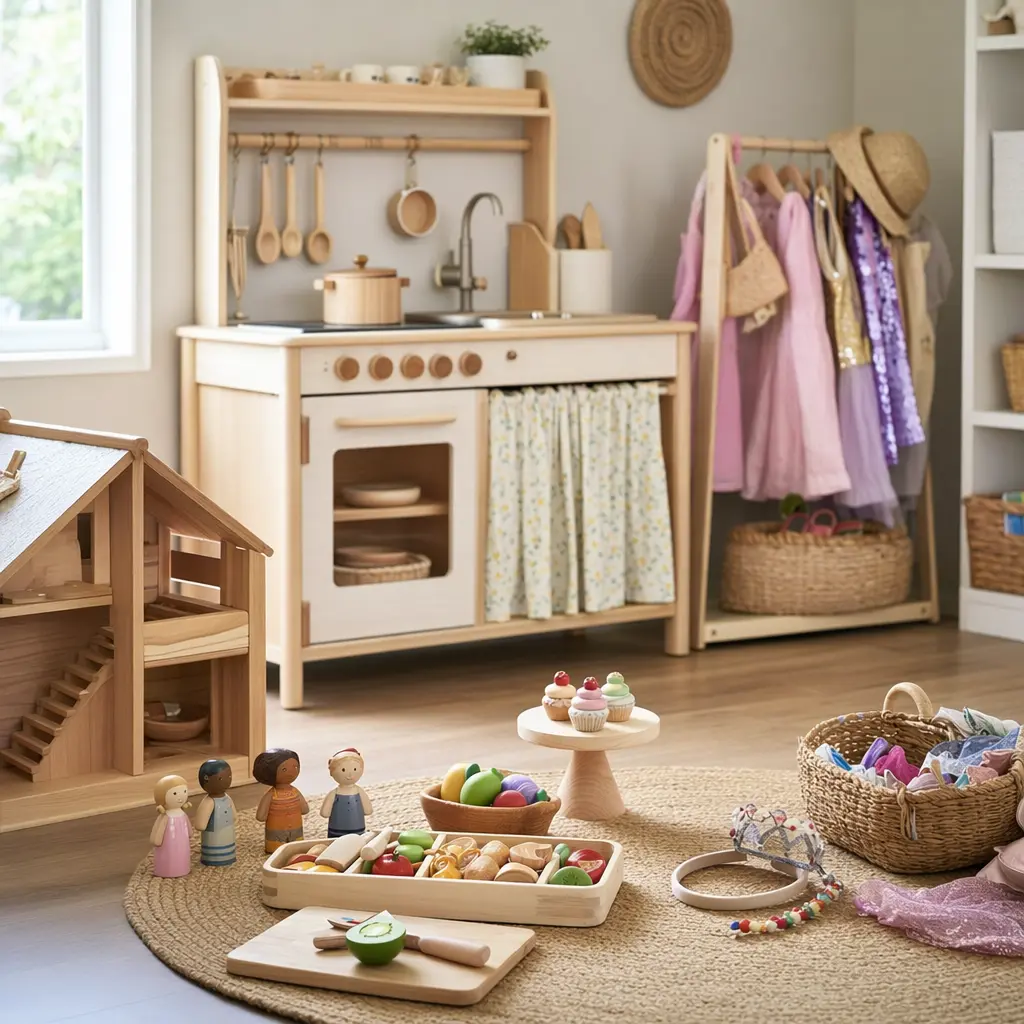
Compare prices and availability
Check current prices and availability for this guide on eBay.
As an eBay Partner, we may be compensated if you make a purchase.
Pretend play sets are more than short-term entertainment. The right ones can grow with your child, supporting simple imitation at age three and more complex storytelling and role play by age eight. For parents, that means better value and fewer toys that feel outgrown after one birthday.
What to look for
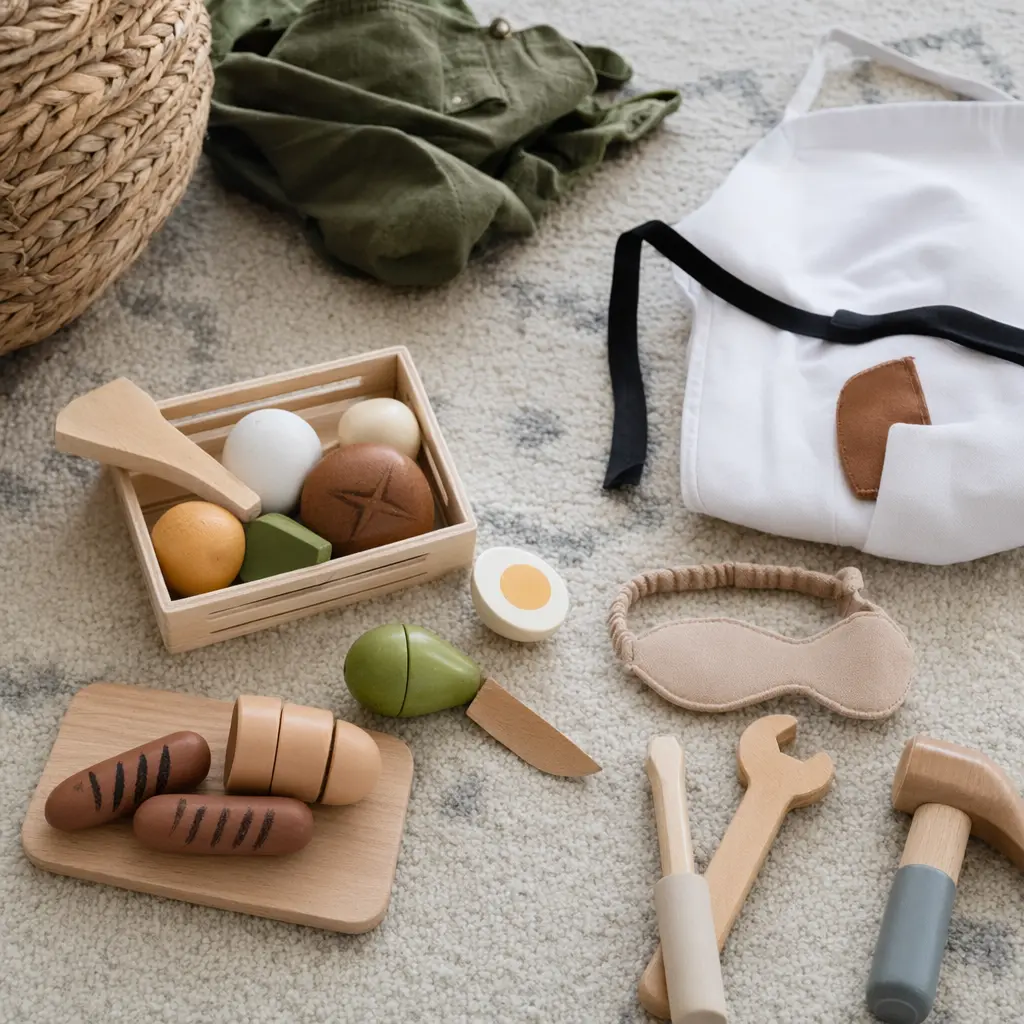
Pretend play sets that last through multiple developmental stages share a few common traits. They leave room for imagination, avoid fixed outcomes, and can be used in different ways as children’s language, social skills, and attention span grow.
- Open-ended pieces: Items that can represent many things instead of just one role or story.
- Durable materials: Sturdy wood, thick plastic, or reinforced fabric that holds up to years of play.
- Expandable design: Sets that work on their own but can be added to later with extra pieces.
- Simple realism: Familiar themes like home, community, or caregiving without too many built-in sounds or scripts.
- Storage-friendly size: Pieces that can be packed away and revisited without taking over a room.
Age suitability
For ages three to five, pretend play is often about copying adults and acting out daily routines. Think feeding a doll, cooking a meal, or pretending to be a helper. As kids move into early elementary years, the same sets can support longer storylines, problem-solving, and cooperative play with siblings or friends. A well-chosen pretend play set doesn’t need to be replaced; it simply gets used in more creative and complex ways over time.
Standout categories or types
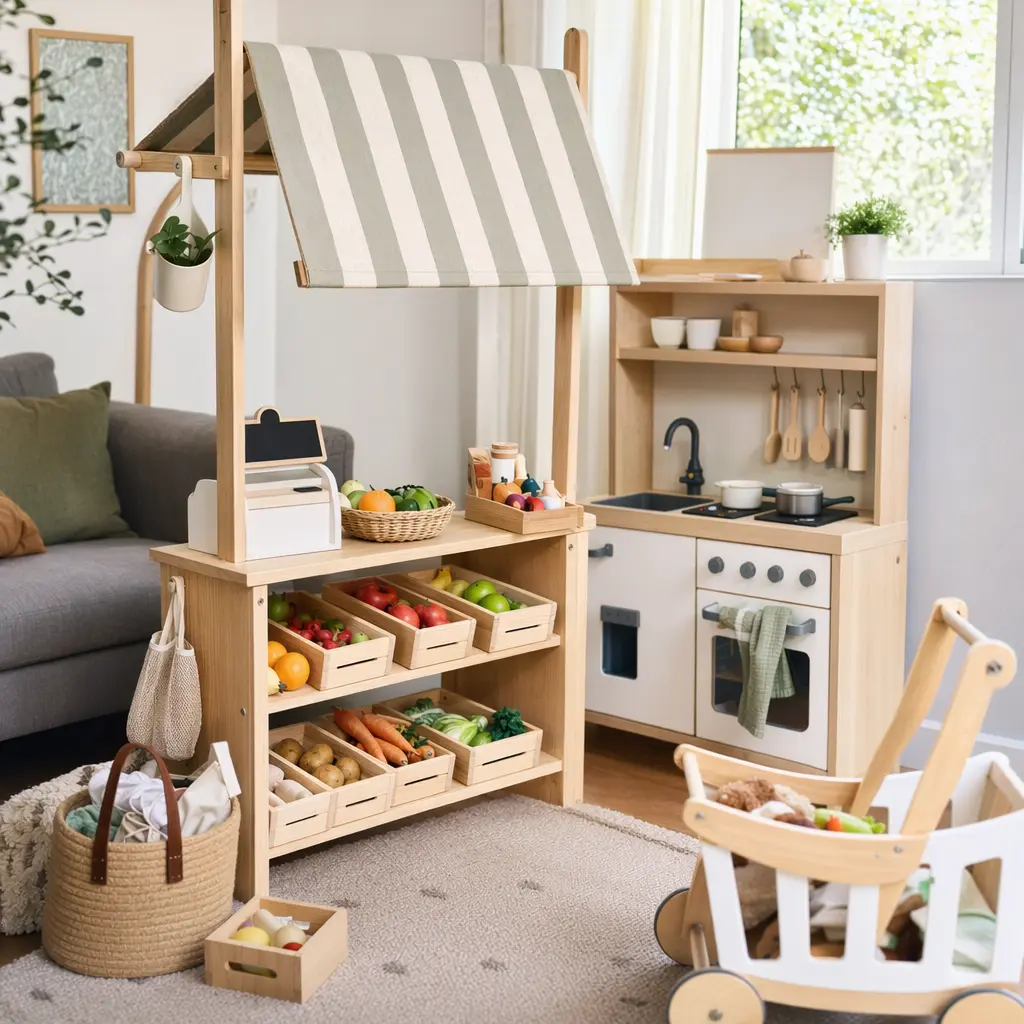
Some types of pretend play sets are especially good at adapting as kids grow. These categories tend to support both early imaginative play and later, more structured storytelling.
- Play kitchens and food sets: Start with simple pretend cooking and expand into restaurants, grocery stores, or family meals.
- Dollhouses and figures: Basic layouts work for young children, while older kids add narratives, rules, and character roles.
- Dress-up and role-play kits: Capes, uniforms, and accessories can shift from simple costume play to elaborate performances.
- Tool benches and work sets: Early play focuses on imitation, while older kids create projects and problem-solve.
- Community role-play sets: Themes like doctors, schools, or shops grow with a child’s understanding of the world.
Frequently asked questions
Can one pretend play set really work from ages 3 to 8?
Yes, if it’s open-ended. Sets that don’t rely on batteries, fixed scripts, or single-use features are more likely to stay interesting as children’s play becomes more complex.
Are bigger sets always better?
Not necessarily. A smaller set with flexible pieces often inspires more creativity than a large set with lots of specialized parts that only do one thing.
How many accessories should a set include?
Enough to suggest ideas, but not so many that play feels overwhelming. Many parents prefer starting with a core set and adding accessories later as interest grows.
Do pretend play sets help with learning?
Pretend play supports language development, social skills, and emotional understanding. While it’s not academic learning, it lays important groundwork for communication and cooperation.
Is adult involvement needed?
Younger children may enjoy playing alongside an adult at first. As kids get older, pretend play often becomes more independent and peer-focused.
Pretend play sets that grow with kids offer long-term value by meeting children where they are now and where they’re headed next. By focusing on open-ended design and durable construction, parents can choose toys that stay relevant well beyond the preschool years.