Pretend Play Toys That Build Social Skills (Ages 3–5)
A parent-friendly guide to pretend play toys that help preschoolers practice empathy, sharing, and communication through role-play. Learn what to look for, age fit, and safety tips.
Compare prices and availability
Check current prices and availability for this guide on eBay.
As an eBay Partner, we may be compensated if you make a purchase.
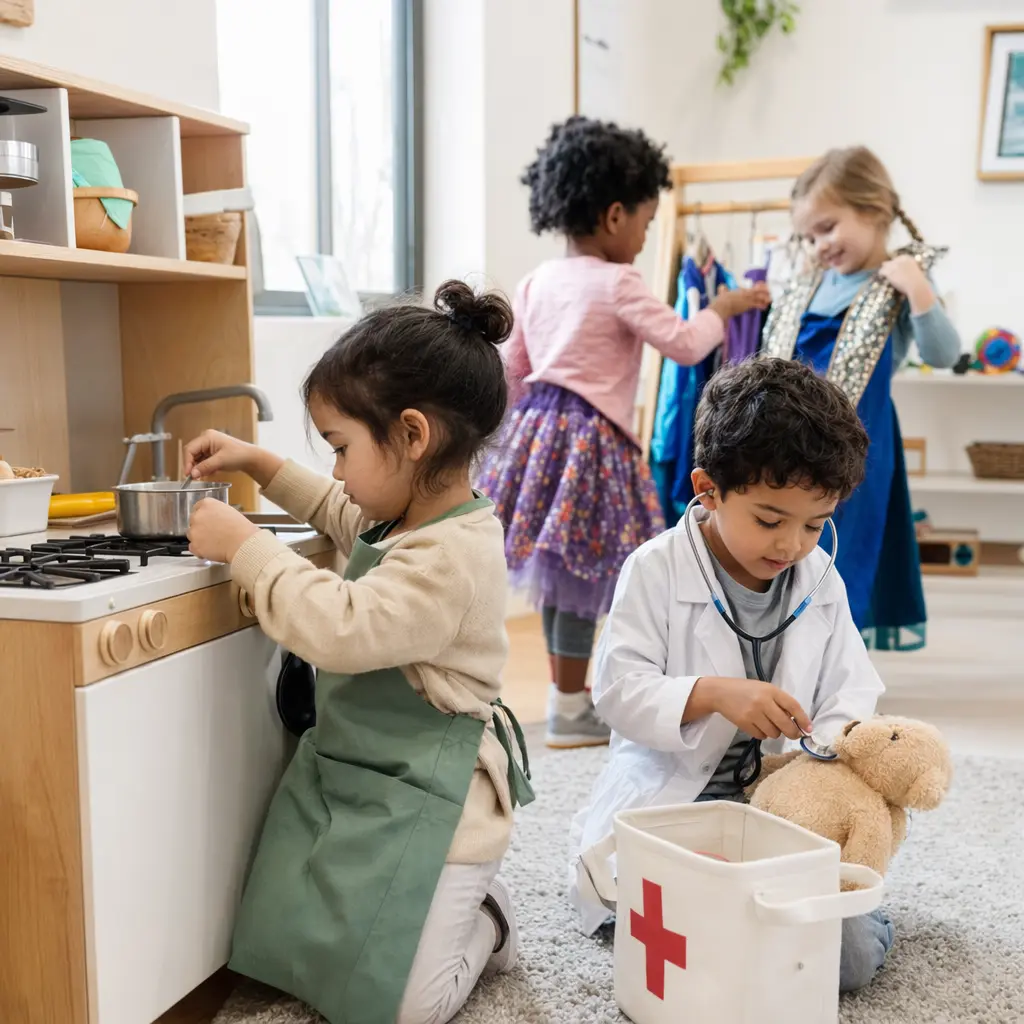
Pretend play is more than make-believe. For children ages 3–5, role-play toys create natural chances to practice empathy, sharing, and communication. When kids take turns being the caregiver, helper, or problem-solver, they begin to understand other perspectives and learn how social interactions work. The right pretend play toys can support these skills while keeping play fun and child-led.
What to look for
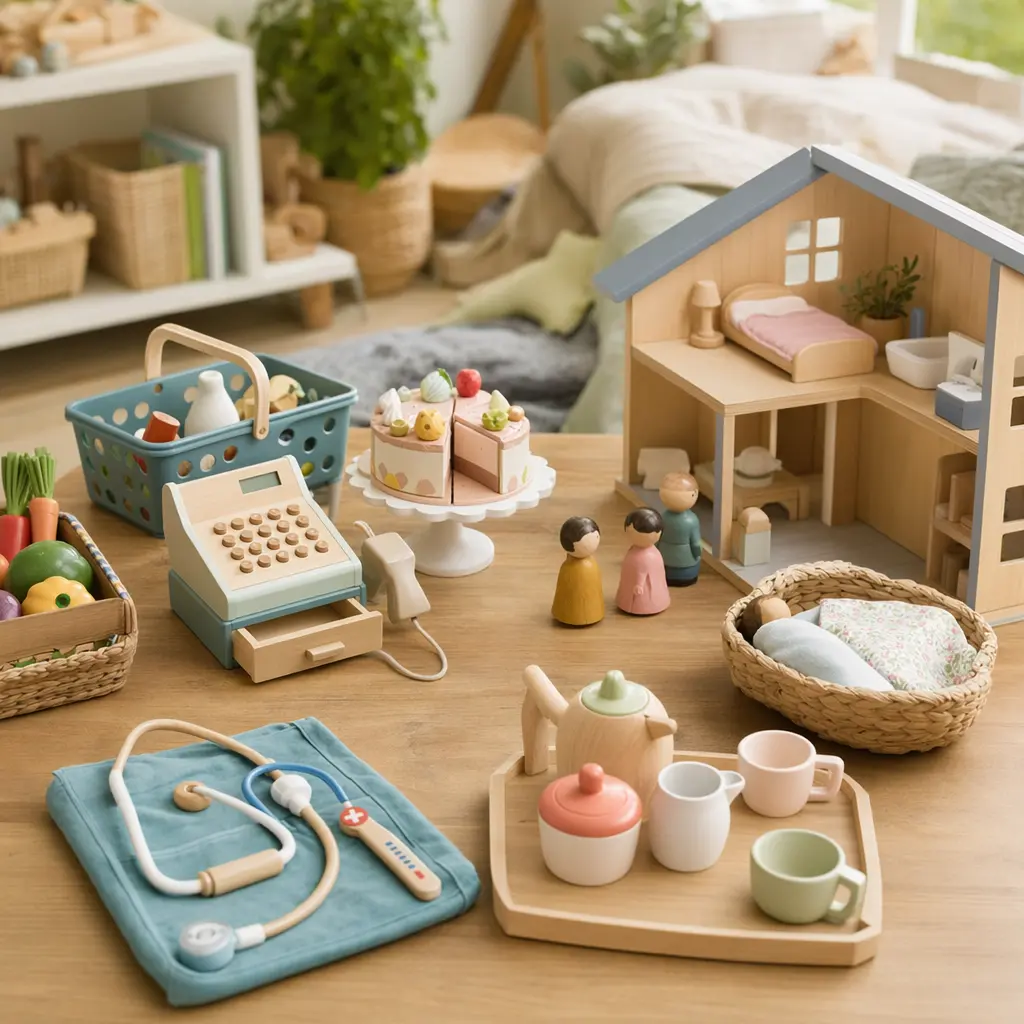
When choosing pretend play toys for social development, focus on features that encourage interaction rather than solo play. Open-ended sets that invite conversation, cooperation, and imagination tend to offer the most value. Durability and simplicity also matter, since preschoolers often repeat favorite scenarios many times.
- Open-ended roles that allow children to switch parts, such as helper, customer, or caregiver
- Multiple pieces that encourage sharing, turn-taking, and collaboration
- Everyday themes kids recognize, like home life or community helpers
- Simple designs that spark imagination instead of directing play
- Sturdy materials sized for small hands
Age suitability
For ages 3–5, pretend play becomes more social and story-driven. Children at this stage can follow simple storylines, use language to explain ideas, and negotiate roles with others. Toys should match these growing skills without being overwhelming. Sets with too many tiny parts or complex instructions can interrupt play, while simpler tools support longer, more meaningful interactions.
Standout categories or types
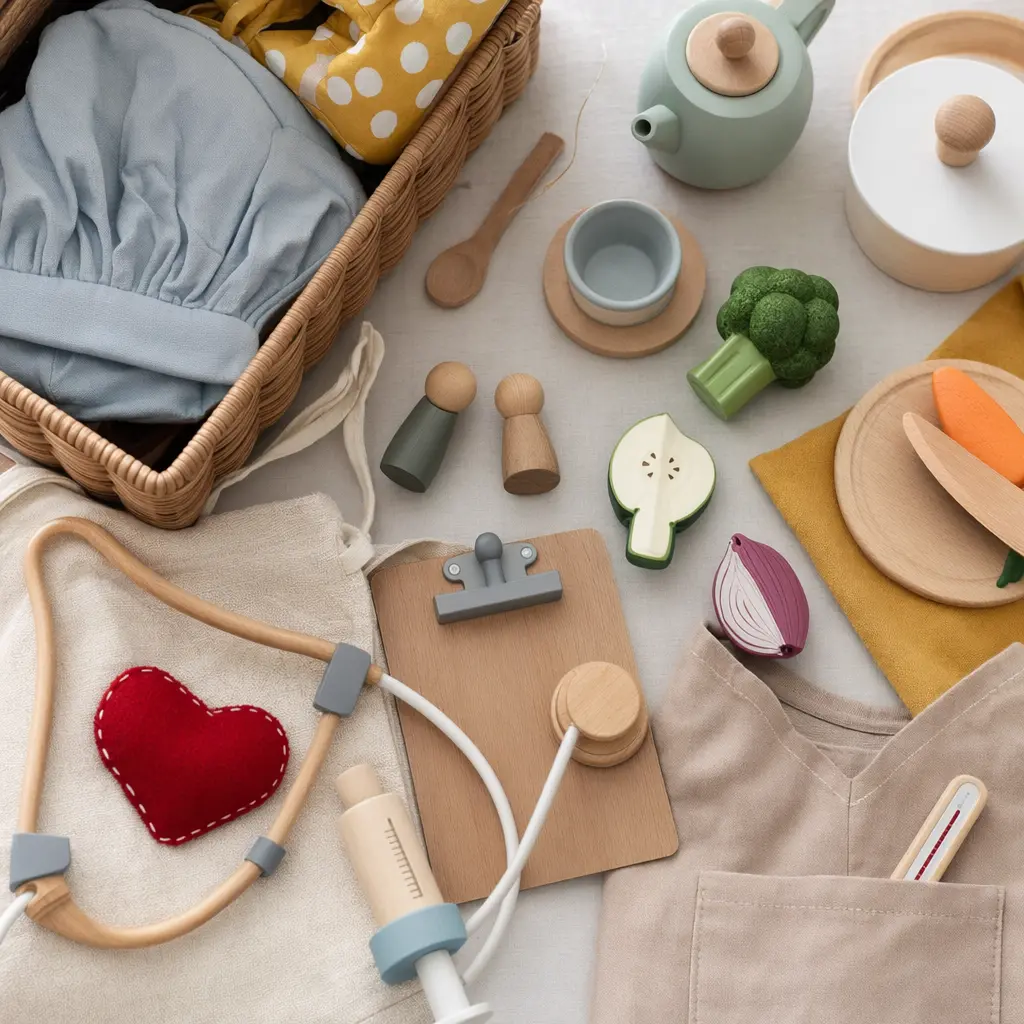
Certain types of pretend play toys are especially effective at building social skills during the preschool years. These categories naturally encourage children to talk, listen, and respond to one another as they act out familiar situations.
- Home and family role-play sets that let children act out caregiving, routines, and cooperation
- Community helper kits that introduce helping roles and problem-solving conversations
- Dress-up and costume pieces that allow kids to explore different identities and emotions
- Play food and market-style toys that promote sharing, requesting, and turn-taking
- Puppet or figure play that helps children express feelings and practice dialogue
Frequently asked questions
How does pretend play support empathy?
By acting out different roles, children practice seeing situations from another person’s point of view. Pretend caregiving or helping scenarios encourage kids to notice feelings and respond with care.
Are pretend play toys better for group play than solo play?
Many pretend play toys work well for both. Solo play builds imagination and language, while group play adds sharing, negotiation, and communication. Toys that support both modes offer the most flexibility.
What if my child prefers playing alone?
That’s normal at this age. Pretend play can still build social understanding even when played solo. Over time, inviting a sibling or friend to join can gently introduce cooperative play.
How many pieces should a set include?
Enough pieces to share without creating clutter is ideal. A small group of well-chosen items often leads to deeper play than a large set with too many parts.
Do parents need to actively participate?
Occasional participation can help model positive social language, but children benefit most when they lead the play. Simple encouragement and observation are often enough.
Pretend play toys can be powerful tools for social learning during the preschool years. By choosing open-ended, age-appropriate options, parents can support empathy, communication, and cooperation while letting children learn through joyful, imaginative play.