The Cardboard Playhouse: How Boxes Became a Modern Classic
From shipping boxes to sketchable castles, the cardboard playhouse shows how simple, recyclable materials became one of today’s most creative pretend-play toys.
Compare prices and availability
Check current prices and availability for this guide on eBay.
As an eBay Partner, we may be compensated if you make a purchase.
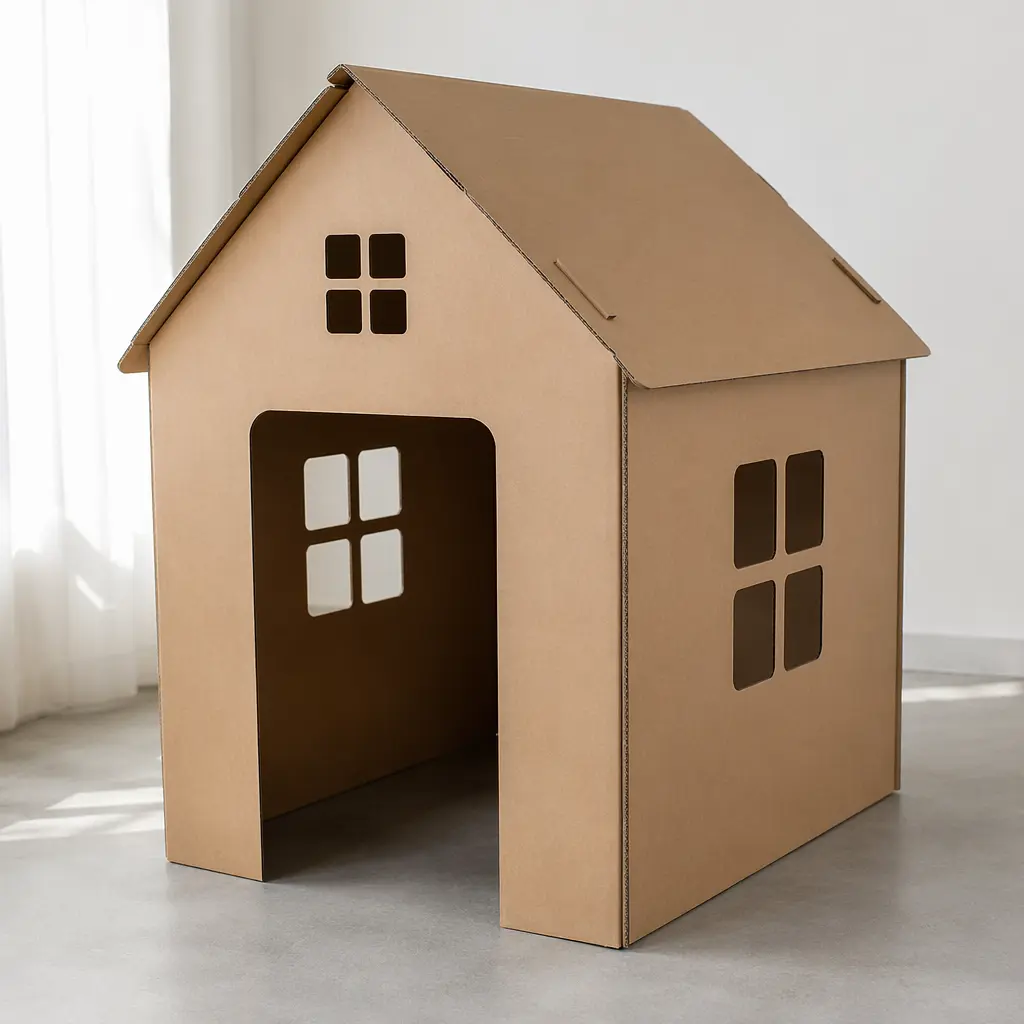
The cardboard playhouse doesn’t look like a toy that should last. It’s made from the same material as delivery boxes, often arrives flat-packed, and invites kids to draw all over it. Yet over the past decade, it has quietly become a staple of playrooms, classrooms, and even living rooms. In an age of batteries and apps, this simple structure has reasserted the power of imagination.
Where it came from
Cardboard playhouses don’t have a single inventor. Their roots are older and more accidental than that. For as long as goods have been shipped in boxes, children have turned those boxes into forts, dens, and secret hideouts. What’s new is the decision by toy and design companies to formalise that instinct into a product.
In the late 2000s and 2010s, as sustainability and open-ended play gained traction, designers began offering pre-cut cardboard houses, shops, and castles. These products kept the DIY spirit of a shipping box but added thoughtful touches: scored fold lines, windows at child height, and doors that open and close. The result was something that felt intentional without feeling finished.
Why it works
The appeal of a cardboard playhouse lies in what it doesn’t do. It doesn’t light up, make sounds, or tell children how to play. Instead, it provides a loose framework that can become almost anything: a café in the morning, a rocket ship after lunch, a quiet reading nook by evening.
From a design perspective, cardboard hits a rare sweet spot. It’s lightweight but sturdy, cheap but surprisingly durable, and forgiving enough to be cut, coloured, and taped without special tools. For parents, it’s also refreshingly low-pressure: when it wears out, it can be recycled without guilt.
- Open-ended structure that encourages imaginative play
- Lightweight material that’s easy to move and store
- Customisable surfaces for drawing, painting, and decorating
- Low-cost, recyclable construction
Who it's for
Most cardboard playhouses are aimed at preschool and early primary ages, when pretend play is at its peak. That said, their simplicity often draws in older children too, especially when art and building are involved. Adults tend to appreciate them for different reasons: they’re relatively affordable, don’t dominate a room forever, and align well with eco-conscious values.
Variants and what to look for today
Today’s cardboard playhouses range from plain house shapes to themed designs like shops, castles, or vehicles. Some come completely blank, while others include light printed outlines meant to be coloured in. There are also modular versions that connect multiple panels, allowing families to build larger structures over time.
When shopping, thickness matters. Heavier corrugated cardboard stands up better to repeated folding and enthusiastic play. It’s also worth checking how the pieces connect; sturdy slots and tabs generally last longer than thin flaps. As with many popular toy categories, cheaper knock-offs exist, but flimsy material can quickly turn a playhouse into a pile of creases.
Frequently asked questions
How long does a cardboard playhouse last?
That depends on the cardboard quality and how it’s used. Some last a few intense weeks, others survive months of steady play. Wear and tear is part of the appeal.
Can children paint them?
Yes. Crayons, markers, and poster paints all work well. Heavier paints may soften the cardboard, so it’s best to let sections dry fully.
Are they safe?
Reputable versions are designed with rounded edges and non-toxic materials. Adult assembly and occasional checks for torn edges are recommended.
What happens when we’re done with it?
Most can be flattened and recycled with household cardboard, which is one reason parents find them appealing.
The cardboard playhouse isn’t flashy, and it doesn’t promise to teach a specific skill. Instead, it offers something rarer: space. Space to imagine, to decorate, to change one’s mind. In a toy landscape crowded with features, that simplicity is exactly why it has endured.