Wooden Thomas Trains: Why the chunky engines still last
Wooden Thomas trains turned a TV character into an open-ended play system that still fills train tables decades later, blending sturdy design, storytelling, and cross-generational appeal.
Compare prices and availability
Check current prices and availability for this guide on eBay.
As an eBay Partner, we may be compensated if you make a purchase.
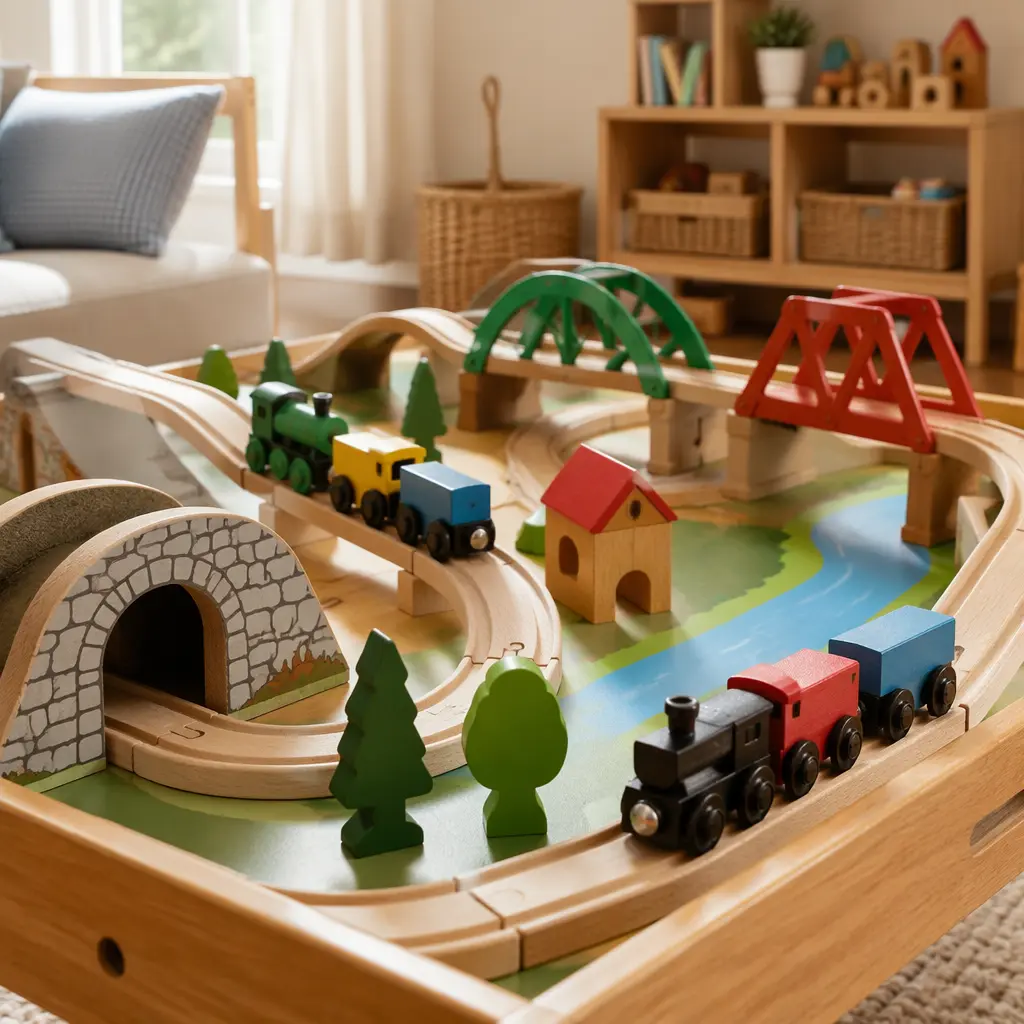
Wooden Thomas trains occupy a rare place in the toy world: they are tied to a famous children's series, yet they often outlast the media moment that introduced them. Long after a child stops watching episodes about talking locomotives, the trains themselves tend to remain in circulation on playroom floors, classroom train tables, and hand-me-down toy bins. The appeal comes from a simple combination of chunky wooden construction, easy-to-connect track pieces, and recognizable engine personalities that encourage storytelling without requiring screens or batteries.
Where it came from
The wooden Thomas train line arrived in the early 1990s, building on the popularity of the long-running Railway Series books and the television adaptation Thomas the Tank Engine & Friends. The timing mattered. By the early 1990s, many parents were already familiar with classic wooden railway systems from preschool classrooms and Scandinavian-style wooden toy brands. Adding recognizable engines and locations gave children an immediate narrative framework while keeping the tactile appeal of traditional wooden toys.
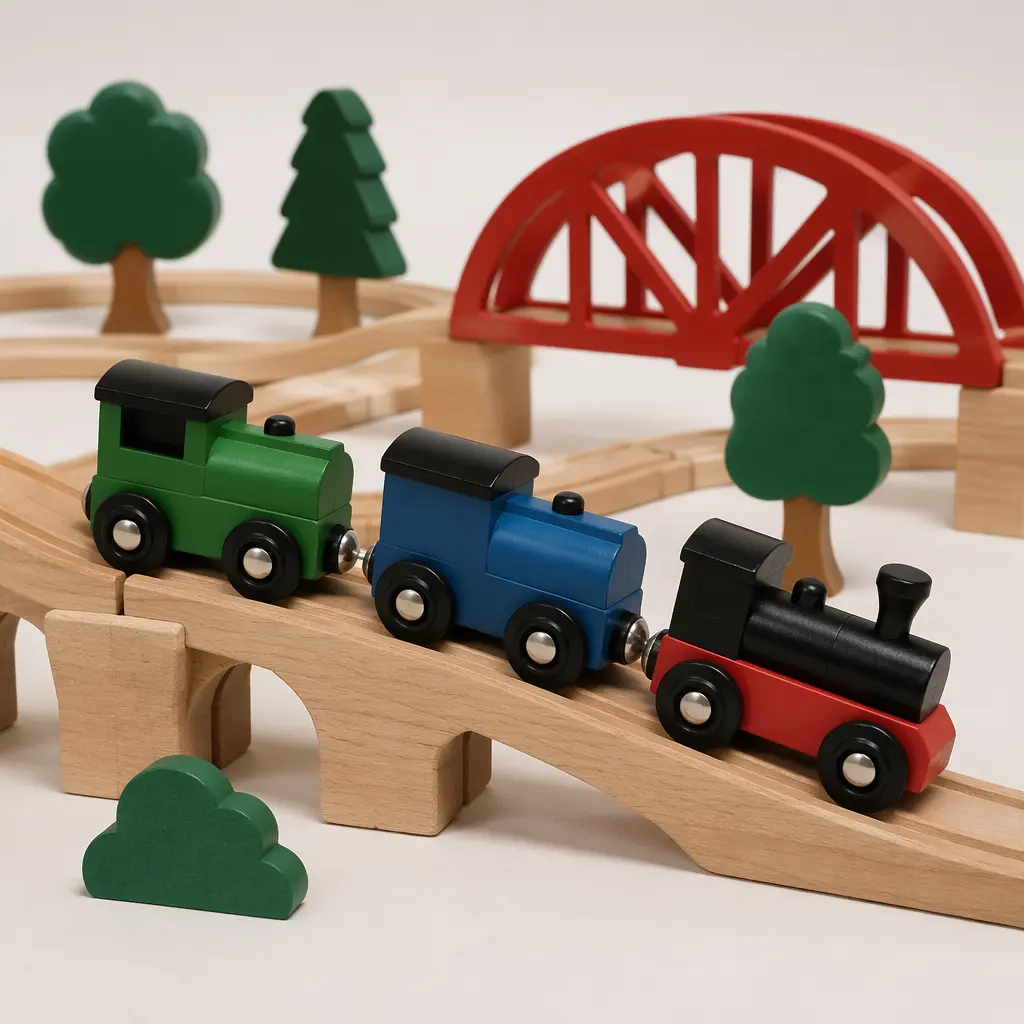
The original concept was straightforward: durable wooden engines with embedded magnets could move freely across grooved wooden tracks that children could rearrange into endless layouts. Unlike highly detailed collector trains, these toys were intentionally oversized and simplified for small hands. The rounded edges, bright colors, and sturdy construction made them approachable for preschoolers while still detailed enough for imaginative world-building. Over time, the line expanded into bridges, stations, cranes, tunnels, cargo yards, and battery-powered accessories, but the basic format stayed remarkably consistent.
Why it works
The design succeeds because it balances structure and freedom. Children recognize familiar characters like blue tank engines or green locomotives, but the tracks themselves are open-ended. A child can recreate scenes from a favorite story one day and invent an entirely new railway network the next. The magnetic couplings are forgiving, which matters more than it sounds. Younger children can connect trains independently without the frustration of tiny hooks or precise alignment.
There is also a physicality to wooden train play that has aged well. The engines have noticeable weight, the tracks click together with satisfying friction, and layouts can spread across an entire room. That hands-on quality encourages collaborative play. Siblings or classmates naturally divide roles between building track systems, operating trains, managing cargo, or inventing station announcements. The toy line became a staple in waiting rooms and preschool settings partly because multiple children can participate at once without complicated rules.
- Chunky wooden engines designed for small hands
- Magnetic couplings that are easy for preschoolers to use
- Expandable track systems that encourage creative layouts
- Mix of character-based storytelling and open-ended pretend play
- Durable construction that often survives years of heavy use
Who it's for
Wooden Thomas trains are generally aimed at preschool and early elementary ages, especially children who enjoy vehicles, building systems, or imaginative storytelling. Younger toddlers may need help assembling track layouts, but the trains themselves are usually easy to push and connect. The line also attracts adults for different reasons. Some parents appreciate the low-tech play pattern compared with app-driven toys, while collectors seek older wooden engines and retired track pieces tied to specific eras of the franchise. There is also a strong nostalgia factor for adults who grew up with the television series during the 1990s and early 2000s.
Variants and what to look for today
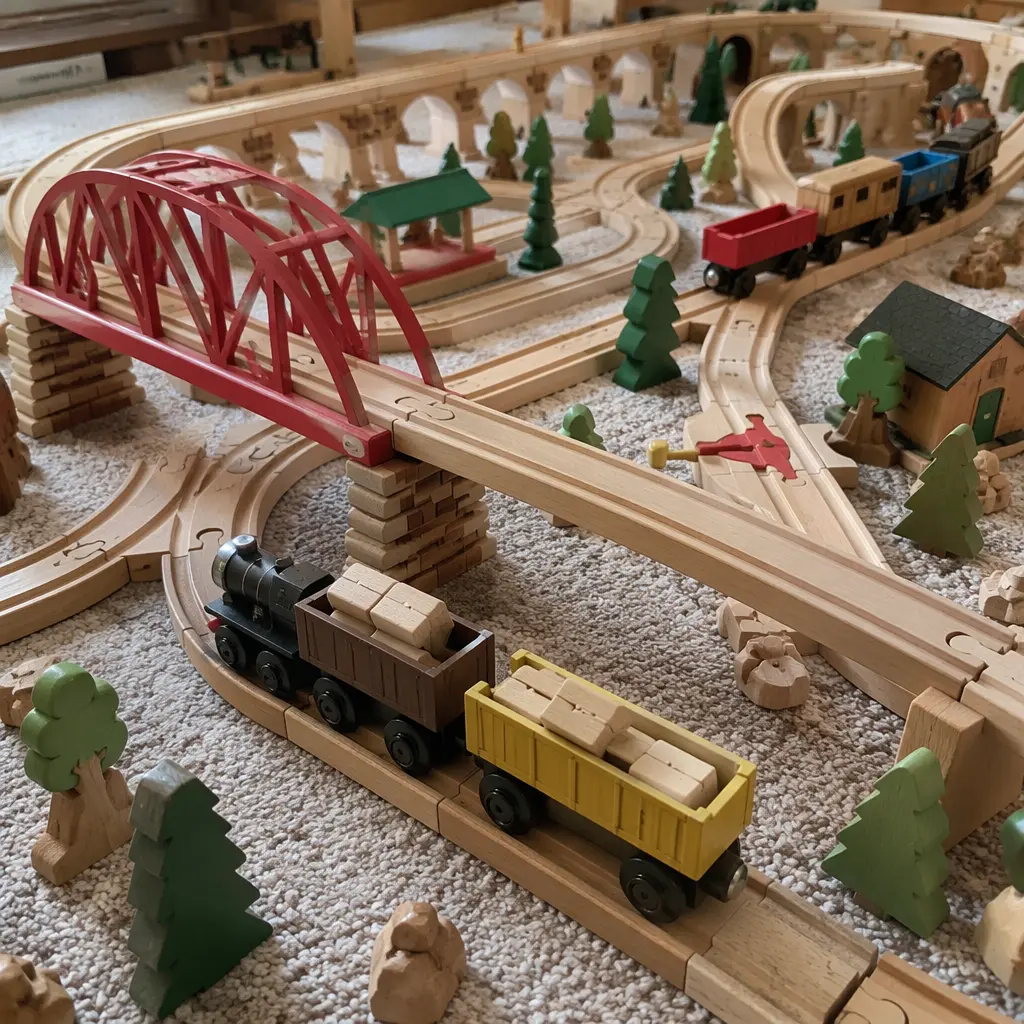
One reason the wooden railway format has endured is compatibility. Many wooden track systems share similar dimensions, allowing families to mix train sets, bridges, and accessories across brands and generations. That flexibility keeps older pieces useful even as manufacturers update packaging or redesign engines. Some families intentionally combine Thomas-themed engines with generic wooden railways to create larger and less character-focused layouts.
Modern versions vary in style and build quality. Some newer trains lean toward lighter construction or brighter finishes, while older editions are often remembered for heavier wood and simpler paintwork. Buyers looking secondhand should check that magnets remain securely attached, wheels roll smoothly, and track pieces are not warped or cracked from moisture exposure.
- Starter sets with simple oval track layouts are easiest for younger children
- Large mixed lots are common on secondhand marketplaces and can offer good value
- Battery-powered accessories can add motion but are not essential to the core play pattern
- Generic wooden track pieces often work alongside branded sets
- Avoid heavily chipped paint, damaged magnets, or swollen wood on used items
Frequently asked questions
Are wooden Thomas trains compatible with other wooden tracks?
In many cases, yes. A large number of wooden railway systems use similar groove widths and connector shapes, so tracks and accessories can often mix together. Fit may vary slightly between brands, but compatibility is one reason the category has remained popular.
Why do children stay interested in train tables for so long?
Train play combines several activities at once: building, storytelling, sorting, and movement. A child can redesign the layout repeatedly while also inventing social interactions between engines, stations, and cargo. That layered play pattern tends to hold attention longer than single-purpose toys.
Do wooden trains still compete with electronic toys?
They do, partly because they offer a different kind of experience. Wooden train sets are tactile, collaborative, and easy to understand immediately. They also do not depend on charging, software updates, or screens, which appeals to many families and educators.
Are older wooden Thomas trains collectible?
Some older engines and accessory sets are sought after by collectors, especially pieces associated with earlier television eras or discontinued designs. Most families, however, buy them primarily as durable play toys rather than display collectibles.
More than three decades after their introduction, wooden Thomas trains still succeed because they treat storytelling as something children actively build rather than simply watch. The engines may begin as recognizable characters, but the enduring appeal comes from the railway worlds children create around them, one track piece at a time.