Melissa & Doug Cutting Food and the Appeal of Pretend Prep
Melissa & Doug’s wooden cutting food sets turned simple pretend meals into a hands-on lesson in kitchen routines, coordination, and imaginative play that still resonates with families today.
Compare prices and availability
Check current prices and availability for this guide on eBay.
As an eBay Partner, we may be compensated if you make a purchase.
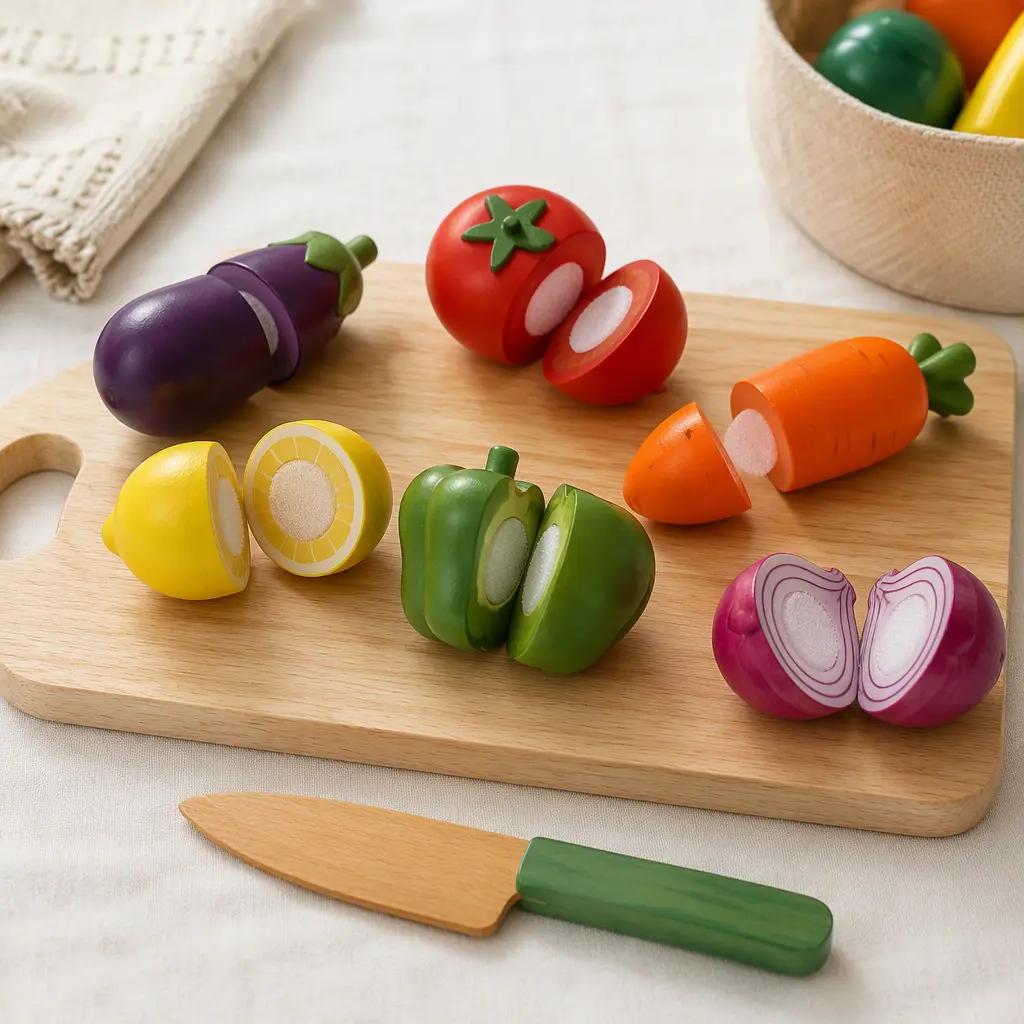
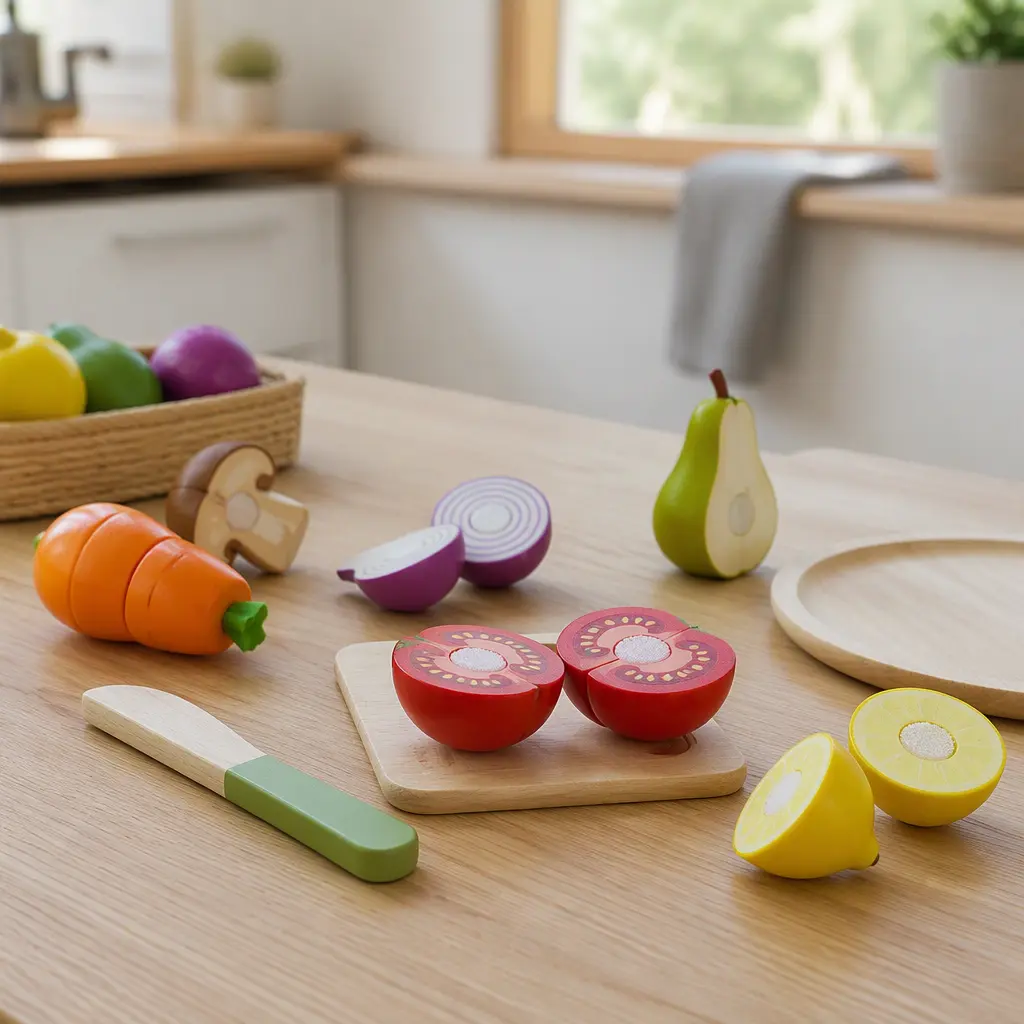
Few pretend-play toys are as instantly understandable as a wooden tomato that splits apart with a crisp ripping sound. Melissa & Doug’s Cutting Food sets became a familiar sight in playrooms because they turned an everyday adult activity into something tactile and repeatable for children. The idea was simple: wooden fruits, vegetables, breads, and other foods held together with hook-and-loop fasteners could be “sliced” apart with a child-safe wooden knife, then reassembled for another round. What looked like a straightforward kitchen toy ended up quietly teaching sequencing, coordination, cleanup habits, and the rhythms of preparing food.
Where it came from
Melissa & Doug was founded in 1988 by Melissa Bernstein and Doug Bernstein, and the company quickly built a reputation around classic-style toys with a focus on hands-on play. At a time when electronic toys were becoming increasingly common, the brand leaned heavily into wood construction, simple mechanics, and open-ended activities. The Cutting Food line fit neatly into that philosophy. Instead of relying on lights, sounds, or batteries, the toy asked children to imitate familiar household routines using durable pieces they could manipulate directly.
Pretend kitchen play had existed for generations before these sets appeared, but Melissa & Doug helped popularize a version that felt sturdy and realistic without becoming complicated. The satisfying pull of the hook-and-loop fasteners gave children immediate feedback that their pretend cutting motion had worked. Parents and preschool teachers also noticed that the toy naturally encouraged vocabulary building. Children named foods, described colors and shapes, counted pieces, and practiced concepts like halves and portions while they played. In many homes, the set became part of a larger pretend kitchen ecosystem that included toy stoves, grocery baskets, and miniature cookware.
Why it works
The core mechanic succeeds because it mirrors a real action in a safe, simplified way. Children grip the wooden knife, steady the food item, and use controlled pressure to separate the pieces. That sequence supports fine motor development while still feeling like imaginative play rather than a lesson. The sound and resistance of the hook-and-loop connection also create a strong sensory payoff. Unlike many toy foods that simply sit on a shelf, these pieces invite repeated interaction.
Another reason the toy endured is that it scales easily with age. Younger children often begin with simple sorting, naming, and pretend serving. Older preschoolers build more elaborate restaurant games or imitate cooking routines they observe at home. Because the foods can be taken apart and rebuilt quickly, the play pattern loops naturally without much adult involvement.
- Wooden construction designed for repeated handling
- Hook-and-loop connections that create tactile feedback
- Child-safe play knife sized for small hands
- Recognizable food shapes that encourage vocabulary practice
- Open-ended play that works alone or with toy kitchens and grocery sets
Who it's for
The Cutting Food sets are typically aimed at preschool-age children, especially those interested in imitation play and toy kitchens. Many children encounter them around ages three to five, when they are developing hand coordination and becoming more aware of household routines. The toy also appeals to adults because it avoids screens and complicated setup. Teachers and therapists have used similar play food sets in classroom and developmental settings because the actions are repetitive, social, and easy to adapt into group activities. Even older children sometimes return to the sets during pretend restaurant games, especially when combined with cash registers, menus, or play cookware.
Variants and what to look for today
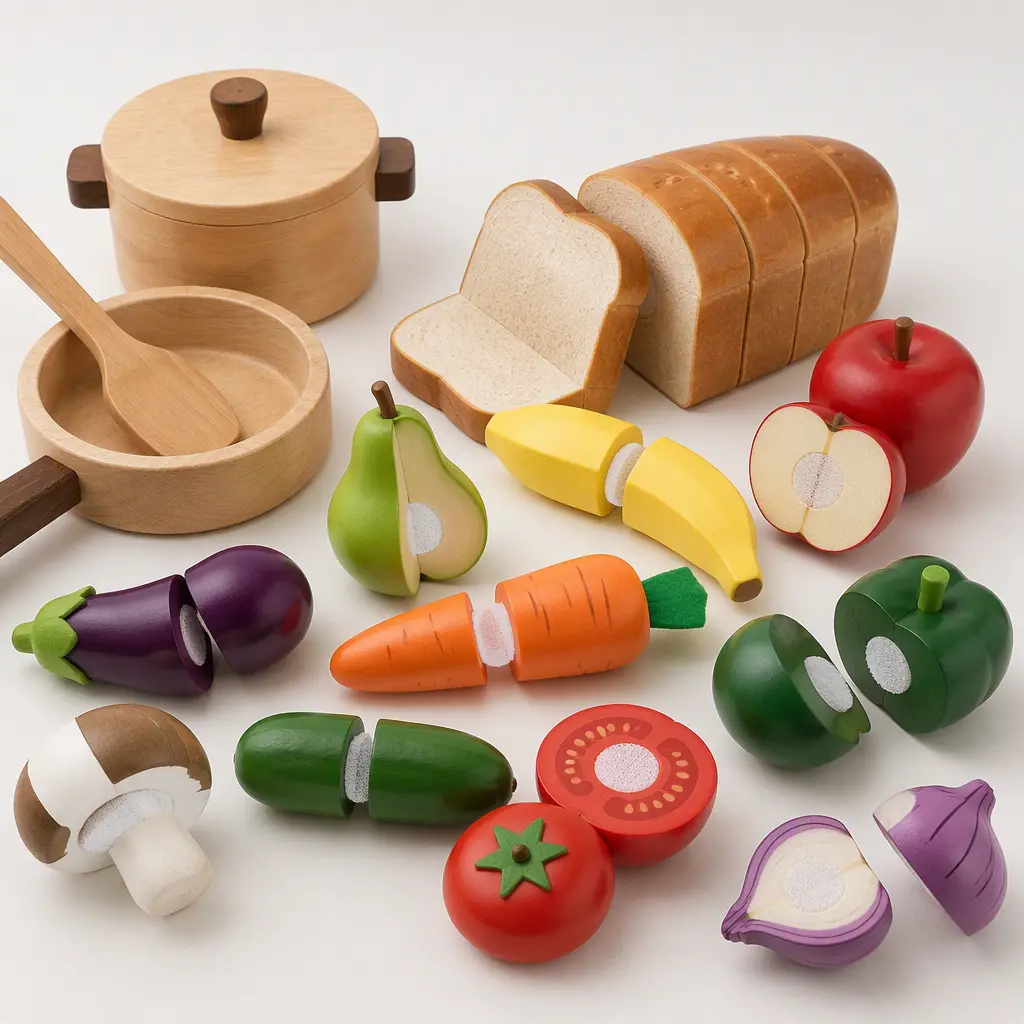
Over the years, the basic concept expanded far beyond the original mixed-food assortment. Modern versions may focus on fruits, vegetables, pizza, sandwich making, breakfast foods, or picnic themes. Some sets include storage crates or wooden boxes, while others are designed specifically to complement play kitchens. The core experience remains largely unchanged: a safe cutting action paired with recognizable foods and reusable pieces.
Parents shopping today will notice a wide range of similar products from many brands. Wooden construction and securely attached fasteners are still good signs of durability. Some inexpensive imitation sets use lightweight materials or weak connections that separate too easily after repeated use. It is also worth checking whether painted surfaces feel smooth and whether the food pieces are appropriately sized for the intended age group. Families who already own pretend kitchen toys often look for mixed assortments because they support a broader range of imaginative scenarios.
- Mixed food assortments for general pretend cooking
- Fruit- or vegetable-focused sets for sorting games
- Pizza and sandwich kits for role-play restaurants
- Compact travel-sized play food kits
- Storage crates or baskets that encourage cleanup routines
Frequently asked questions
Why do children enjoy the cutting action so much?
The combination of motion, resistance, and sound creates a clear cause-and-effect response. Children can see and hear the result of their action immediately, which makes the activity satisfying to repeat.
Are wooden play food sets mainly educational toys?
They are usually marketed as pretend-play toys first, but they naturally support skills like hand coordination, vocabulary development, sorting, counting, and social interaction during group play.
Do these sets work well with toy kitchens?
Yes. The Cutting Food sets are often used alongside play kitchens, toy shopping carts, pretend appliances, and restaurant role-play setups. Their scale and familiar food themes make them easy to combine with other pretend-play accessories.
What makes Melissa & Doug versions stand out?
The brand became associated with sturdy wood construction and simple, repeatable play patterns during a period when many toys emphasized electronics or licensed entertainment tie-ins. That straightforward approach helped the sets remain recognizable across multiple generations of families.
Melissa & Doug’s Cutting Food toys lasted because they treated ordinary routines as worthy subjects for play. Children did not need a complicated story world or battery-powered features to stay engaged. They only needed recognizable foods, a safe cutting motion, and the freedom to imitate the adults around them. Decades after the company introduced its early wooden toys, the familiar ripping sound of pretend slicing still signals the same kind of imaginative, hands-on play that made the sets memorable in the first place.