VTech Go! Go! Smart Wheels: A quiet lesson in cause and effect
VTech Go! Go! Smart Wheels turned rolling cars into a gentle lesson in cause and effect, using simple electronics and sturdy tracks to reward toddlers with sounds, lights, and repeatable discoveries.
Compare prices and availability
Check current prices and availability for this guide on eBay.
As an eBay Partner, we may be compensated if you make a purchase.
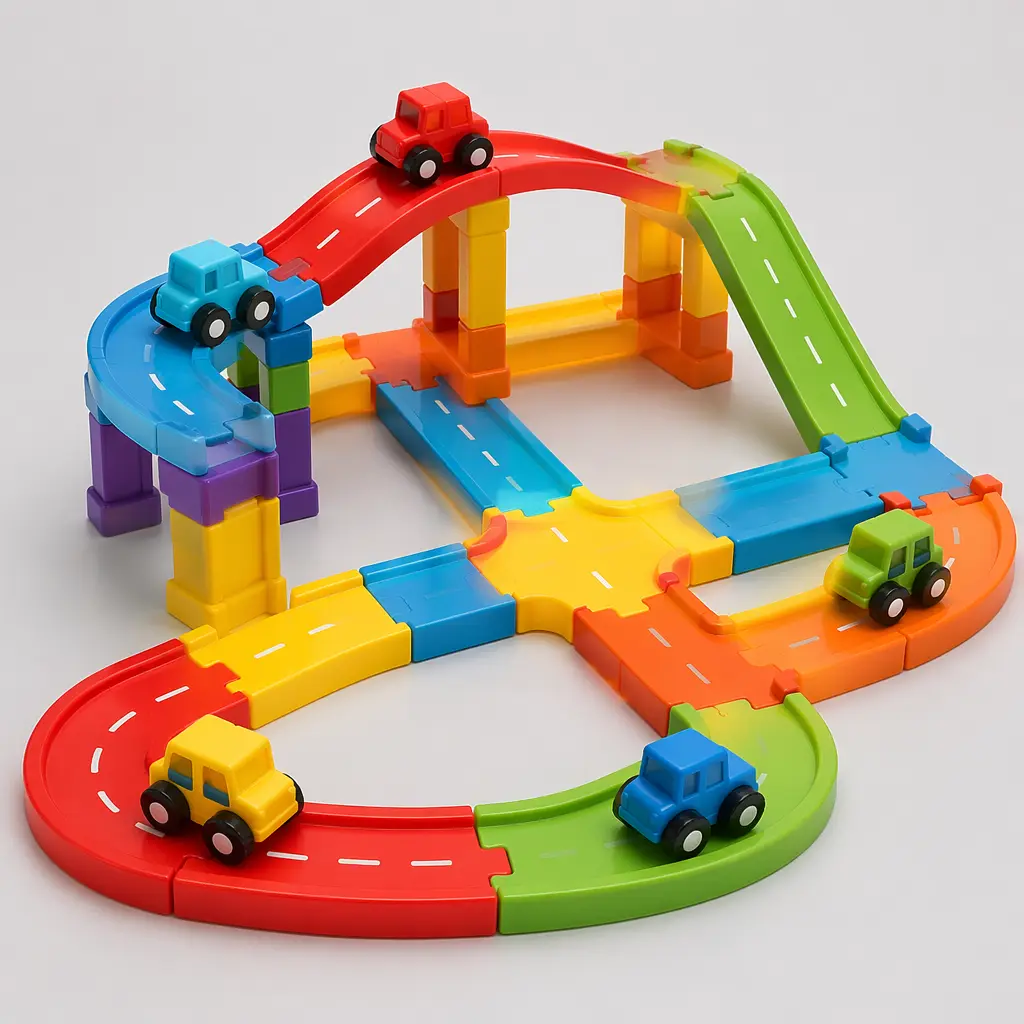
At first glance, VTech Go! Go! Smart Wheels looks like a cheerful plastic road system. Cars roll, tracks connect, and everything is sized for small hands. What makes it interesting is what happens next: a car crosses a special spot and the world responds with a sound, a phrase, or a light. For many toddlers, this is their first clear experience of cause and effect—do this, and something predictable happens back.
Where it came from
Go! Go! Smart Wheels launched in the early 2010s, around 2011, during a period when toy makers were experimenting with how much technology to put into preschool play. VTech, already known for learning toys with lights and sound, took a measured approach. Instead of screens or complex controls, the company embedded simple sensors into vehicles and track pieces.
The original purpose was not to teach letters or numbers in a formal way, but to encourage exploration. A child could push a car anywhere, and if it crossed a designated point, the toy responded. This kept the learning abstract and physical. It also meant the system could grow: new track packs, new vehicles, and new destinations could be added without changing the basic idea.
Why it works
The appeal of Go! Go! Smart Wheels is rooted in repetition. Toddlers love to do the same thing again and again, especially when the result is consistent. Roll the car down the ramp, hear a sound. Stop on a trigger point, see a light. This predictability builds confidence and invites experimentation.
Unlike many electronic toys, the system keeps the child in control. There are no menus or start buttons to manage. The electronics stay quiet until the child acts, which helps the toy blend into free play rather than dominate it.
- Chunky vehicles that are easy to grasp and push
- Embedded sensors that respond to movement, not button presses
- Modular tracks that encourage building and rebuilding
- Audio and light feedback that reinforces actions without overwhelming
Who it's for
This system is aimed squarely at toddlers and young preschoolers, roughly ages one to four. The cars are large enough to be safe for mouthing stages, and the tracks snap together with minimal force. Adults often appreciate it too, because it offers structured play without needing constant supervision or instruction. Older siblings may lose interest quickly, but parents and carers tend to value how calmly it holds a young child’s attention.
Variants and what to look for today
Over the years, the Go! Go! Smart Wheels family expanded into themed sets: garages, train crossings, spiral ramps, and multi-level layouts. While the themes vary, the core technology remains the same. Vehicles are designed to work across most sets, and tracks usually connect using a shared system.
If you are looking for one today, focus on compatibility and simplicity. Starter sets are often the easiest entry point, while large bundles can be overwhelming at first. It is also worth being cautious with unbranded add-ons; while generic track pieces may fit physically, they may not trigger sounds or lights correctly.
Frequently asked questions
Does it work without the electronics?
Yes. The tracks and cars still function as a basic road system even if the electronics are turned off or batteries are removed. This makes it usable during quieter playtimes.
Is it noisy?
The sound effects are noticeable but generally short and tied to specific actions. Many parents find them less intrusive than toys that play continuous music.
Can different sets be mixed together?
Most sets within the family are designed to connect, though older and newer pieces may vary slightly. Mixing is part of the intended play pattern.
Is it durable?
The plastic tracks are built for repeated assembly and disassembly. Vehicles tend to hold up well, though like all electronic toys, they benefit from careful handling.
VTech Go! Go! Smart Wheels endures because it respects how young children learn. It doesn’t rush them toward academic milestones or flashy screens. Instead, it rewards curiosity, movement, and repetition. For many families, it becomes a first introduction to the idea that their actions can shape the world—even if that world is just a small, colorful road on the living room floor.