Razor A Kick Scooter and the Early 2000s School Run
The Razor A kick scooter turned lightweight aluminum and tiny urethane wheels into a playground phenomenon, defining how many kids traveled to school in the early 2000s.
Compare prices and availability
Check current prices and availability for this guide on eBay.
As an eBay Partner, we may be compensated if you make a purchase.
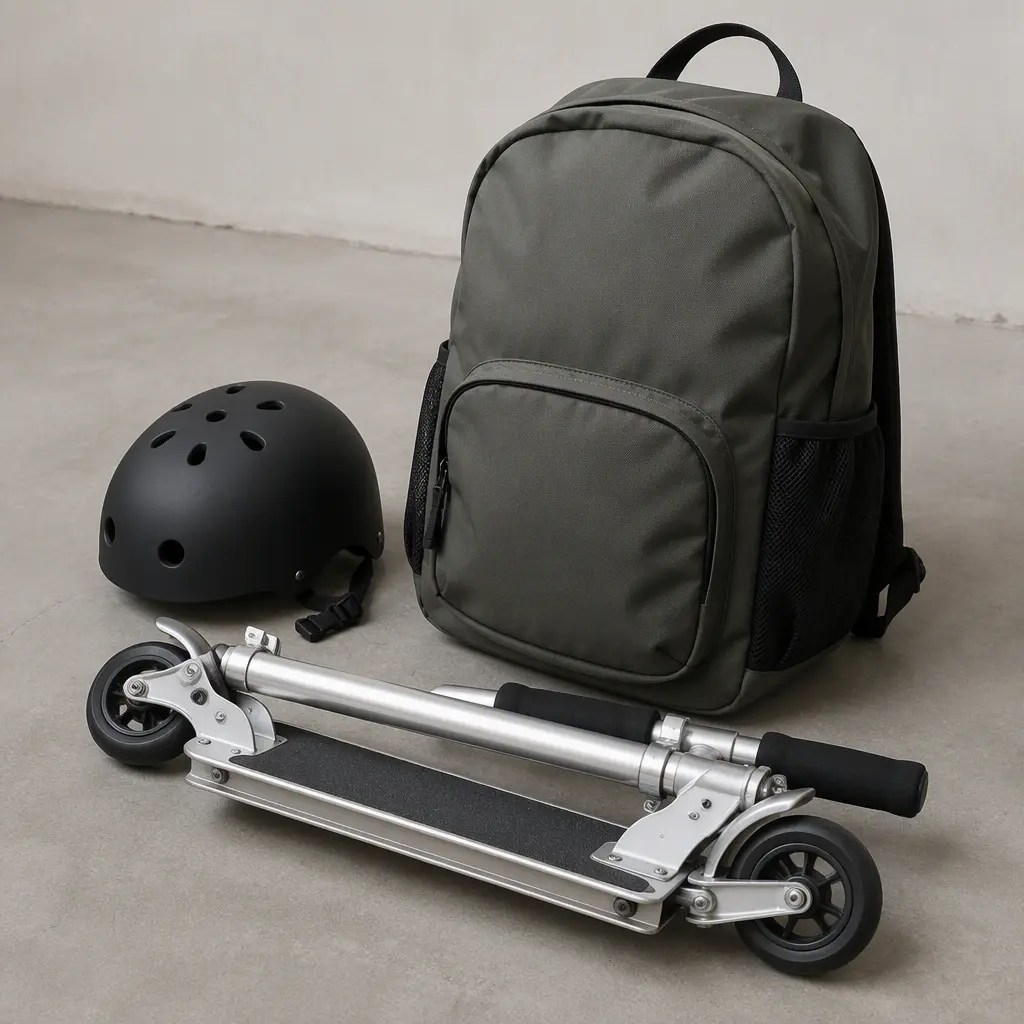
Few toys crossed over into everyday transportation as quickly as the Razor A kick scooter. Around the early 2000s, it seemed to appear everywhere at once: outside schools, at skate parks, in suburban driveways, and folded under restaurant tables while families ate dinner. The appeal was immediate and easy to understand. It was lighter and faster than the bulky scooters that came before it, simple enough for younger riders to learn in minutes, and compact enough to carry when the pavement ran out. For many children of the era, the scooter was not just a toy but part of the daily routine.
Where it came from
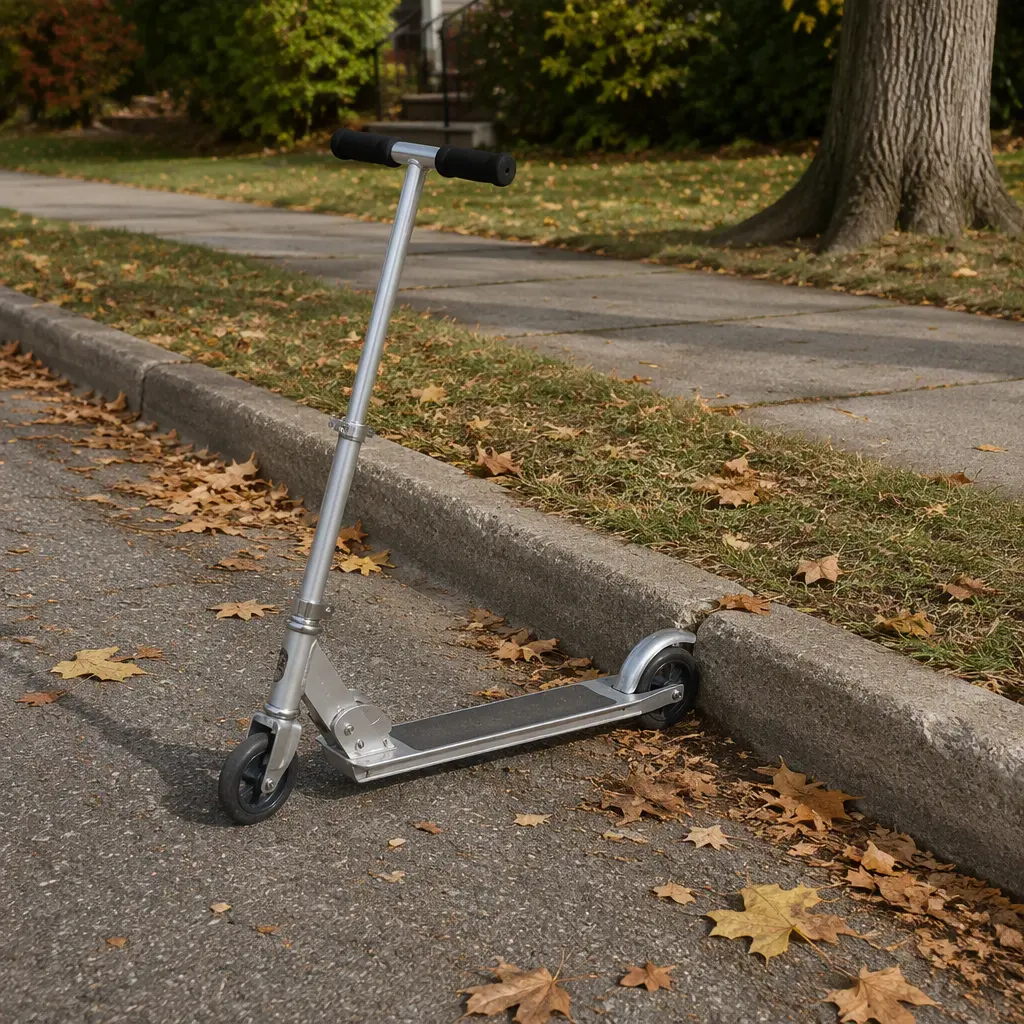
The Razor A kick scooter launched in 2000 during a period when extreme sports aesthetics were filtering into mainstream toys. Developed by JD Corporation and distributed widely through Razor USA, the scooter drew inspiration from compact urban scooters already common in parts of Europe and Asia. What made this version stand out was its stripped-down efficiency. Instead of thick steel tubing and oversized tires, it used aircraft-grade aluminum, inline-skate-style urethane wheels, and a folding frame that felt modern compared with the heavier ride-ons children were used to.
Timing played a major role in the scooter's rise. The early 2000s toy market was filled with products tied to speed, motion, and outdoor activity. Inline skates and skateboards were already popular, but they could be intimidating for beginners. The Razor scooter offered some of the same cultural energy while being easier to balance on and easier for parents to transport in a car trunk or hallway closet. Within a few years, the scooter had become one of the defining ride-on toys of its generation, helped along by television appearances, schoolyard word of mouth, and a wave of imitators.
Why it works
The Razor A scooter succeeded because nearly every part of the design supported convenience. The narrow deck encouraged a quick kicking rhythm, the small hard wheels rolled efficiently on smooth pavement, and the handlebars folded down with a simple mechanism. At a time when many toys competed by adding electronics or larger plastic parts, the scooter felt refreshingly mechanical. Riders could understand exactly how it worked after a few seconds of use.
Its riding style also fit naturally into short neighborhood trips. The scooter accelerated quickly, coasted smoothly on flat sidewalks, and was light enough to pick up when crossing streets or climbing stairs. That combination made it especially popular for school commutes and casual recreation. The experience was active without requiring a dedicated sports environment.
- Lightweight aluminum frame that was easy for children to carry
- Folding mechanism for storage and travel
- Small urethane wheels adapted from inline skates for smooth rolling
- Simple foot brake over the rear wheel
- Adjustable handlebars that allowed the scooter to grow with younger riders
Who it's for
The Razor A scooter was originally aimed at school-age children, but part of its staying power came from its broad appeal. Younger riders could learn basic balance and steering quickly, while older kids often treated scooters as a social accessory as much as a ride-on toy. Adults adopted them too, sometimes for short urban commutes or simply because the compact design made them convenient. Today, kick scooters still appeal to families looking for outdoor activity that feels less intimidating than skateboarding and less bulky than a bicycle.
Variants and what to look for today
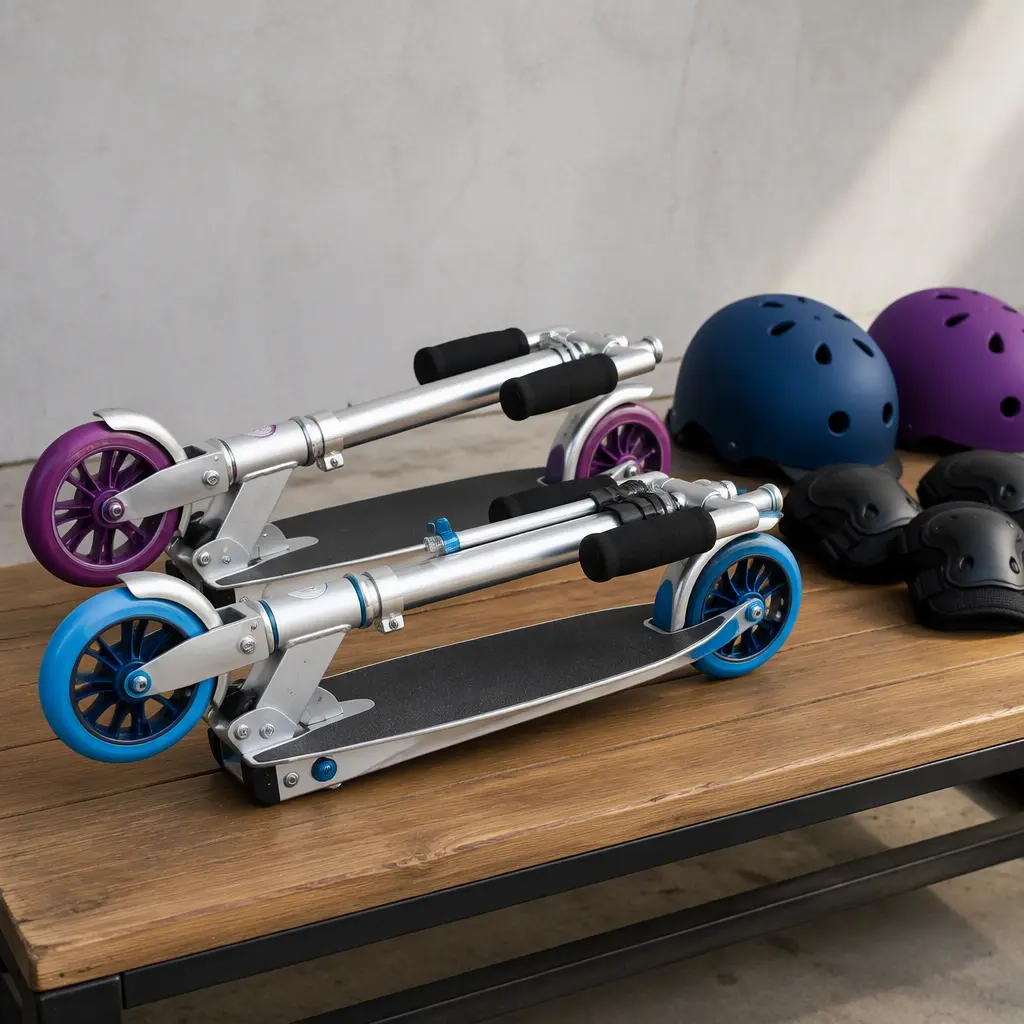
Modern kick scooters have expanded far beyond the original lightweight formula. Larger wheels, wider decks, adjustable steering systems, and suspension features are now common, especially on scooters intended for rougher pavement. Even so, the classic compact style remains recognizable and widely available. Many parents still seek out the smaller-wheel aluminum format because it folds easily and stores well in apartments, garages, and school lockers.
When shopping today, it helps to pay attention to construction quality rather than cosmetic extras. Sturdy locking mechanisms, reliable wheel bearings, and stable handlebar connections matter more than decorative finishes. Generic low-cost scooters sometimes use weaker folding joints or harder wheels that create a rough ride and wear down quickly.
- Classic compact scooters remain best for smooth sidewalks and short trips
- Larger-wheel versions handle cracks and rough pavement more comfortably
- Adjustable handlebars can extend the usable age range
- Protective gear is still recommended even for casual neighborhood riding
- Check replacement wheel and brake availability for long-term use
Frequently asked questions
Why did the Razor scooter become so popular so quickly?
It combined portability, affordability, and a modern look at the right cultural moment. The scooter felt faster and sleeker than earlier children's scooters while remaining easy to learn and easy to carry.
Are small-wheel scooters still practical today?
Yes, especially for short rides on smooth pavement. Many families still prefer compact scooters because they are lightweight, easy to fold, and convenient to store in smaller spaces.
What ages are kick scooters generally suitable for?
Most compact kick scooters are designed for children who already have basic balance and coordination, though exact suitability depends on rider size and local safety guidance. Many models now include adjustable handlebars to accommodate a wider range of ages.
Did scooters replace bicycles for some children?
Not entirely, but scooters became a common alternative for short neighborhood trips and school runs. They required less storage space, were easier to transport, and could be carried indoors more easily than bicycles.
More than two decades after its launch, the Razor A kick scooter remains tied to a very specific moment in youth culture. Its lightweight aluminum frame and folding design captured the early 2000s fascination with mobility, convenience, and outdoor independence. While newer scooters now come with larger wheels and more specialized features, the original formula still feels surprisingly current: simple mechanics, quick movement, and the freedom to roll down the block under your own power.